Counterpoint
Hal Andrews | April 1, 2026Why It is Theoretically Flawed, Often Wrong and Practically Useless – and Why Making it Useful is Essential to America's Fiscal Health
On June 24, 2019, President Trump issued Executive Order 13877, which outlined a price transparency framework to apply to hospitals, health insurers and self-insured group health plans, with a focus on charges and negotiated rates. Executive Order 13877 included the following stated purpose and policy:
“Section 1 . Purpose. My Administration seeks to enhance the ability of patients to choose the healthcare that is best for them. To make fully informed decisions about their healthcare, patients must know the price and quality of a good or service in advance. With the predominant role that third-party payers and Government programs play in the American healthcare system, however, patients often lack both access to useful price and quality information and the incentives to find low-cost, high-quality care. Opaque pricing structures may benefit powerful special interest groups, such as large hospital systems and insurance companies, but they generally leave patients and taxpayers worse off than would a more transparent system.
...
Sec. 2 . Policy. It is the policy of the Federal Government to ensure that patients are engaged with their healthcare decisions and have the information requisite for choosing the healthcare they want and need. The Federal Government aims to eliminate unnecessary barriers to price and quality transparency; to increase the availability of meaningful price and quality information for patients; to enhance patients' control over their own healthcare resources, including through tax-preferred medical accounts; and to protect patients from surprise medical bills.”1
At the outset, let us stipulate that the policy is noble: Americans would benefit from “access to useful price and quality information and the incentives to find low-cost, high quality care.” Even so, as the legendary venture capitalist John Doerr noted: “Ideas are easy. Execution is everything.” Acknowledging that hindsight is 20:15, what are the results of the Federal government’s execution of healthcare price transparency seven years later?
The Regulatory History of Healthcare Price Transparency
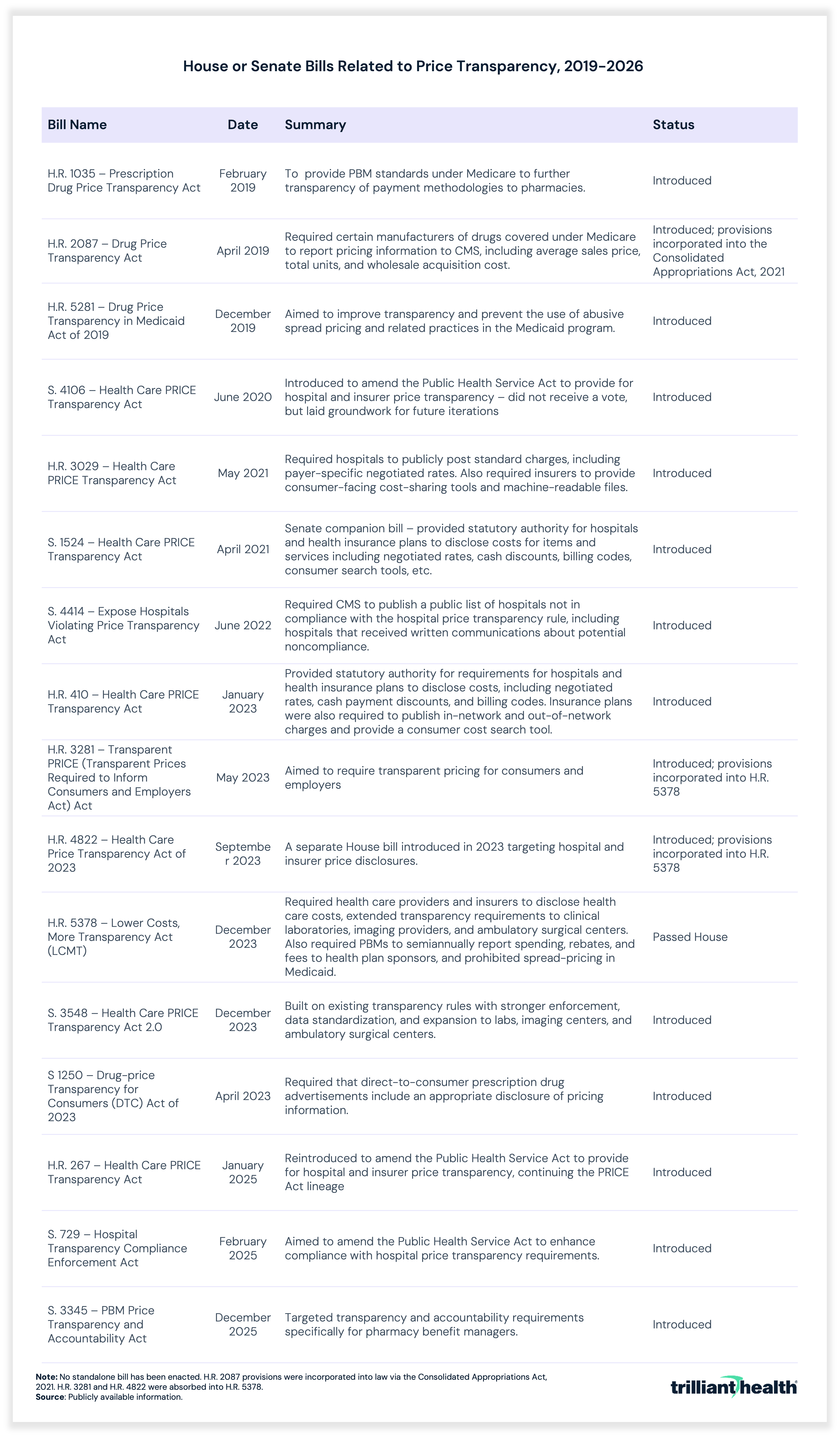
Increased consumer choice, stakeholder competition and price transparency have been the most conspicuous and consistent health policy priorities of President Trump’s two terms in the White House, the subject of Executive Orders 13813, 13877 and 14221. To implement Executive Order 13877, the Centers for Medicare and Medicaid Services (CMS) published initial hospital price transparency requirements on November 15, 2019 and the final rule for Transparency in Coverage, i.e., health plan price transparency, on October 29, 2020. Under the Biden Administration, CMS followed that with hospital price transparency enforcement updates on April 26, 2023 and updated hospital price transparency regulations on November 2, 2023. In the second Trump Administration, CMS issued updated hospital price transparency guidance on May 22, 2025 and November 21, 2025. Moreover, CMS issued updated regulations for Transparency in Coverage on December 19, 2025.
Apparently unsatisfied with CMS’s mandates, Congress has repeatedly considered additional price transparency legislation since the issuance of Executive Order 13813.
Economic Price Theory and Healthcare Price Transparency
From the perspective of accessibility, hospital price transparency is a success. There is little more that the White House, the Department of Health and Human Services (HHS) or Congress can do to make hospital price transparency freely available – anyone can download the aggregated files or query them with an AI chatbot. Even so, in a recent podcast, HHS Secretary Kennedy reiterated the White House’s commitment to making hospital price transparency data more accessible to consumers through a forthcoming map application that will allow consumers to compare hospitals in the same geography.
However, as a useful price signal to consumers, hospital price transparency is a failure.
The Austrian economist Ludwig von Mises wrote this about price theory in a free market:
“In an occasional act of barter in which men who ordinarily do not resort to trading with other people exchange goods ordinarily not negotiated, the ratio of exchange is determined only within broad margins. Catallactics, the theory of exchange ratios and prices, cannot determine at what point within these margins the concrete ratio will be established. All that it can assert with regard to such exchanges is that they can be effected only if each party values what he receives more highly than what he gives away…
Only with regard to fungible commodities negotiated on organized stock or commodity exchanges is it permissible, in comparing prices, to assume that they refer to the same quality. Apart from such prices negotiated in exchanges and from prices of commodities the homogeneity of which can be precisely established by technological analysis, it is a serious blunder to disregard differences in the quality of the commodity in question. Even in the wholesale trade of raw textiles the diversity of the articles plays the main role. A comparison of prices of consumers’ goods in mainly misleading on account of the difference in quality.…
The ultimate source of the determination of prices is the value judgments of the consumers. Prices are the outcome of the valuation preferring a to b. They are social phenomena as they are brought about by the interplay of the valuations of all individuals participating in the operation of the market. Each individual, in buying or not buying and in selling or not selling, contributes his share to the formation of the market prices.”2
For most consumers, “buying” healthcare services can be fairly characterized as “an occasional act of barter” for which there is abundant evidence that it would be “a serious blunder to disregard differences in quality of the commodity in question.” We have repeatedly demonstrated the differences in quality, most recently with this example:
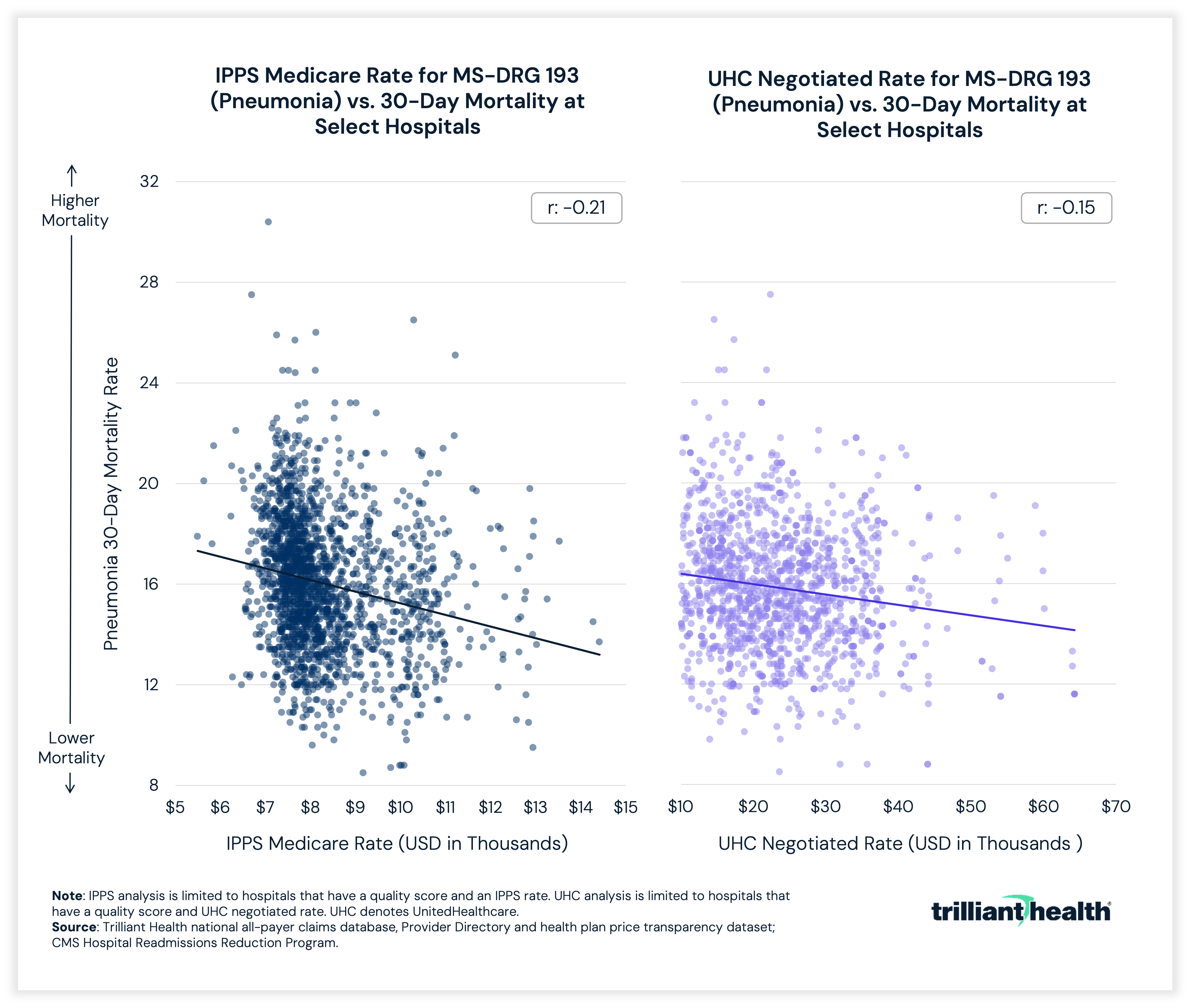
All the information in these graphs is publicly available, if not easily calculable. According to von Mises, consumers armed with this information about the difference in price and quality, as measured in this case by post-discharge mortality, could make informed value judgments. In theory, a consumer with a choice of hospitals offering pneumonia treatment for the same price would choose the hospital with the lowest mortality rate. In dozens of markets throughout the U.S., the opposite occurs regularly.
However, despite being mandatory since 2007, post-discharge mortality data reporting is surprisingly incomplete and declining.
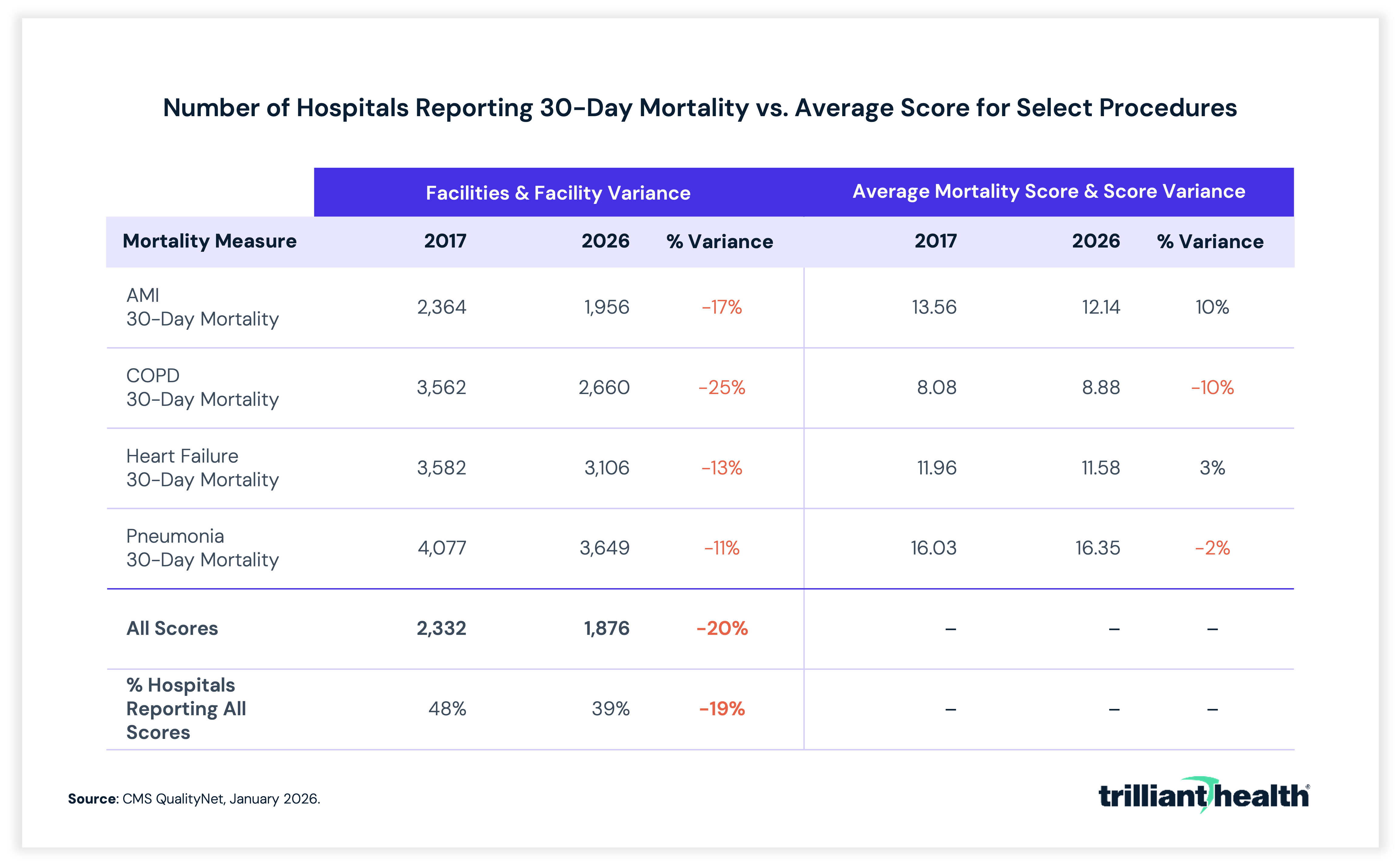
As I have written previously, it is fair to question CMS’s commitment to quality given their lack of enforcement of merely reporting mandatory post-discharge mortality data.
Notably, the scarcity of mortality data, the ultimate healthcare quality measure, is expressly contrary to Executive Order 13877’s decree of a “Health Quality Roadmap” in furtherance of providing patients with “access to useful price and quality information and the incentives to find low-cost, high-quality care.” Almost seven years later, little has been said about the Health Quality Roadmap, which seems to have been subsumed into CMS’s Center for Clinical Standards and Quality, which on March 11, 2026, published these “strategic” goals:
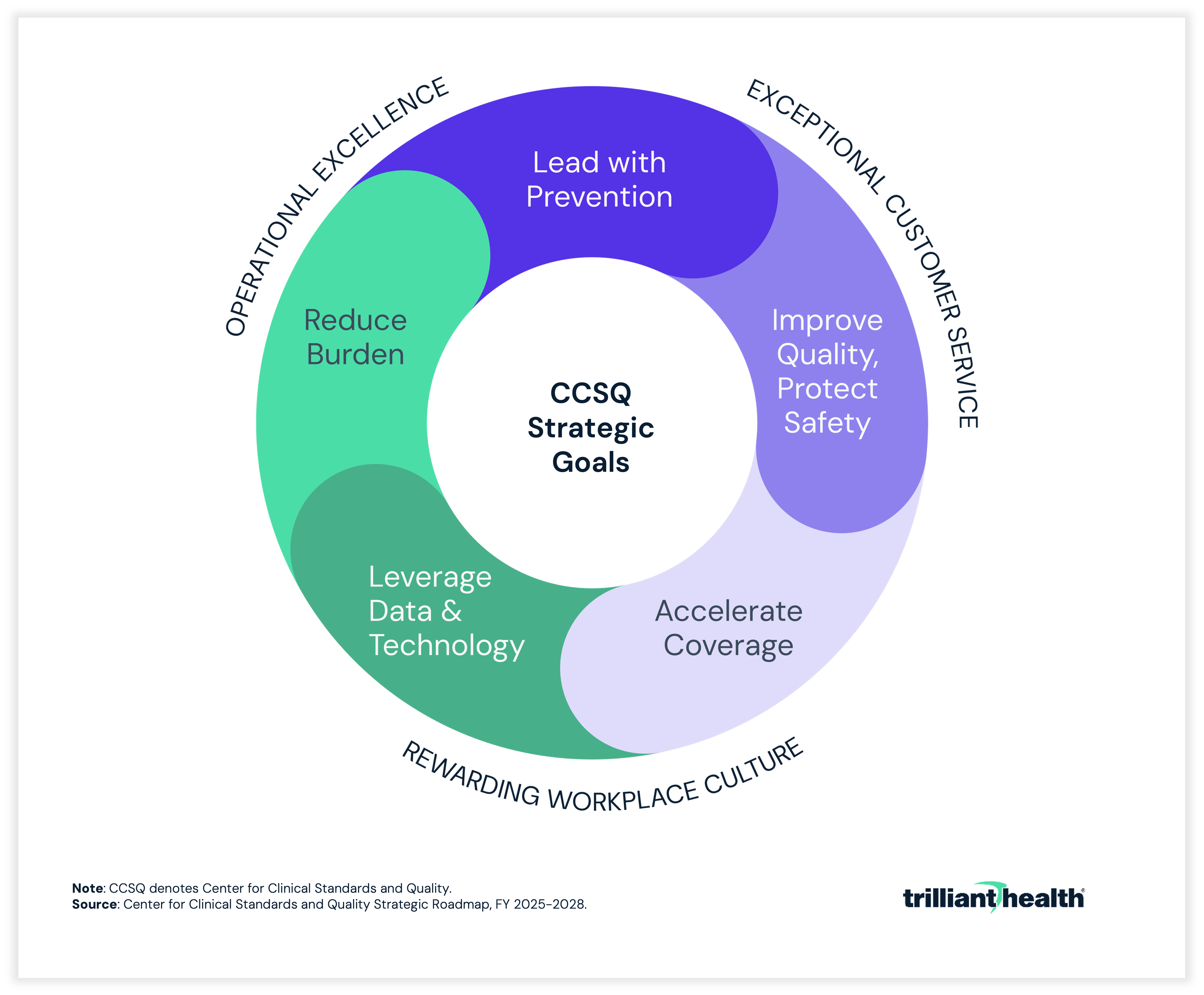
You can decide whether these “strategic goals” provide patients with “access to…useful quality information.”
More importantly, from a theoretical point, is the fact that the U.S. healthcare system is not a “free market economy” as described by von Mises:
“The market economy is the social system of the division of labor under private ownership of the means of production…
There is in the operation of the market no compulsion and coercion. The state, the social apparatus of coercion and compulsion, does not interfere with the market and with the citizens’ activities directed by the market.”3
There is abundant evidence that America’s health economy does not meet von Mises’ definition: the Social Security Act Amendments of 1965, the Emergency Medical Treatment and Labor Act of 1986, the Health Insurance Portability and Accountability Act of 1996, the Patient Protection and Affordable Care Act of 2010, etc., each of which involves varying degrees of compulsion and/or coercion that no amount of price transparency regulation can overcome. Because of the extent of “compulsion and coercion” – and regulatory capture – embedded in the U.S. medical-industrial complex, economic theories about price signals are insufficient to effect meaningful change, even if price transparency is “better” than price opacity.
Flawed Price Signals
Beyond the flawed economic theory of hospital price transparency is a practical reality:
Hospital price transparency files are often deeply flawed.
Based on our experience working with healthcare providers throughout the U.S., we know that health plan price transparency under CMS’s Transparency in Coverage initiative is a much better “source of truth” than hospital price transparency. To demonstrate the nature and extent of the flawed price signals in the hospital price transparency files, we compared the rates posted by 450 hospitals with the rates posted by CVS/Aetna (Aetna) and UnitedHealthcare (UHC) for a variety of DRGs and CPT codes.
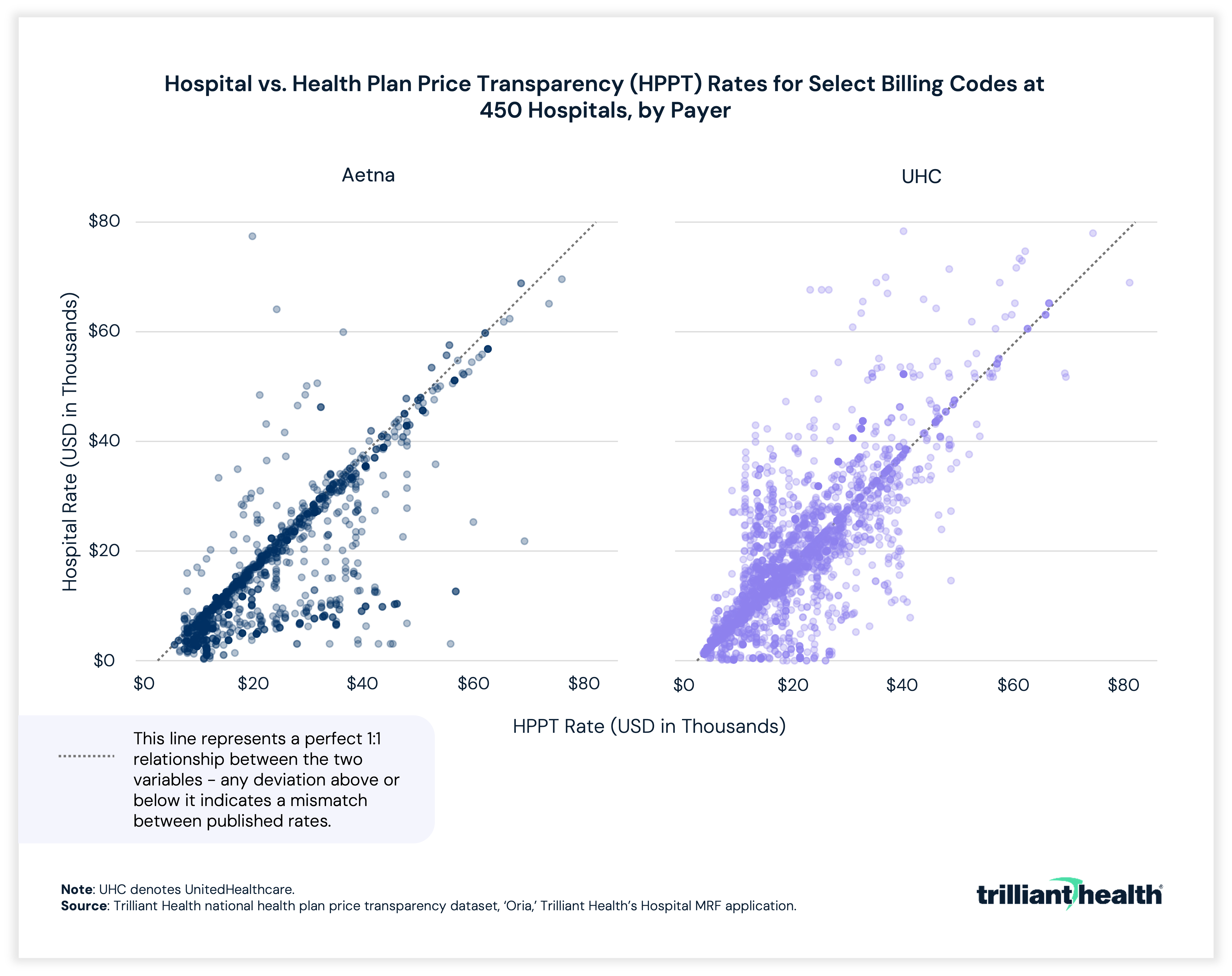
The following graphs reveal the ratio of a hospital's reported rate to the applicable health plan's reported rate (Aetna and UHC) for the most common PPO plan for a subset of elective gastroenterology surgical codes. The label of “1X” on the x-axis represents the number of instances where the applicable rate is the same in both the hospital price transparency data and the Transparency in Coverage data. For example, for CPT Code 45380, a colonoscopy with a biopsy, only 26.4% of hospitals posted a negotiated rate within 5% of the UHC posted rate. Moreover, the negotiated rates posted by the hospitals ranged from $6,503.93 below to $8,308.00 above the UHC posted rate for CPT Code 45380.
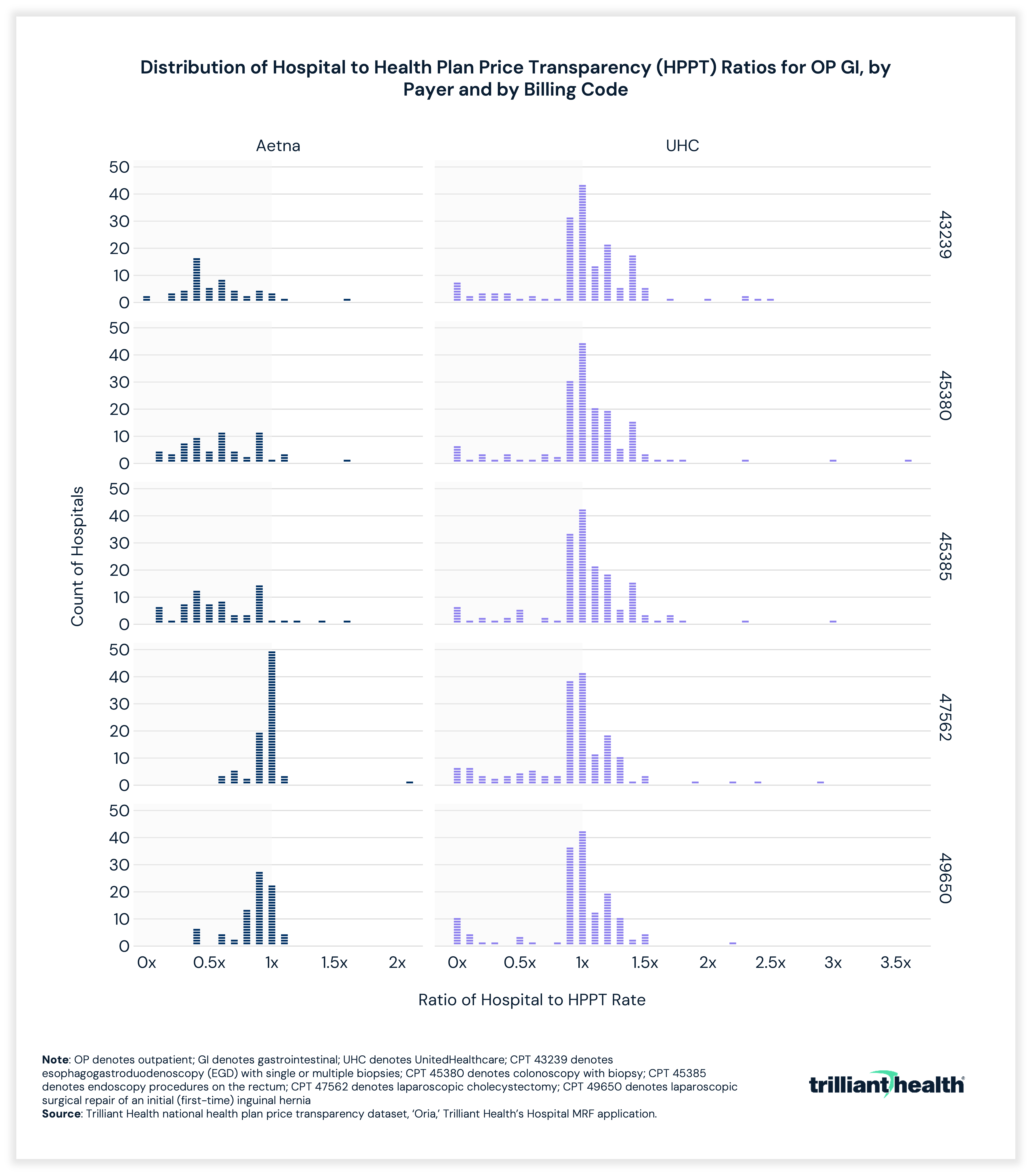
It should be self-evident that consumers cannot make the “right” decisions about “low-cost” care based on “wrong” data. In the absence of any capacity to assess the accuracy of what is posted – which CMS and Congress most assuredly do not possess – more price transparency legislation and regulation is the government equivalent of “more cowbell.”
Even if every U.S. hospital complied fully and accurately with CMS regulations, hospital price transparency would still be largely useless for consumers. Annual hospital admissions represented only 11% of all healthcare encounters in the U.S. in 2024, and ~50% of all hospital admissions originate in the emergency department. An emergency department visit is certainly what von Mises would define as “an occasional act of barter in which men who ordinarily do not resort to trading with other people exchange goods ordinarily not negotiated,” the situation for which the No Surprises Act was expressly designed (though based on wildly inaccurate data). But whether an emergent patient can be billed out-of-network charges is completely different from whether that patient will check a price transparency application while strapped to a stretcher in the back of an ambulance.
The balance of hospital admissions are “elective,” meaning that a physician with admitting privileges at a hospital “admits” a patient for treatment. Somehow, every politician understands that the phrase “you can keep your doctor” is political gold without understanding why. Not only do most Americans want to “keep their doctor,” none of them can be admitted to a hospital by “their doctor” unless “their doctor” has admitting privileges at that hospital. The continuing infatuation of the White House, CMS and the mainstream media with enabling expectant mothers to “price shop” for OB services is bewildering given that expectant mothers are very worried about whether their OB will be on call when their water breaks and rarely worried about the cost of the hospital where their OB delivers babies.
Understanding the Factors of Production of Healthcare Costs
For a consumer, the “cost” of healthcare is the result of two distinctly and sequentially different “factors of production.”
In his essay, “I, Pencil,” the economist Leonard Read records the “genealogy” of a “simple” pencil that claims “not a single person on the face of the earth knows how to make me” before explaining the “innumerable antecedents” required to produce a single pencil. Similarly, not a single person on the face of the earth knows or could know how to “produce” a coronary artery bypass graft (CABG) surgery, but economic theory of pricing doesn’t require perfect knowledge.
Friedrich Hayek, a student and colleague of von Mises, wrote this in his seminal essay, “The Use of Knowledge in Society”:
“But the ‘man on the spot’ cannot decide solely on the basis of his limited but intimate knowledge of the facts of his immediate surroundings. There still remains the problem of communicating to him such further information as he needs to fit his decisions into the whole pattern of changes of the larger economic system.
How much knowledge does he need to do so successfully? Which of the events which happen beyond the horizon of his immediate knowledge are of relevance to his immediate decision, and how much of them need he know?
There is hardly anything that happens anywhere in the world that might not have an effect on the decision he ought to make. But he need not know of these events as such, nor of all their effects…
It is always a question of the relative importance of the particular things with which he is concerned, and the causes which alter their relative importance are of no interest to him beyond the effect on those concrete things of his own environment.”4
A CABG, of course, is merely one example of the factors of production in a hospital, “the most complex human organization ever devised” according to Peter Drucker, because of its high capital costs, labor costs and regulatory burden. What Congress and CMS and California tech bros underestimate is that the cost of the most expensive healthcare “produced” by a hospital – commercially reimbursed healthcare – is downstream of another means of production: the health insurance benefit.
Unlike a CABG, the factors of production in the health insurance benefit are, with Ray Dalio-like “radical transparency,” likely knowable but intentionally obfuscated to protect the immense profitability of the intentional friction costs that are embedded within those very factors of production. Health plan – not hospital – price transparency reveals the frequently stark differences in the cost of the same procedure performed by the same provider at the same location, with the difference solely attributable to the payer.
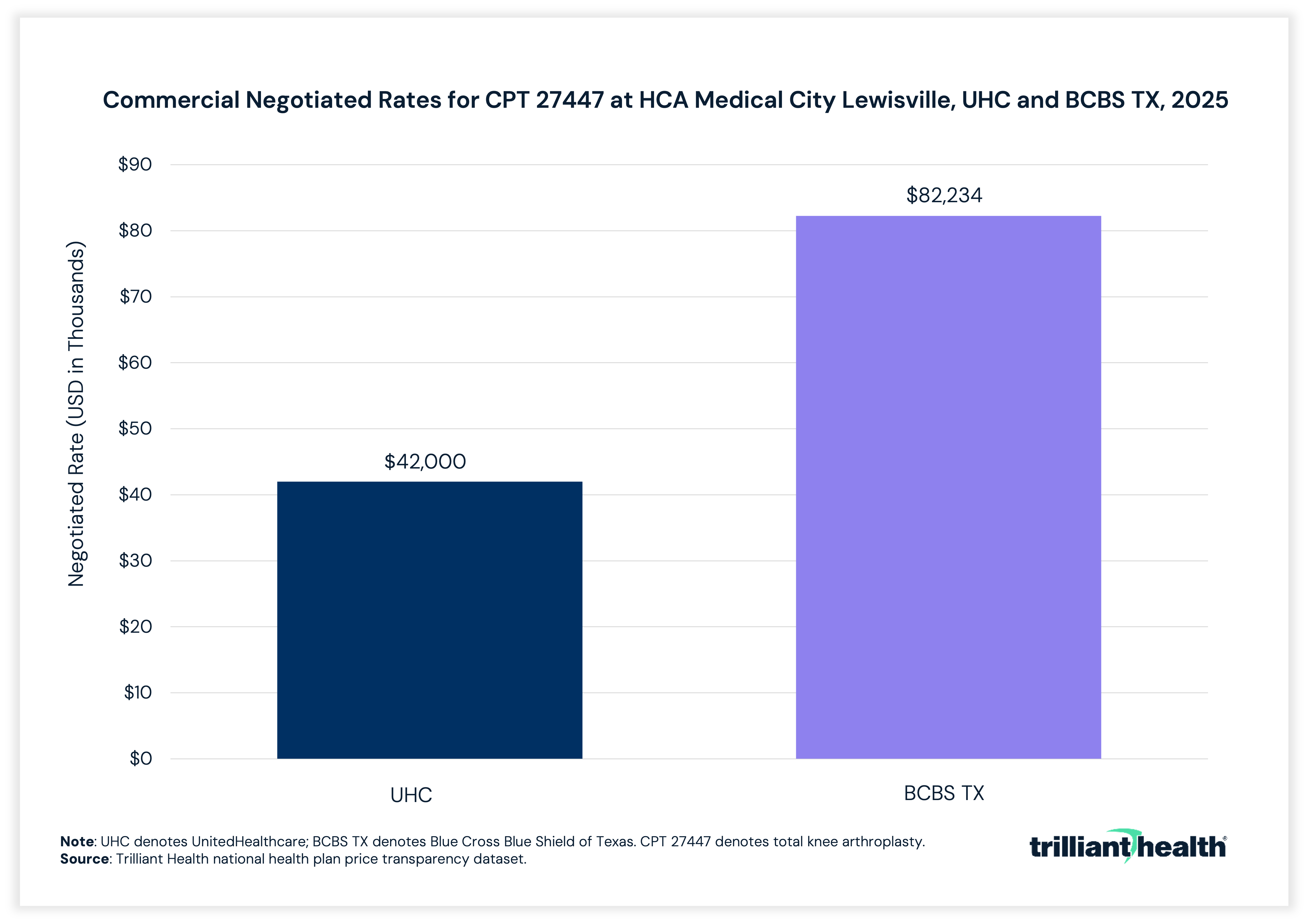
No free market economic principle can explain this recurring example in the health economy, and hospital price transparency cannot resolve it.
Why? Because providing price transparency after the employer’s selection of a provider network and the employee’s selection of a benefit tier is inherently futile. The fact that I have complete clarity that a bottled water at the airport costs me $6 after TSA screening is not indicative of what bottled water costs in a free market. By definition, no provider network (with the possible exception of an “any willing provider” network) is a free market, especially one recommended by a health insurance broker who received a six-figure commission from that network’s owner for the “expertise” the broker provided the employer.
How Health Plan Price Transparency Can Provide Actionable Insights
There is no proof that government regulation is bending America’s healthcare cost curve, which might explain state-led initiatives to impose price caps. Many an economist has written many words about price caps, but price caps are not a free market solution.
The most impactful free market approach to bend the healthcare cost curve would be to eliminate the tax deduction for employer sponsored health insurance. Would that create confusion and disruption in the market for a few years? Yes, but markets eventually sort themselves out, the proof of which are the 50M+ poor and elderly Americans who have navigated annual enrollment in Exchange and Medicare Advantage plans for the past few years.
Short of that, the only way to improve upon what Executive Order 13877 refers to as “opaque pricing structures [that] benefit powerful special interest groups” is through health plan price transparency. In contrast to hospital price transparency, which is limited to services rendered on a hospital campus, health plan price transparency contains every rate paid by a health insurer or third-party administrator for every service rendered by an in-network provider – hospital, ambulatory surgery center, physician office, imaging center, physical therapy clinic, etc.
When used at the beginning of the “factors of production” of the health insurance benefit, health plan price transparency can – without “more cowbell” from the White House or Congress – reveal the difference in the cost of a standard basket of healthcare services among a variety of provider networks prior to the selection of the health insurance benefit, whether an individual is enrolled in a group health, Exchange or Medicare Advantage plan. Naked self-interest, in addition to economic principles, would suggest that employers were already doing this, as would the fiduciary duties to which executives of most employers – and all self-funded group health plans – are bound. Undoubtedly, some employers have been led to believe that their benefits consultants or brokers are doing that for them. The proof is in the pudding, and our research suggests that isn’t always true.
If Congress is bound and determined to expand the regulation of healthcare price transparency, then they should amend the commission disclosure requirements under the Consolidated Appropriations Act, 2021 to require brokers to use health plan price transparency to disclose both the projected cost of and the broker’s commission for each carrier’s provider network. The thought that Congress needs to do that raises a more troubling question: How has America arrived at a point in history when the Federal government must compel employers to act in their economic interest?
Why Price Transparency Isn’t Enough to Bend the Healthcare Cost Curve
For all the reasons set forth above, hospital price transparency cannot meaningfully reduce the rate of increase in America’s healthcare costs. Used thoughtfully, or even by mandate, prior to selection of a health benefit, health plan price transparency can theoretically reduce the variance in the cost of healthcare services at the market level, thereby reducing the aggregate costs. And, of course, mandatory price caps can theoretically limit the cost of healthcare services in a market, though undoubtedly with unexpected derivative effects. However, all those things are not enough.
U.S. healthcare consumes $1 out of every $21 of global GPD. Trying to bend the healthcare cost curve is essential to America’s fiscal health, but thinking a few Executive Orders and Congressional acts will effectuate that is absurd.
The price, or more accurately the cost, of healthcare is merely a symptom of the fundamental problem with the U.S. health economy: the wide variance in, and all too frequent lack of, value for money. Innumerable studies reveal the poor comparative value delivered by America’s healthcare system, which can be summarized in this graph:
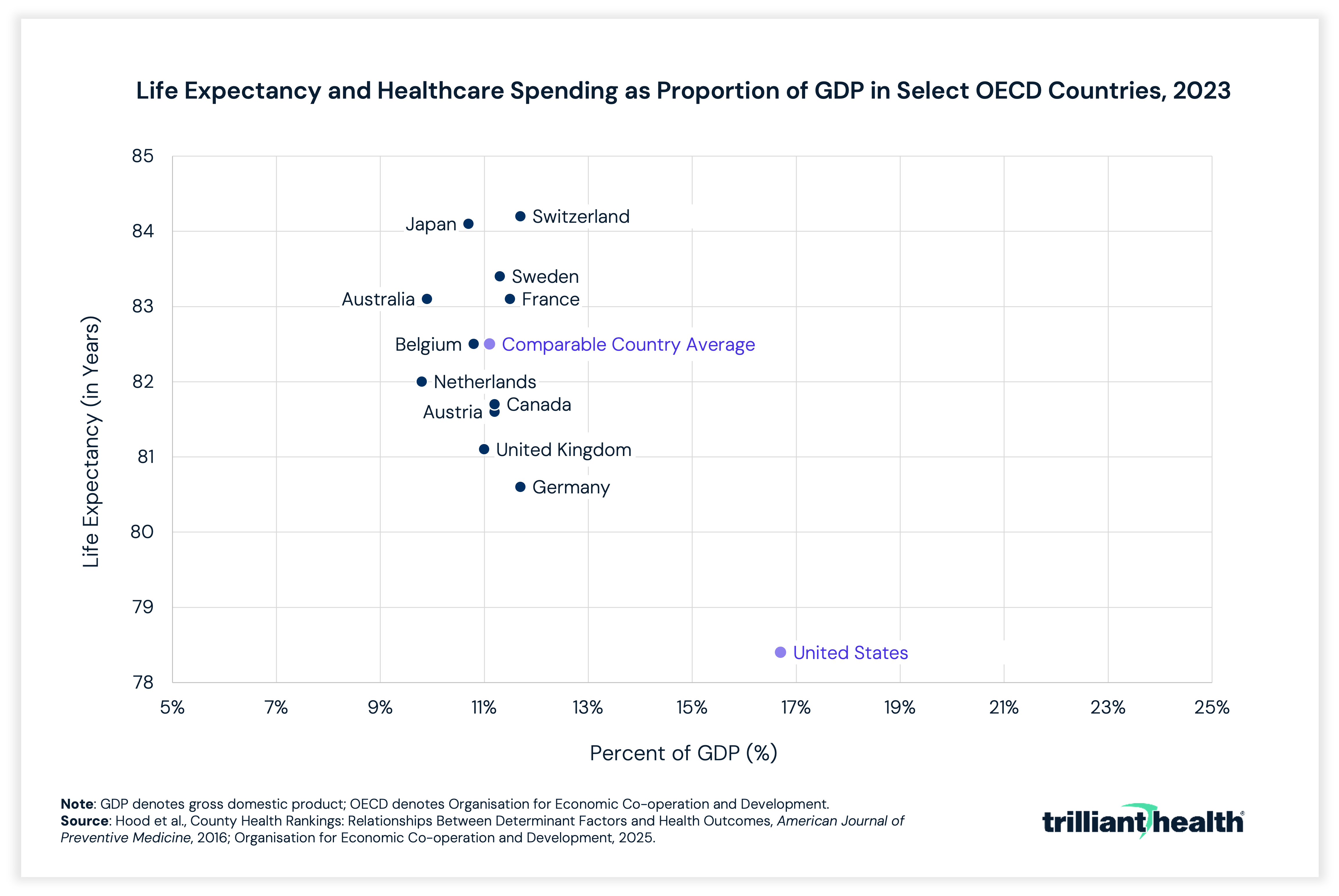
Cost and quality are the two essential “factors of production” in value for money in healthcare. As such, price transparency, whether hospital or health plan, is not the end, but a means to the end. Executive Order 13877 notes that “to make fully informed decisions about their healthcare, patients must know the price and quality of a good or service in advance,” which explains its declaration of the need for a Health Quality Roadmap. However, the consultant-speak in the graphic above from CMS’s Centers for Clinical Standards and Quality – “Improve Quality, Protect Safety” – implicitly reveals the truth of the matter: medicine is a mix of science and art. A CABG is a fine example: the science of how and why a coronary artery bypass will work, and the art revealed in the surgeon’s hands that sew the blood vessel into the artery and aorta.
It is axiomatic that beauty is in the eye of the beholder, as it is in Justice Stewart’s definition of pornography that “I know it when I see it.” Both axioms apply to healthcare quality. For a two-view ankle X-ray, the technician’s only patient instruction – “Don’t move” – reflects the sole quality metric for the scan. In contrast, proton beam therapy requires a medical physicist for treatment planning, dosing and safety.
As von Mises noted, “it is a serious blunder to disregard differences in the quality of the commodity in question,” which is especially true for healthcare services. A rigorous approach to quality measurement is required, and it is hard, as England’s National Health Service has learned:
“The traditional accounting framework for discussing value for money is…[f]inancial inputs (in the form of costs) are converted into physical inputs (such as labour and capital). The success of this conversion is often referred to as the ‘economy’ with which inputs are purchased. Physical inputs are in turn converted into physical outputs (such as an episode of hospital care). The relationship between physical inputs and outputs is often referred to as ‘efficiency’. Depending on the quality of care, the physical outputs then create eventual outcomes, for example, increases to the quality and length of life. The success of this conversion is referred to as ‘effectiveness’.
It is conventional to consider various value for money measures under these headings. For example, the traditional measure of ‘length of stay’ for a hospital episode is an efficiency measure as it indicates the level of physical inputs (bed days) required to produce a physical output (an ‘episode’). In contrast, the post-operative mortality rate is a measure of the quality of that output and therefore a signal of effectiveness. The holy grail of value for money is therefore cost-effectiveness: the ratio of outcomes to inputs. For example, the ‘cost per quality adjusted life year’ used by the National Institute for Health and Clinical Excellence (NICE) to assess new technologies is a cost-effectiveness ratio, and the recent efforts to develop a single number measure of NHS productivity represent an attempt to move from the piecemeal assessment of indicators of economy, efficiency and effectiveness towards a more comprehensive measure of cost-effectiveness…
Recent work in estimating system productivity has developed innovative approaches, such as seeking to incorporate measures of quality alongside measures of inputs and activity…[which] implies a desire to incorporate measures of effectiveness into the value for money analysis. However, because of the difficulties associated with defining and measuring quality, little consensus has yet to emerge as to the ‘correct’ or most appropriate approach.
…
Any assessment of a health service ought to examine indicators of the value of the ‘output’ it creates. Traditionally, two classes of outcome are considered important in healthcare: clinical outcomes expressed in terms of the health gains created by the system, and the quality of the patient experience, independent of health outcomes, expressed in concepts such as ease of access to care and responsiveness.
Some health outcomes indicators – such as life expectancy rates, infant mortality rates and cancer mortality rates – are available. However, improvements in these are a function of many factors over which the NHS often has little influence. The relative scarcity of readily accessible outcome data specific to the NHS forces any analysis to rely heavily on process indicators, on the assumption that they provide a reasonable proxy for health outcomes.”5
CMS has done little to delineate between subjective and objective quality in healthcare. Moreover, CMS does not acknowledge that quality is frequently completely irrelevant in many of its “shoppable” services as long as a phlebotomist can hit a vein. Where quality is irrelevant, value for money depends primarily on cost, though as a general principle healthcare services that don’t involve quality – like a strep throat swab – are relatively inexpensive. Where quality is essential but economically intangible, value for money is an elusive concept.
Since the 1999 publication of To Err is Human in 1999 and the 2007 release of the Triple Aim, CMS has implemented a vast quality reporting framework at incalculable system cost in the form of Quality Measures, HEDIS Measures, Consumer Assessment of Healthcare Providers & Systems, etc. Like Seinfeld’s The Car Reservation episode, creating a reporting framework and enforcing a reporting framework are not the same thing, and neither is the same as measuring health outcomes. After 20 years, CMS has abundant evidence to demonstrate the fallacy of assuming that process measures “provide a reasonable proxy for health outcomes.”
There is no way to calculate value for money in healthcare without transparency about cost and quality.
If CMS or health economy stakeholders cannot measure healthcare quality, then value for money in healthcare is unachievable…which may leave every health economy stakeholder to restructure its business model to survive under price caps. Of course, if CMS cannot measure healthcare quality, then its quality reporting framework is logically part of the oft-cited administrative waste in healthcare.
America has a history of doing challenging things. Figuring out how to measure healthcare quality is challenging, but it is the most important initiative for America’s fiscal health, which is inextricably linked to the health economy, which continues to grow at an unsustainable rate.
Ideas are easy. Execution is everything.