TRILLIANT HEALTH RESEARCH
Studies
Timely trend analysis. Free in your inbox.
Receive weekly studies from Trilliant Health.
October 15, 2026
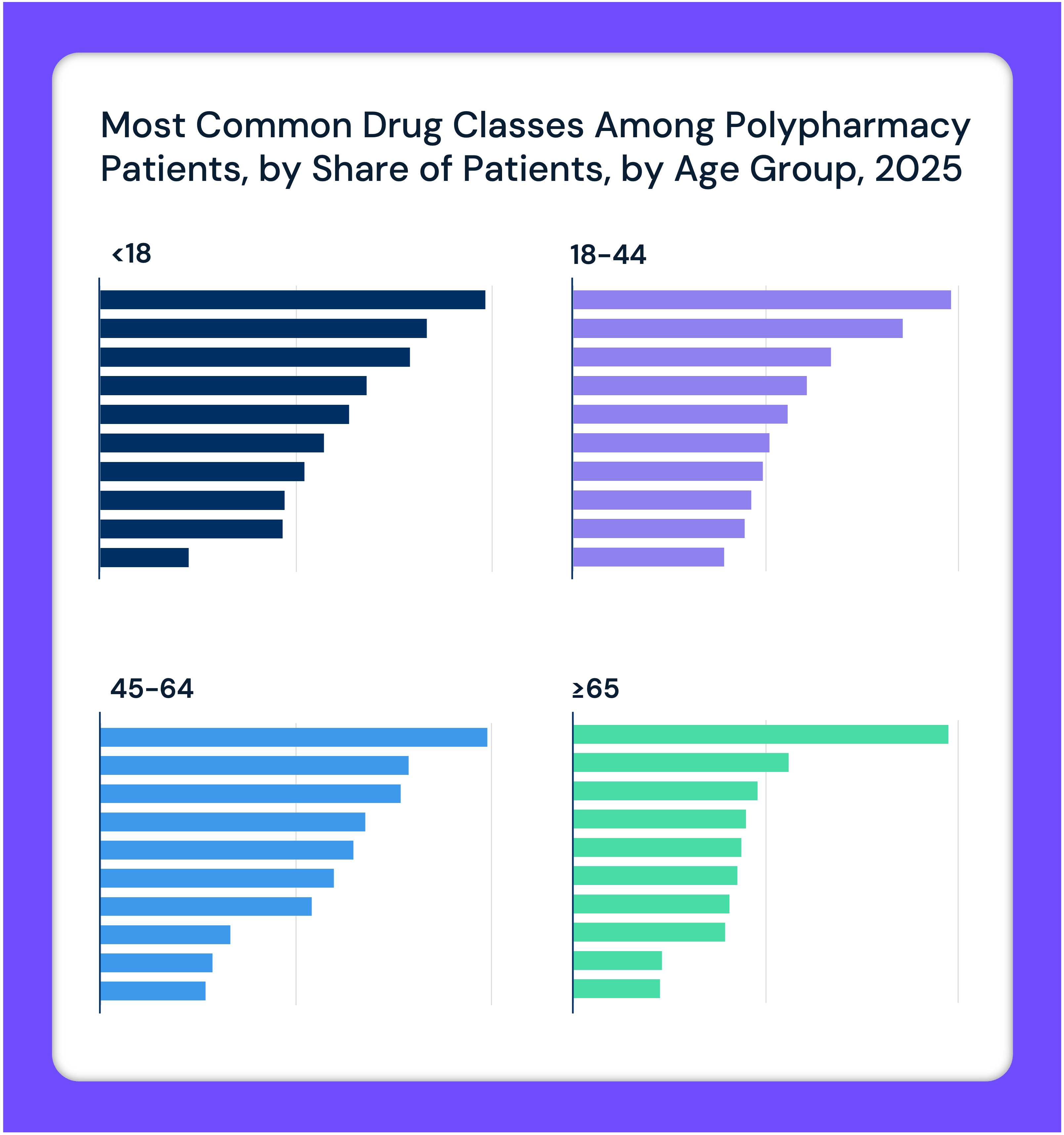
Polypharmacy Rates Continue to Rise Across All Age Groups
In 2025, 32.9% of patients with a prescription used five or more medications, up from 29.4% in 2019. Rates were highest for adults 65+ (58.4%) and higher for women than men in every age group.
Katie Patton • Austin Miller • Allison Oakes, Ph.D.
FundamentalsOctober 09, 2026
The 2026 Trends Report in Brief: The U.S. Health Economy Is a Tragedy of the Commons
A summary of Trilliant Health's 2026 Trends Shaping the Health Economy Report and how rational decisions compound into collective failure across six trends
Trilliant Health
StudiesOctober 08, 2026
Fewer Hospice Patients Are Dying at Home Every Year, While Acute Inpatient Hospice Stays Continue to Rise
Home hospice deaths decreased from 49.9% in 2020 to 46.4% in 2025 as acute inpatient deaths increased. Assisted living stays are the longest – a median of 55 days – signaling incentive-driven variation.
Allison Roberts, Ph.D. • Katie Patton • Allison Oakes, Ph.D.
StudiesOctober 01, 2026
Projected Healthcare Demand Growth Is Slowing as the Population Ages
Across every care setting and clinical category analyzed, projected healthcare demand growth from 2026 to 2036 falls below historical rates, and many services are projected to see relatively flat demand.
Katie Patton • Austin Miller • Allison Oakes, Ph.D.
StudiesSeptember 24, 2026
Urgent Care Utilization Is an Inconsistent Predictor of Downstream Health System Loyalty
While patient loyalty to a health system urgent care was high (73.6% to 93.3%), loyalty to emergency, inpatient and primary care was varied. Urgent care loyalty is not as strong of a loyalty predictor as primary care.
Katie Patton • Allison Roberts, Ph.D. • Allison Oakes, Ph.D.
StudiesSeptember 17, 2026
Urgent Care Utilization Has Returned to Pre-Pandemic Levels Despite Continued Investment and Increased Access
Urgent care utilization has rebounded to pre-pandemic levels despite heavy PE investment. It isn’t replacing primary or emergency care, and patients show strong loyalty to a single location or brand.
Allison Roberts, Ph.D. • Katie Patton • Allison Oakes, Ph.D.
StudiesSeptember 10, 2026
Liver Disease Utilization and Mortality Increased Among U.S. Adults, Even as Alcohol Misuse Screening Decreased
Between 2019 and 2025, chronic liver disease mortality increased 12.1% and liver disease patient volume increased by 48.3% – increasing fastest among women, but higher among men. In contrast, alcohol misuse screening has decreased by 21.0%.
Katie Patton • Austin Miller • Clara Petrucelli • Allison Oakes, Ph.D.
StudiesSeptember 03, 2026
By January 1, 2028, Nearly Every Hospital Will Be Subject to Episode-Based Risk for Lower-Extremity Joint Replacement
CMS’s finalized CJR-X rule makes nearly every U.S. hospital financially responsible for 90 days of joint replacement costs, starting January 1, 2028, extending mandatory bundled payment nationwide.
Katie Patton • Allison Oakes, Ph.D.
StudiesAugust 27, 2026
The Majority of U.S. Physicians Are Employed, and Their Commercial Negotiated Rates Exceed Those of Independent Physicians
In the U.S., 59.4% of physicians are hospital-employed, varying widely by state and specialty. Employed physicians’ Chicago commercial E/M rates average $92 more than independent peers.
Katie Patton • David Taylor • Jim Browne • Maura Eshleman • Allison Oakes, Ph.D.
Interested in citing our research? Please follow this guide.