Study Takeaways
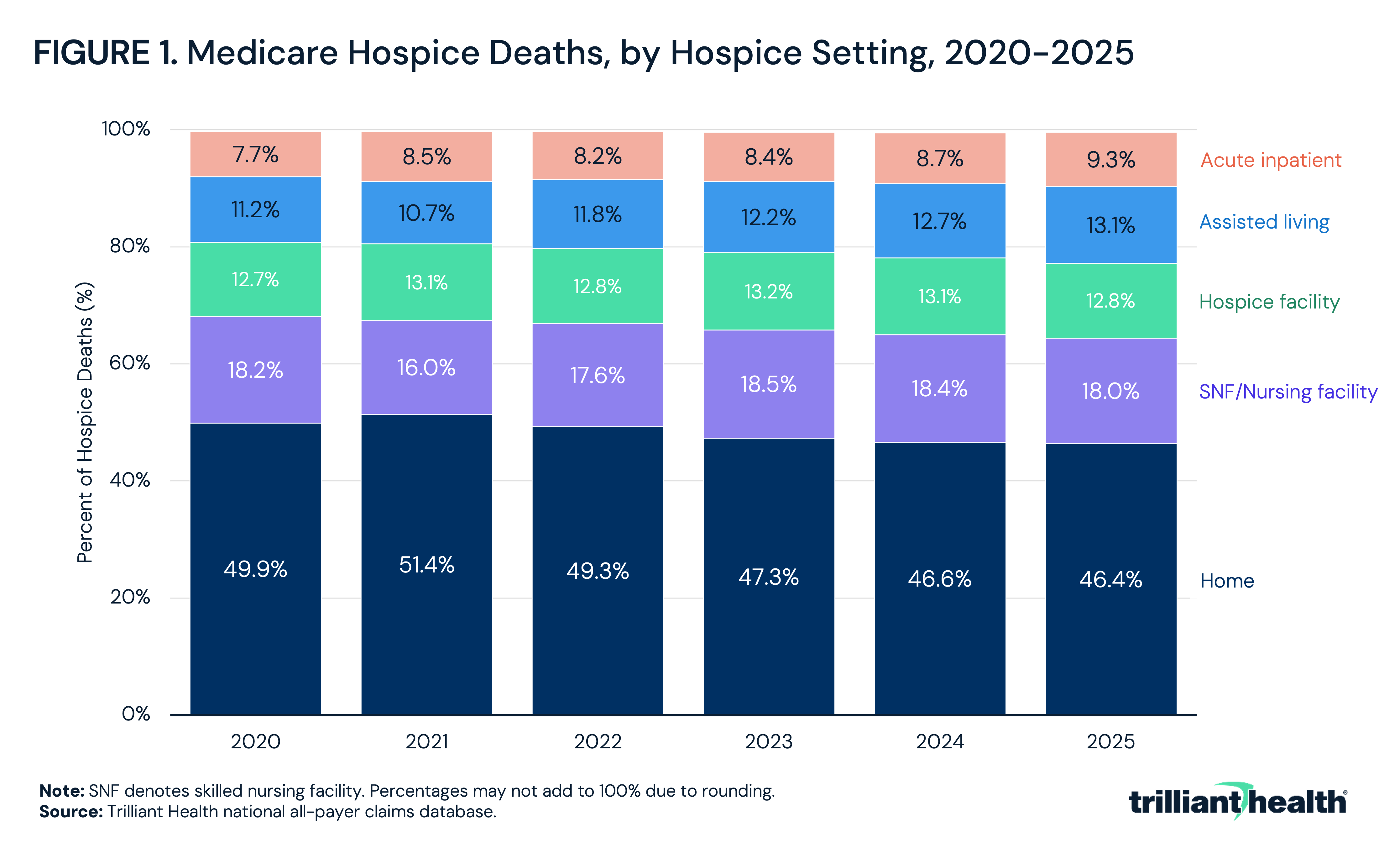
- The share of hospice patients who died at home has declined, from 49.9% in 2020 to 46.4% in 2025, while the share of hospice patients who died in acute inpatient settings rose from 7.7% to 9.3% over the same period.
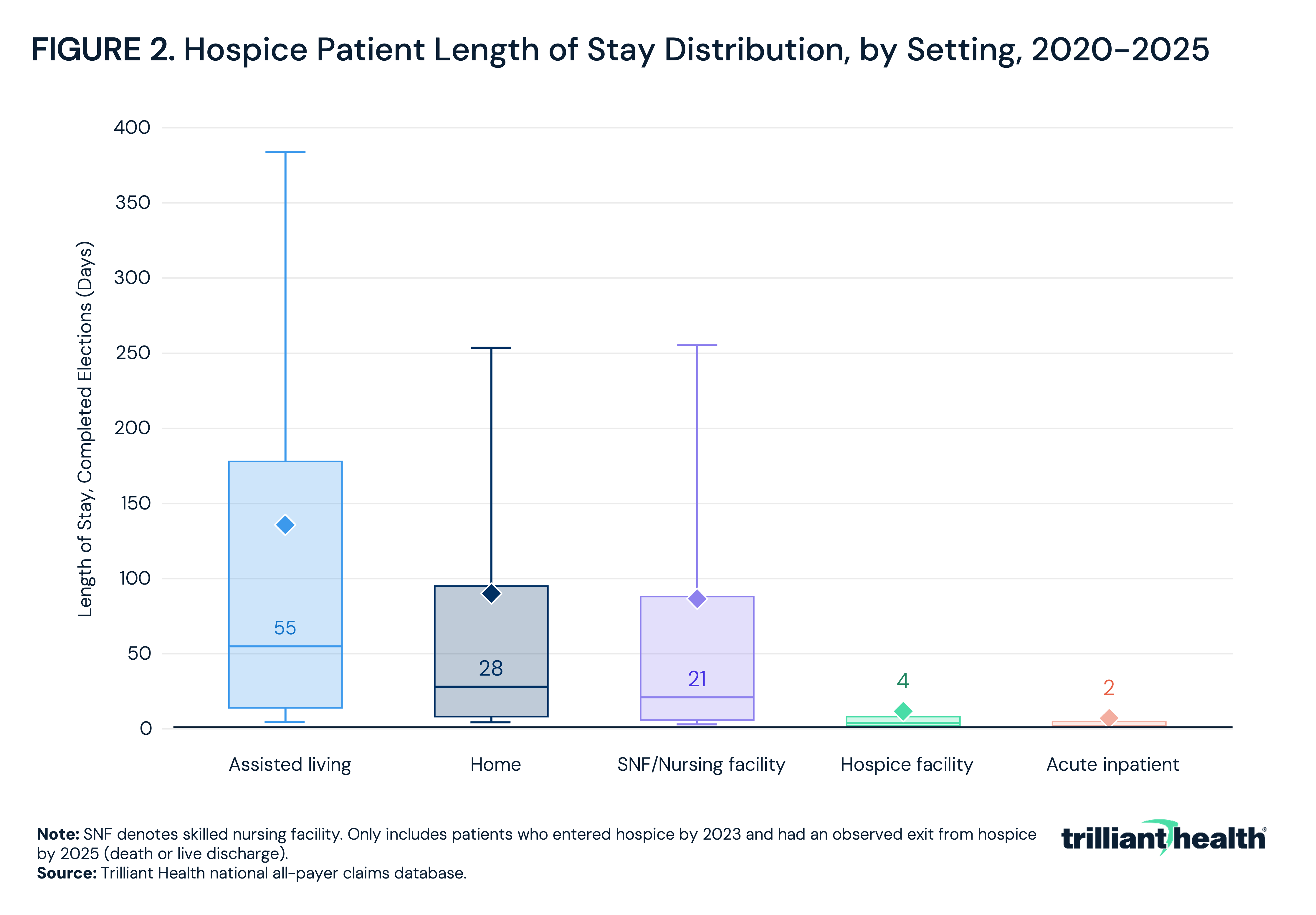
- Across all care settings, assisted living hospice patients had the longest median length of stay, 55 days, and 10% had stays longer than 384 days. This translated to very different survival times, with 9.9% of assisted living hospice patients surviving at least two years.
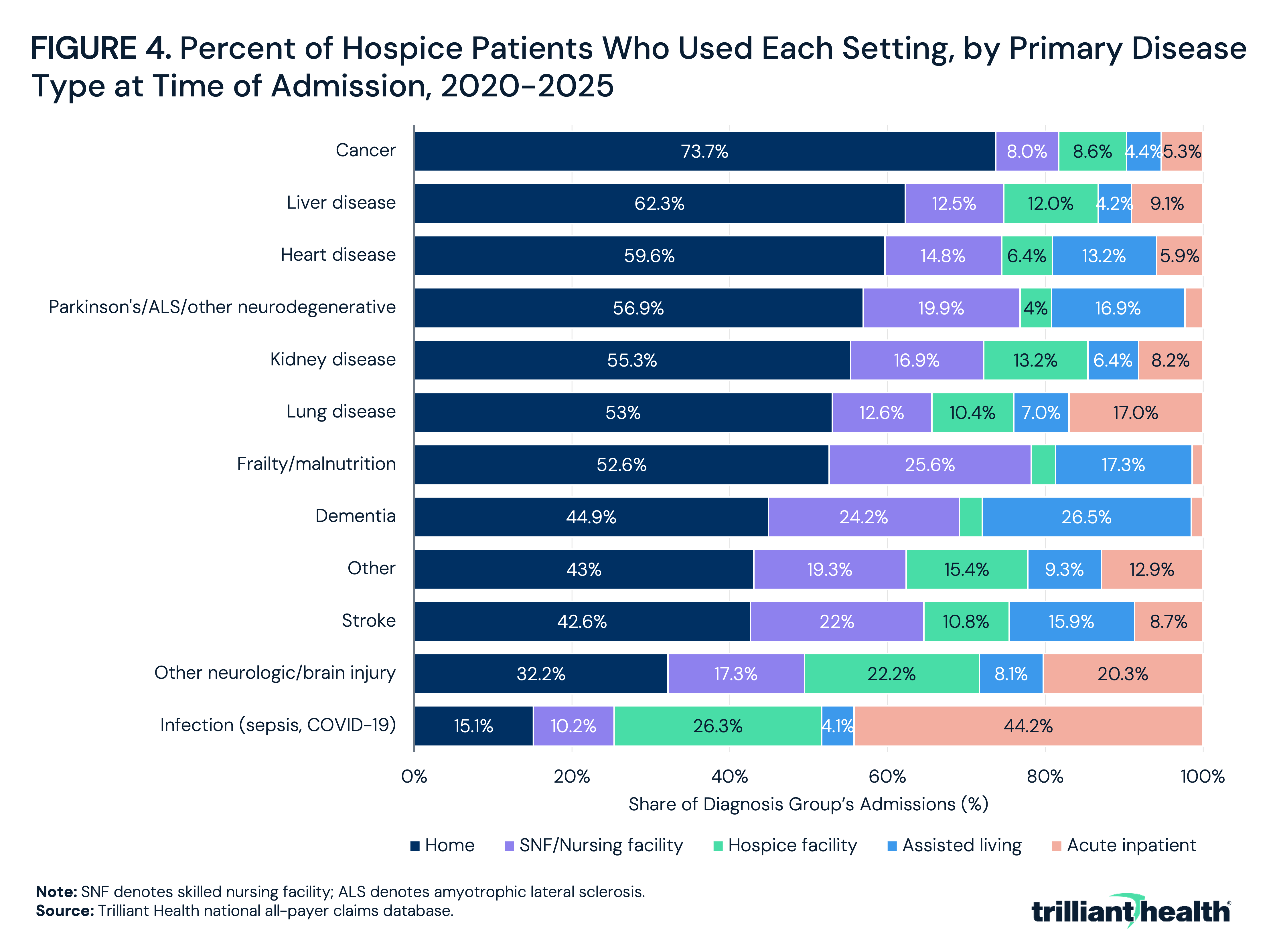
- Diagnosis impacted hospice outcomes but still varied widely by setting. Dementia patients, for example, had the lowest six-month mortality rate when beginning hospice in assisted living (63.1%), but a six-month mortality rate of 95.6% when entering hospice in acute inpatient settings.
Medicare hospice is intended for beneficiaries with a terminal prognosis of six months or less, but actual hospice utilization patterns vary widely by diagnosis and setting. This analysis examines new hospice admissions from 2020 to 2025 for trends in utilization, where patients die and how length of stay and survival differ by the setting in which care begins and the diagnosis the patient received.
Background
The end of life is usually the most expensive period of a patient’s healthcare use, especially because of the cost and complexity of many late-stage medical interventions.1 In contrast, hospice care is designed to reduce end-of-life (EOL) costs and improve quality of life, balancing the tension between a medical system incentivized to keep the patient alive at any cost and the reality of terminal illness.
All Medicare beneficiaries with Part A coverage, regardless of enrollment in Medicare Advantage, are eligible for hospice benefits through Traditional Medicare. Hospice enrollment requires two physicians to certify that the illness is terminal with a prognosis of six months or less, and for the patient to agree to forgo any additional curative care for the terminal illness. In 2024, 52.9% of Medicare decedents used hospice, up 1.3 percentage points from 2019, with Medicare spending $28.3B on hospice services in 2024, an increase of 10.4% from 2023.2
To an extent, patients can select the hospice care setting, including home care. As most people report a preference for dying at home, it would be expected that a substantial share of hospice patients die at home.3 In reality, the provision of hospice care is more complex. Hospice has become an increasingly for-profit business, with 81.9% of hospice agencies registering as for-profit in 2024.4 While these agencies do not provide all aspects of hospice care, they provide most care offered in assisted living facilities and homes, as well as some of the care offered in nursing facilities and other inpatient settings.
Low-acuity, long-term hospice patients in institutional settings have the highest potential profit margin, as the hospice can provide less intense care and receive the same daily rates, which incentivizes longer lengths of stay, particularly among for-profit agencies. Notably, more than 60% of Medicare hospice spending in 2024 was for patients with stays over 180 days.5 Concerns over these trends have led Medicare to institute additional monitoring and limit the formation of new hospices in six states, in addition to enforcing the existing per-hospice cap on total spending.
At the same time, other institutional pressures disincentivize enrollment in hospice altogether. Every provider other than the hospice agency has a financial incentive to continue to treat the patient, whether a hospital, nursing home, home health agency or physician, given the systemic focus on life-prolonging treatment. Moreover, estimating when a patient has less than six months to live, which is the prognostic threshold for hospice eligibility, is more art than science.6 As a result, some patients are enrolled in hospice too late to benefit from its design – less intervention and more control over the place and nature of death. The impact of this pressure is most obvious in acute inpatient settings, where patients may be enrolled in hospice only after extensive life-saving measures have been attempted.
These countervailing pressures have led to two almost contradictory trends: a hospice system that benefits from longer stays, and a healthcare system that fails to recommend hospice at the right point in a patient’s care journey. This analysis examines how these pressures impacted actual hospice patterns among Medicare beneficiaries from 2020-2025 by analyzing hospice trends by the setting of admission and death, to better illustrate how the institution that initiates hospice can impact the patient’s experience.
Analytic Approach
National all-payer claims were used to identify and examine Traditional Medicare beneficiaries and Medicare Advantage enrollees who received hospice care at least once between 2020 and 2025. Patient deaths were determined using discharge codes (20, 40, 41, 42) and verified deaths reported in the Limited Data Set Medicare Beneficiary Summary File. Patient deaths were included regardless of whether they occurred while the patient was still officially enrolled in hospice. Hospice care setting was determined using a combination of procedure codes and the Trilliant Health Provider Directory. For analyses looking at time to death, only stays that occurred before June 1, 2025 were included, to ensure a six-month follow-up period.
To assess if the variation in hospice utilization patterns by care setting was driven by differences in patient populations, outcomes were also evaluated by patient primary diagnosis and overall health. Patients were assigned a diagnosis category based on the primary diagnosis listed on their first hospice claim. In addition, overall patient health was measured using the Charlson Comorbidity Index (CCI), based on all diagnoses available on the first observed hospice claim.
Findings
The analysis found that the share of beneficiaries using hospice continued to increase, with 53.5% of Medicare decedents using hospice in 2025. The location of hospice deaths shifted over the period, with home deaths declining from 49.9% of all decedents in 2020 to 46.4% of all decedents in 2025 (Figure 1). Both acute inpatient and assisted living deaths increased over the period by 1.6 and 1.9 percentage points, respectively.
The overall median length of stay (LOS) for hospice patients who entered hospice by 2023 and had an observed exit by 2025 was 19 days, but it varied substantially by care setting (Figure 2). Assisted living patients had a median LOS of 55 days, but there was substantial variation, with the 90th percentile of stays extending past 384 days, more than twice the length required for an initial hospice diagnosis. At the other extreme, acute inpatient hospice patients had a median LOS of just two days, with almost no variation. Hospice facilities had similarly short stays, with a median of four days. Across all settings, the mean LOS was higher than the median, explained by a small number of patients with unusually long hospice stays.
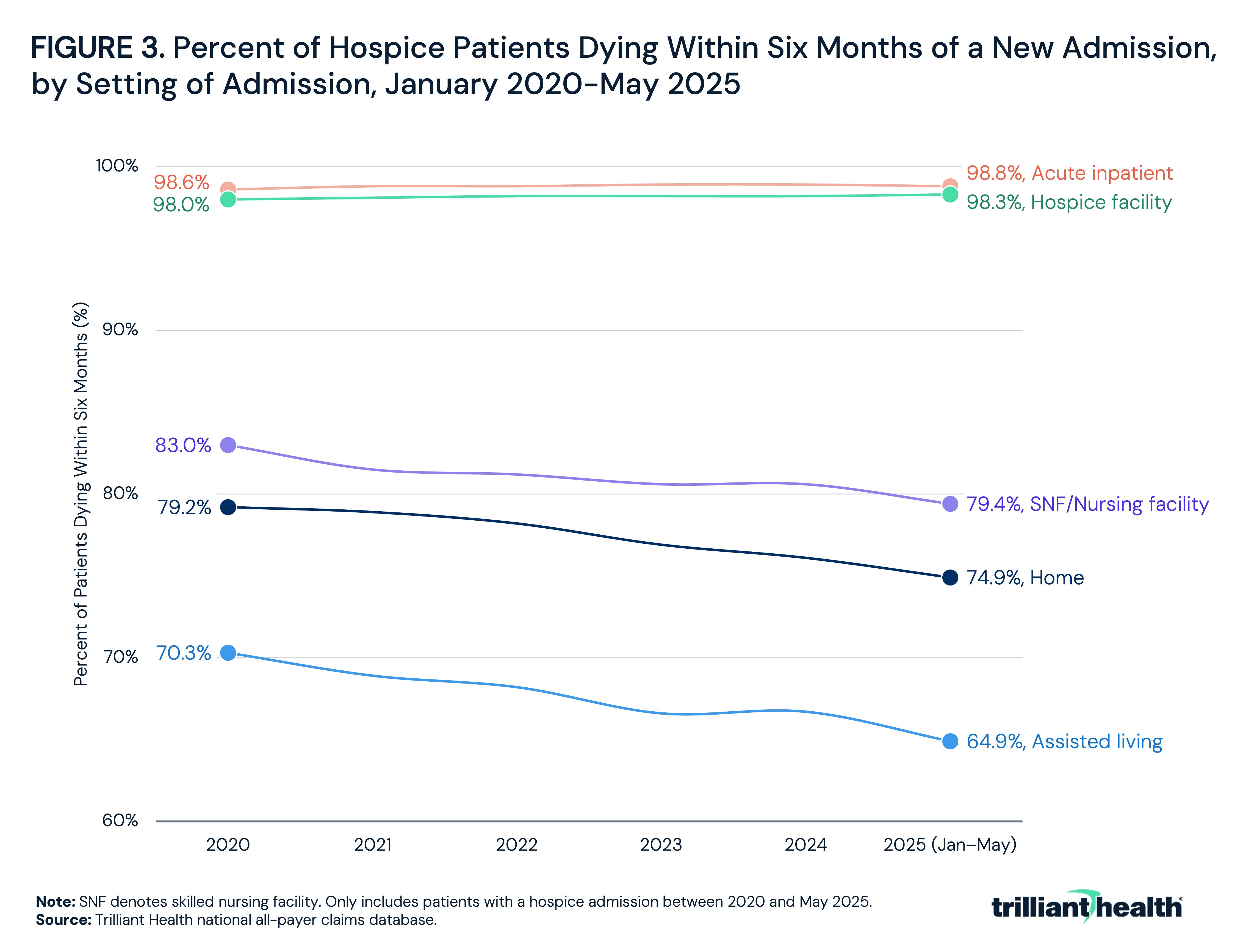
Medicare guidelines state that patients should be admitted within the last six months of their lives, but the percent of hospice patients who died within six months each year declined in every setting except acute inpatient and hospice facilities across the period (Figure 3). Assisted living hospice patients had the steepest decline in new hospice admissions dying within six months, from 70.3% of 2020 new patients to 64.9% of admissions from the first half of 2025. Within acute inpatient and hospice facility settings, rates held steady, with 98.8% of acute inpatient and 98.3% of hospice facility patients dying within six months of admission.
These lengths of stay and six-month mortality patterns align closely with patient survival rates. When examining the associated survival curves in our 2026 Trends Shaping the Health Economy report, 9.9% of assisted living patients survived two years, while just 0.5% and 0.8% of acute inpatient and hospice facility patients, respectively, survived that long.
Some variation in LOS and survival can be explained by patient differences across care settings. While home was the most common care setting for many conditions, diagnosis and hospice care setting vary widely (Figure 4). For example, 73.7% of cancer patients entered hospice at home, the highest share of any condition group, followed by liver disease and heart disease. While 44.9% of dementia patients used hospice care at home, 26.5% entered hospice in assisted living, the highest share of any condition group. Patients with more acute causes of death, like infection and brain injury, used acute inpatient hospice care more frequently, 44.2% and 20.3%, respectively.
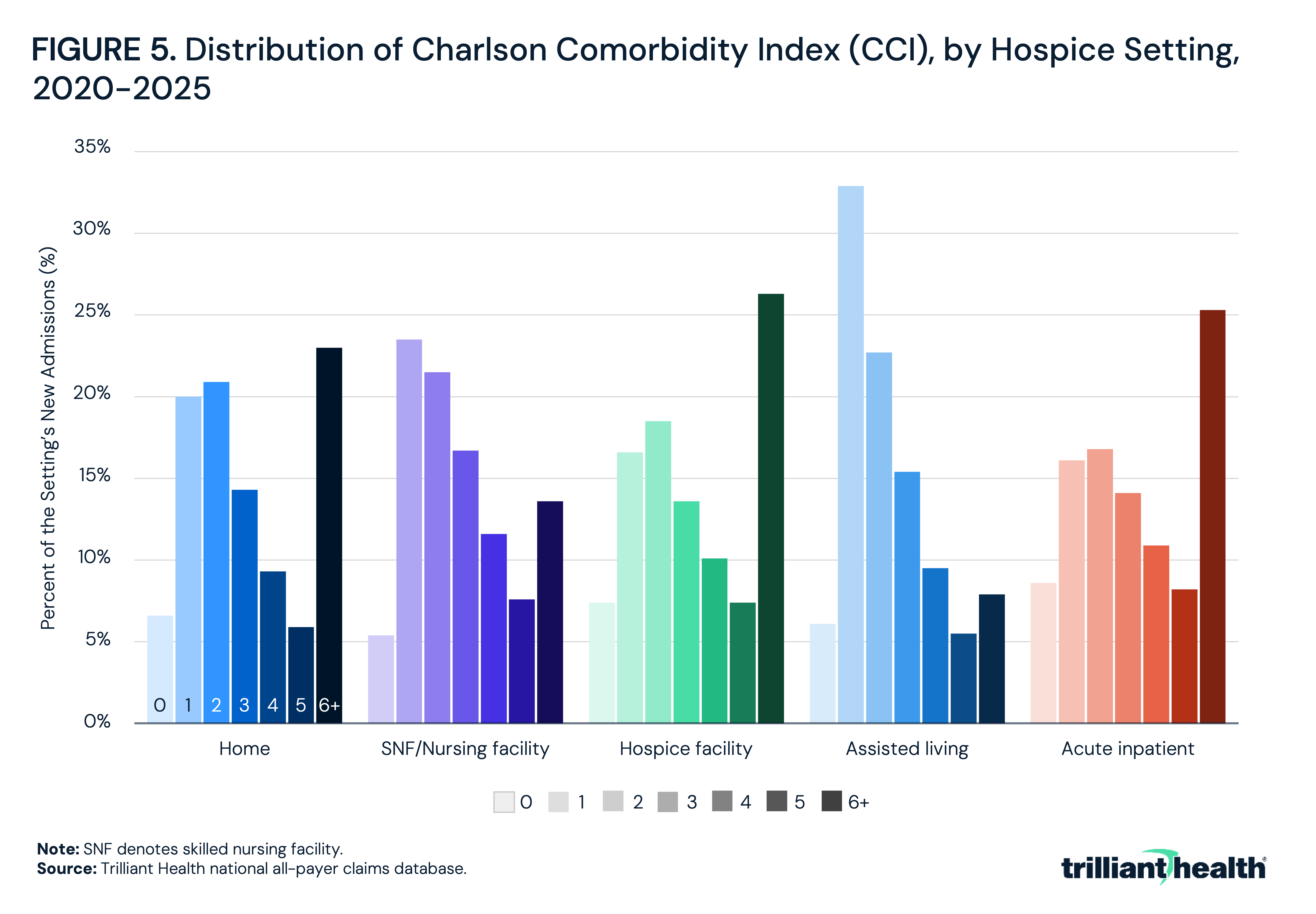
Across hospice patients, the mean CCI was 3.2, ranging from 2.5 for patients in assisted living hospice to 3.7 for patients in hospice facilities, though 26.3% of hospice facility patients had a score of 6 or higher (Figure 5). Nursing facilities and assisted living facilities had lower-complexity patients, with 32.9% of assisted living and 23.5% of nursing facility patients scoring a 1 on the index. Because some forms of terminal cancer have a CCI score as high as 6, some variation in CCI across hospice settings is likely more attributable to where cancer patients are treated than overall case mix, particularly in the home setting.
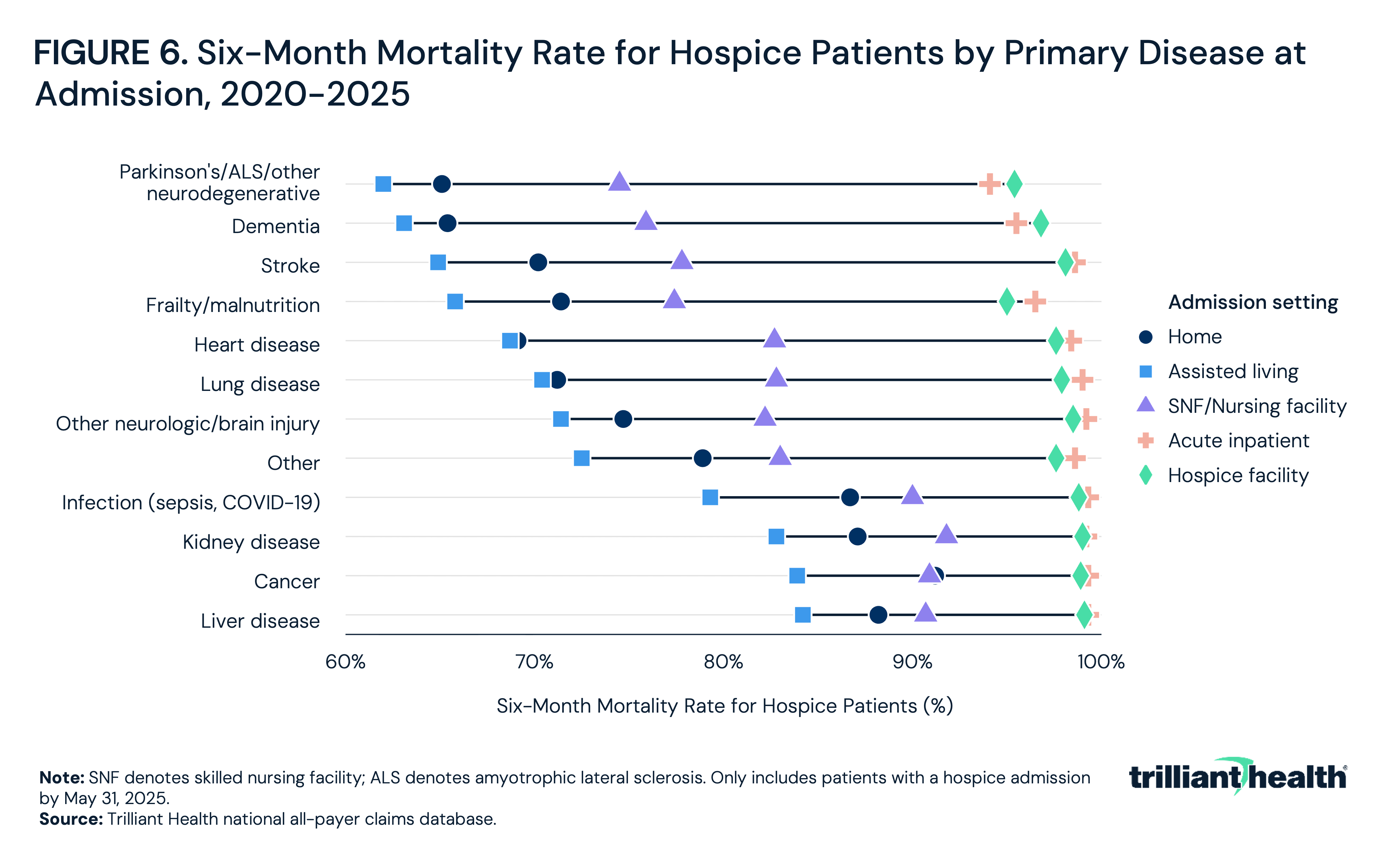
Patient outcomes also varied depending on the hospice setting for the admitting diagnosis. By setting, assisted living hospice patients had the longest stays and lowest six-month mortality rates across all disease types, even when controlling for CCI (Figure 6). Home care generally had the second-lowest six-month mortality rates, followed by nursing facilities. In contrast, acute inpatient hospice patients had the shortest stays and highest six-month mortality rates except dementia and neurodegenerative patients, where hospice facilities had slightly higher death rates. Dementia and neurodegenerative patients also had the lowest observed six-month mortality rates in assisted living settings, at 63.1% and 62.0%, respectively, and among the widest spreads in outcomes, with their hospice facility death rates coming in 33.8 and 33.4 percentage points higher, respectively. Liver disease and cancer patients had the least variability across settings, with 84.2% of liver disease patients dying within six months in assisted living and 99.3% dying in acute inpatient settings. Cancer patients ranged from 83.9% to 99.3%.
Conclusion
This analysis reveals that hospice care policy is flawed in view of its philosophical underpinnings. With the exception of 2021, fewer than half of patients died at home. Moreover, while the median LOS was 19 days across all settings, 24.2% of assisted living stays were over 180 days, and the median LOS for acute inpatients was just two days. This reveals wide variation in hospice utilization primarily attributable to the care setting, not the diagnosis.
These trends have important economic considerations. Hospice care is designed, in part, to avoid the cost of intensive EOL care, but this analysis reveals that acute inpatient hospice stays are brief and growing, indicating that an increasing number of patients may be entering the hospice system far too late. For Traditional Medicare patients, this means that Medicare is directly covering late-stage interventions as well as hospice care. On the other end of the spectrum, assisted living was the primary source of an increasing number of long hospice stays. Since long hospice stays are the largest proportion of Medicare hospice expenditures, this trend again drives the total cost of care upwards. From a quality-of-life perspective, the decreasing share of home hospice stays is contrary to presumed patient preference to die at home.
This analysis is yet another example of health economy stakeholders responding to reimbursement incentives. Hospice companies are incentivized to prioritize long assisted living hospice stays, which appears to have resulted in exactly that. Simultaneously, inpatient hospitals are not designed, financially or administratively, to prioritize hospice care, and consequently, their patients spend very few days in hospice. While Medicare has taken steps to curtail these trends, this analysis illustrates that those changes are, to date, ineffective. In both cases, patients increasingly do not spend their last days in the home, the least costly setting for hospice care.
Get the latest insights delivered to your inbox.
Was this shared with you?
Subscribe for weekly insights.
Subscribe to receive weekly insights from Trilliant Health's Research Team
Interested in citing our research? Please follow this guide.