Study Takeaways
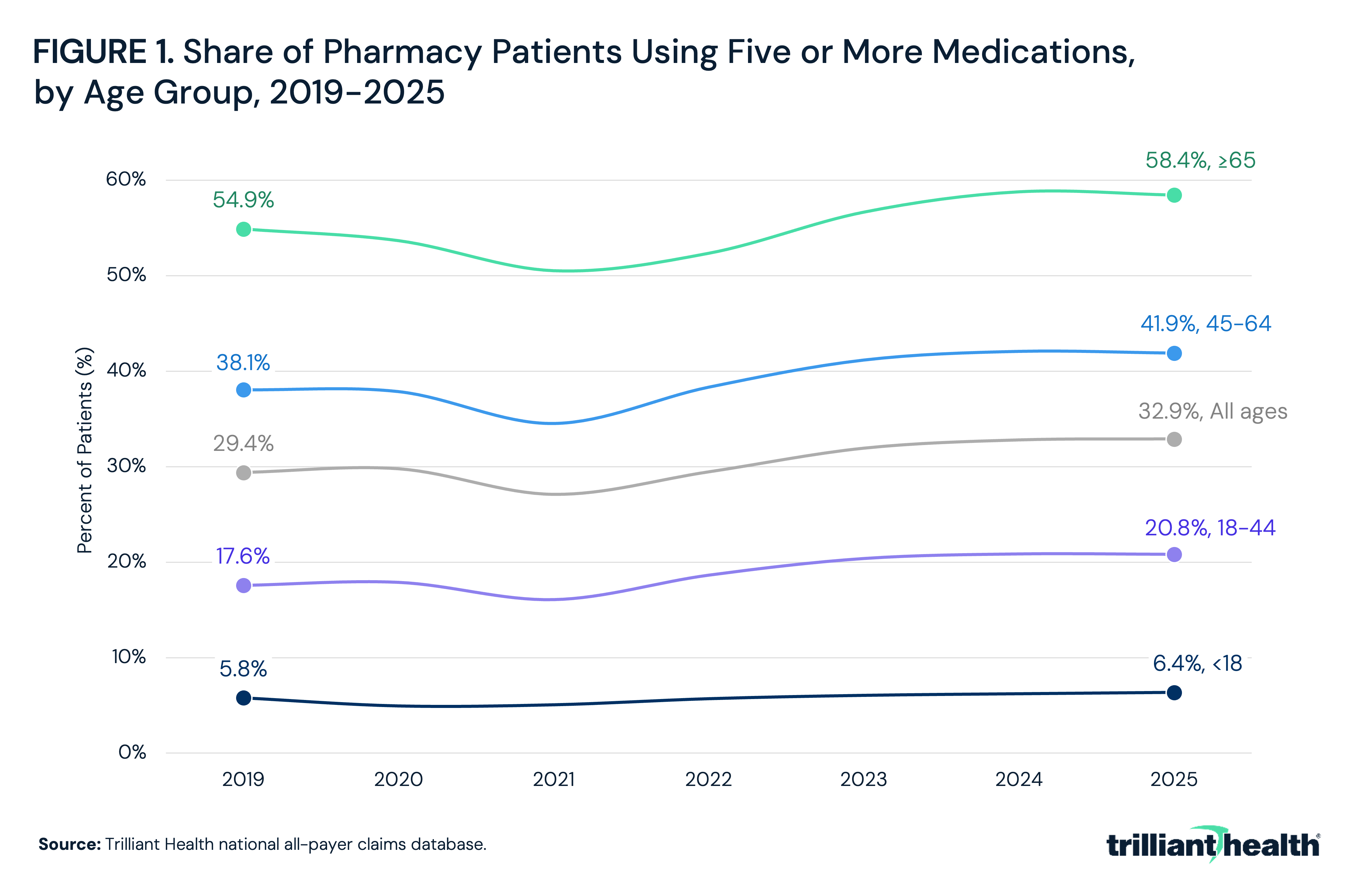
- In 2025, 32.9% of patients with at least one prescription were prescribed five or more medications.
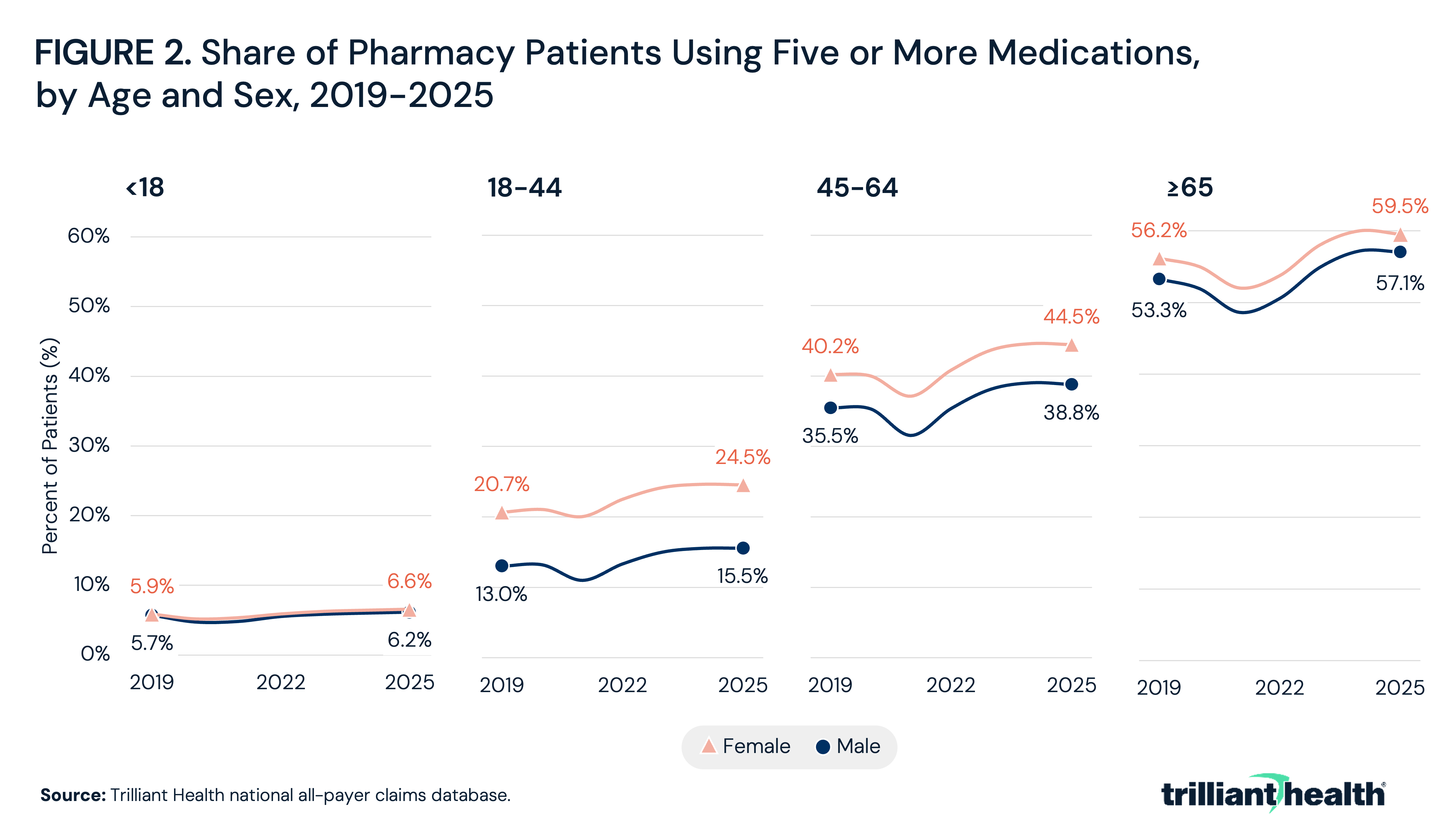
- From 2019 to 2025, polypharmacy rates were higher for women than men in every age group. The gender gap was largest for adults ages 18-44, where rates increased from 20.7% to 24.5% for women and from 13.0% to 15.5% for men.
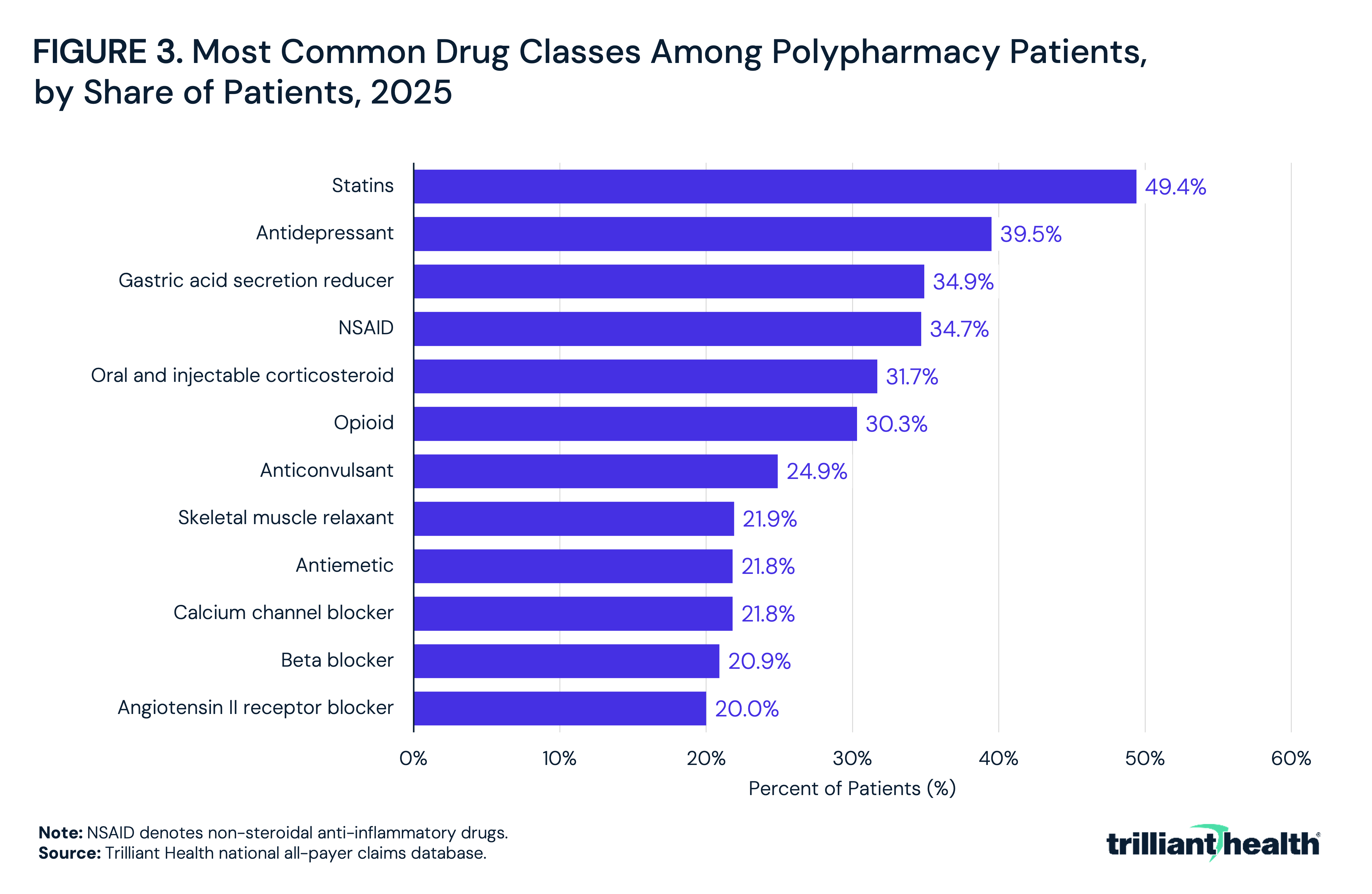
- Statins were the most common drug class among polypharmacy patients in 2025, prescribed to nearly half of patients, followed by antidepressants (39.5%) and gastric acid secretion reducers (34.9%).
Polypharmacy is defined as the regular use of five or more medications. While medication has become a central component of chronic disease management, polypharmacy raises important questions about overtreatment and patient safety. For many patients, particularly older adults managing multiple chronic conditions, polypharmacy may be necessary. However, the cumulative burden of multiple medications can introduce significant health risks, including adverse drug interactions, medication non-adherence, functional decline and increased healthcare costs. As the U.S. healthcare system increasingly emphasizes medication-based interventions, understanding the scope and implications of polypharmacy is essential for balancing therapeutic benefit with potential harm.
Background
Polypharmacy is associated with a 16% higher risk of hospitalization and a 25% higher mortality risk compared with those with one or two prescribed medications, outcomes that reflect both the complexity of underlying health conditions and the potential for medication-related complications.1 Beyond these clinical risks, polypharmacy contributes to substantial healthcare expenditures. Patients taking multiple medications face higher out-of-pocket (OOP) costs and greater likelihood of emergency department visits related to adverse drug events.2
Growth in polypharmacy reflects several converging trends in healthcare. Clinical guidelines increasingly recommend multi-drug regimens to manage prevalent chronic conditions such as diabetes, hypertension and cardiovascular disease. Additionally, the aging U.S. population is living longer with multiple comorbidities, necessitating more complex pharmaceutical management. Moreover, the growing recognition and treatment of mental health conditions has led to wider use of psychotropic medications across age groups.3
The expanding pipeline of prescription therapies is also shifting how some conditions are treated. As novel drugs enter the market, the proliferation of prescription medications will gradually imperil procedure-based medical interventions. For example, glucagon-like peptide-1 (GLP-1) receptor agonists are poised to reduce demand for bariatric surgery.4 As more conditions are managed through ongoing medication regimens rather than one-time interventions, each new therapy adds to the cumulative number of prescriptions a patient may be prescribed.
Managed holistically, polypharmacy can be clinically appropriate, but concerns persist about inappropriate prescribing, including the use of medications with limited benefit, duplication of drug classes and continuation of drugs beyond their clinical utility.5 These patterns are particularly pronounced in older adults, who are more vulnerable to drug-drug interactions and age-related changes in drug metabolism. Researchers found that over 34% of older adults taking five or more medications were using at least one potentially inappropriate medication.6
Understanding which patient populations are most affected by polypharmacy and which drug classes are most prevalent provides insight into prescribing patterns and the health status of the population, and identifies opportunities for intervention and deprescribing. This analysis examines polypharmacy trends by age and sex and the most common drug classes by age group.
Analytic Approach
National all-payer claims data were used to examine polypharmacy trends from 2019 to 2025. Polypharmacy was defined as patients prescribed five or more medications from at least five unique drug classes during the calendar year. Drug classes that target acute conditions (e.g., antibiotics) were excluded from the analysis. Polypharmacy rates were calculated as the number of polypharmacy patients divided by the total number of patients with at least one prescription.
Patient demographics were analyzed by age group (0-17, 18-44, 45-64 and 65 years and older) and sex. To identify the most common medication regimens, the analysis calculated the share of polypharmacy patients prescribed each drug class, overall and by age group in 2025. The share was calculated as the number of polypharmacy patients prescribed a given class divided by the total number of polypharmacy patients in that age group. The top 10 classes by share are shown for each age group.
Findings
In 2025, 32.9% of patients with at least one prescription were prescribed five or more medications (Figure 1). Notably, adults ages 65 and older had the highest polypharmacy rate at 58.4%, followed by 41.9% of adults ages 45-64. Individuals under age 18 had the lowest polypharmacy rate at 6.4%, followed by adults ages 18-44 at 20.8%. Across all ages, the polypharmacy rate increased from 29.4% in 2019 to 32.9% in 2025. Adults ages 45-64 had the largest absolute increase, with the polypharmacy rate increasing from 38.1% in 2019 to 41.9% in 2025. The polypharmacy rate among adults ages 65 and older increased from 54.9% to 58.4%, peaking at 58.8% in 2024. Adults ages 18-44 increased from 17.6% to 20.8%, and the pediatric polypharmacy rate increased from 5.8% to 6.4%.
From 2019 to 2025, polypharmacy rates were higher for women than men in every age group (Figure 2). For adults ages 65 and older, polypharmacy rates increased from 56.2% to 59.5% for women and from 53.3% to 57.1% for men, the smallest gender gap of the adult age groups in 2025. In the 45-64 age group, polypharmacy rates grew from 40.2% to 44.5% for women and from 35.5% to 38.8% for men over the same period. The gender gap was largest for adults ages 18-44, where rates increased from 20.7% to 24.5% for women and from 13.0% to 15.5% for men. Polypharmacy rates for individuals under age 18 increased from 5.9% to 6.6% for girls and from 5.7% to 6.2% for boys.
Statins were the most common drug class among polypharmacy patients in 2025, prescribed to 49.4% of patients, followed by antidepressants (39.5%), gastric acid secretion reducers (34.9%) and nonsteroidal anti-inflammatory drugs (NSAIDs) (34.7%) (Figure 3). Oral and injectable corticosteroids (31.7%) and opioids (30.3%) ranked fifth and sixth.
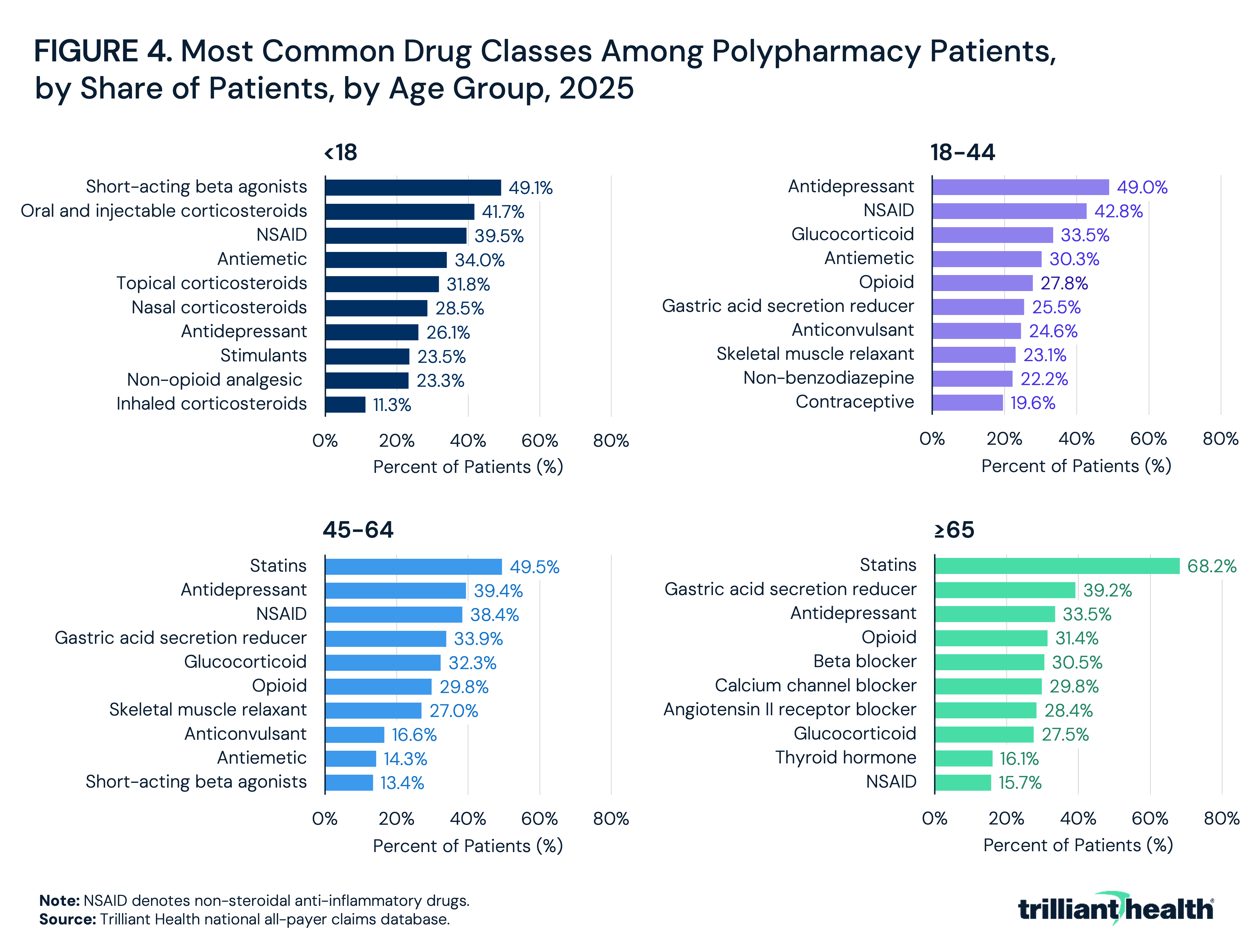
In 2025, the most common polypharmacy drug classes varied by age group. Short-acting beta agonists were prescribed to 49.1% of polypharmacy patients under age 18, followed by oral and injectable corticosteroids (41.7%) and NSAIDs (39.5%). Stimulant medications ranked eighth for children at 23.5%. For adults ages 18-44 with polypharmacy, antidepressants (49.0%) and NSAIDs (42.8%) were the most common classes. Statins were the most common class for adults ages 45-64 (49.5%) and 65 and older (68.2%). In the 65 and older age group, gastric acid secretion reducers (39.2%), antidepressants (33.5%) and opioids (31.4%) ranked second through fourth, and three cardiovascular classes (selective beta blockers, calcium channel blockers and angiotensin II receptor blockers) were each prescribed to 28.4% to 30.5% of senior polypharmacy patients.
Conclusion
The prevalence of polypharmacy across the U.S. population reflects both ongoing therapeutic innovation and the limitations of the U.S. healthcare system, which frequently defaults to pharmaceutical interventions, often for clinical conditions attributable in part or in whole to poor lifestyle decisions. For many patients, particularly those managing multiple chronic conditions, the concurrent use of multiple medications is potentially medically necessary and may improve quality of life. However, the data also reveal a healthcare system that may rely too heavily on medication therapy without sufficient attention to non-pharmacologic interventions or the cumulative risks of complex, and often fragmented, drug regimens.
The concentration of polypharmacy among older adults is especially concerning, given this population's heightened vulnerability to adverse drug events, cognitive impairment and functional decline associated with medication burden. By 2025, nearly six in 10 adults ages 65 and older were prescribed medications across at least five classes. As individuals age and become more medically complex, prescriptions are often added incrementally, sometimes by multiple disconnected providers across different care settings, without a systematic review of whether existing medications remain necessary or beneficial. This prescribing cascade can result in patients taking medications to treat the side effects of other medications, further compounding complexity and risk. The higher share of women with polypharmacy among adults ages 18-64 may reflect differences in care-seeking behavior between men and women, which could influence time to treatment and overall health outcomes for men and women.
Polypharmacy represents not only clinical challenges, but also economic ones. Retail prescription drug spending grew 7.9% in 2024 compared with 7.2% growth in total U.S. health spending. In 2024, retail prescriptions accounted for $467B, or 8.8% of the $5.3T in total U.S. health spending.7 In parallel, patients face expanding OOP liability for prescription drugs, contributing to medication non-adherence and financial strain. The downstream consequences of non-adherence, such as avoidable disease progression and preventable complications, can ultimately generate far greater costs than the medications themselves.
Polypharmacy trends also invite questions about financial incentives embedded within the healthcare system. Pharmaceutical representatives frequently engage with healthcare providers to promote new medications, offering samples, educational materials and other inducements that can influence prescribing behavior. Fee-for-service reimbursement models further reinforce this pattern by compensating providers for visits and prescriptions written rather than for outcomes achieved or medications deprescribed. These structural incentives can make it easier for clinicians to add a medication than to eliminate one, particularly when prescribing decisions occur across fragmented care settings with limited coordination.
Addressing polypharmacy utilization and appropriateness requires clinicians to adopt a more deliberate stance toward prescribing, regularly reassessing the ongoing appropriateness of each medication and engaging patients in shared decision-making about treatment goals and risk factors. Because patients with polypharmacy often receive prescriptions from multiple clinicians across care settings, prescribers and pharmacists need shared access to complete medication lists, along with clinical decision support tools that flag duplicative therapies, drug interactions and medications that may no longer be needed.
Payers can support these efforts through reimbursement models that reward comprehensive medication management rather than volume of prescriptions filled. Medicare Part D plans have been required to offer medication therapy management (MTM) programs since 2006, yet enrollment and comprehensive medication review completion rates remain low, which researchers attribute in part to a lack of financial incentives.8 Because claims capture covered prescriptions across a member's clinicians and pharmacies, payers could use them to target members with high-risk regimens for these reviews, reimburse deprescribing and create stronger incentives to use generic drugs that are at least as efficacious as on-patent therapies.
As the population ages and the number of available pharmaceutical therapies continues to expand, polypharmacy rates are likely to rise without consistent scrutiny of safety, appropriateness and efficacy. It is imperative that health economy stakeholders, particularly the Food and Drug Administration (FDA), be transparent about the subset of FDA-approved medications that deliver measurable efficacy and value, and in which populations. Likewise, it is incumbent on CMS, payers and self-funded employers to implement formularies limited to that subset of pharmaceutical therapies. Finally, it is incumbent on physicians to ensure that each drug prescribed serves an intentional and achievable clinical purpose, rather than simply the clinical path of least resistance.
Get the latest insights delivered to your inbox.
Was this shared with you?
Subscribe for weekly insights.
Subscribe to receive weekly insights from Trilliant Health's Research Team
Interested in citing our research? Please follow this guide.