Study Takeaways
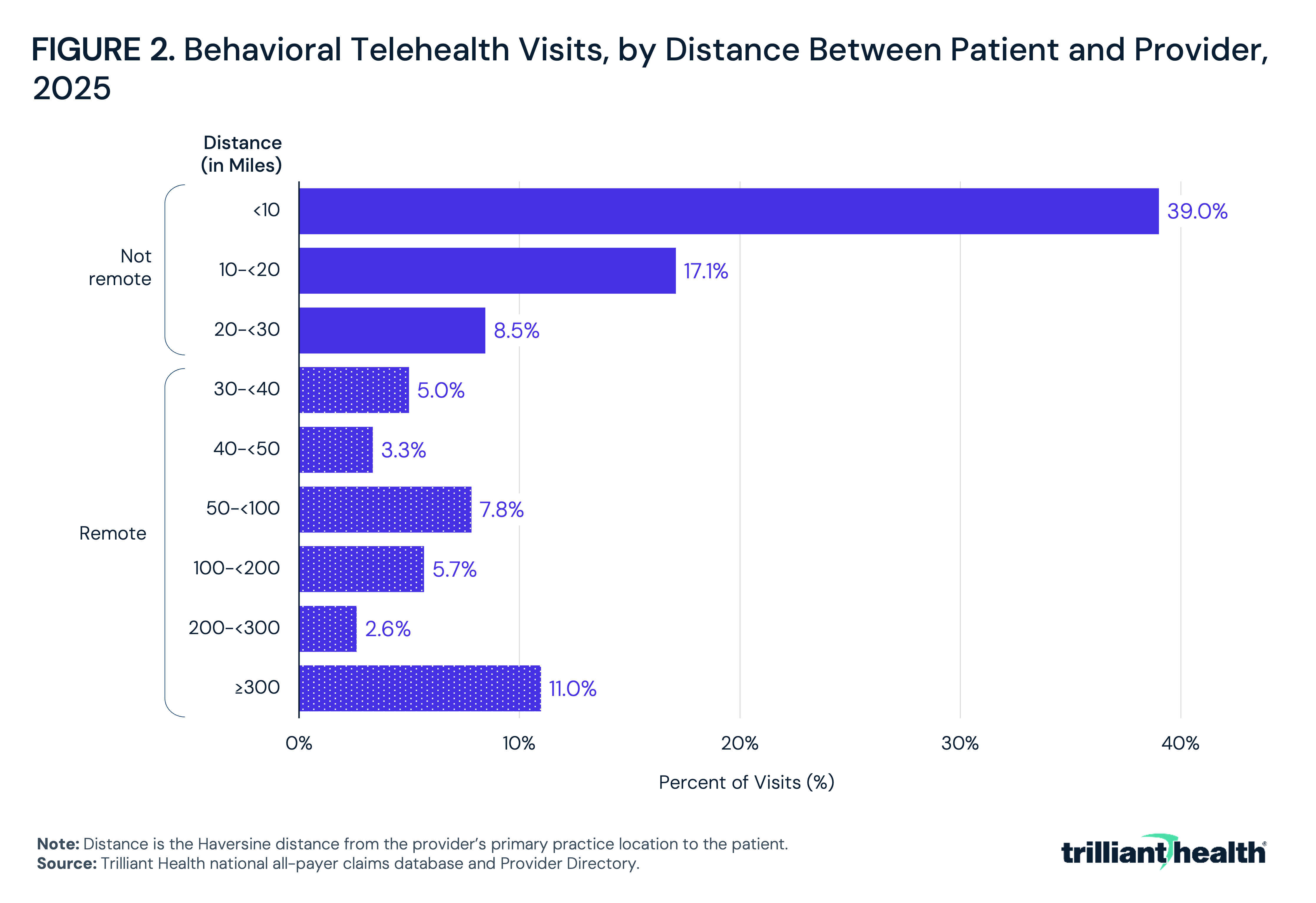
- For 64.6% of behavioral telehealth visits in 2025, the patient was located less than 30 miles from the provider’s primary practice location.
- Only 31.4% of behavioral health providers with at least one telehealth visit in 2025 had five or more patients whom they primarily treated remotely (i.e., more than 30 miles from their primary practice location) via telehealth.
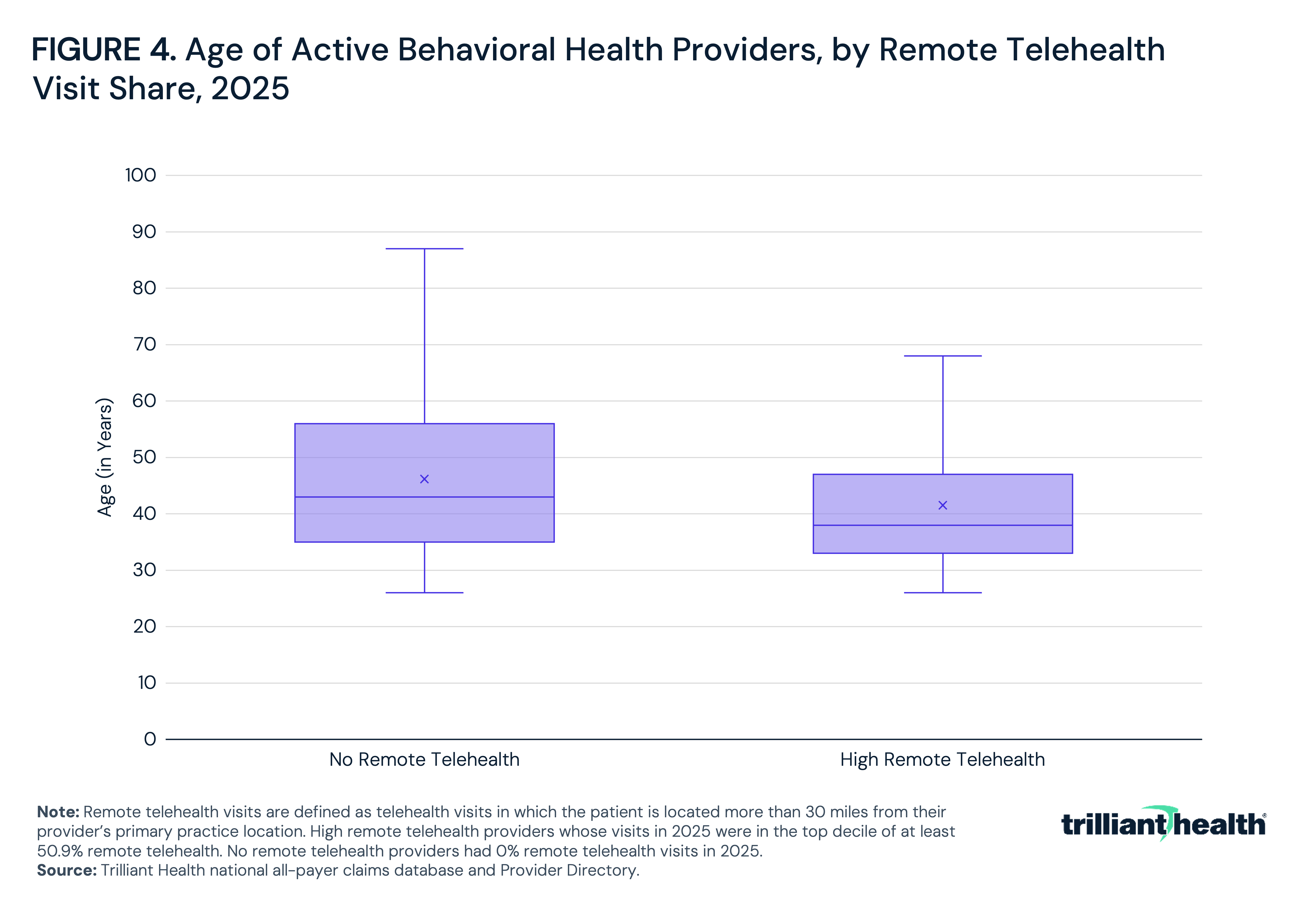
- High remote telehealth providers were 4.7 years younger, on average, than providers not treating patients remotely.
Behavioral healthcare is essential to reducing the considerable health and economic costs of mental illness in the U.S. However, unmet need is common, with 49.1% of adults with a mental illness in 2025 going without treatment for the entire year due in part to a persistent shortage of behavioral health providers, particularly in rural areas.1,2 Telehealth presents an opportunity to address this shortage and distribute care more efficiently across the U.S.
Background
About one in five U.S. adults, 54.6M people, had a mental illness in 2025.3 Demand for behavioral healthcare is expected to increase, with a projected compound annual growth rate of 0.8% from 2024 to 2030.4 However, many people who need behavioral healthcare are going without it, with 49.1% of Americans ages 18 and older with a mental illness and 84.0% of Americans ages 12 and older who needed substance use treatment not receiving treatment in 2025.5
The consequences of unmet behavioral health need are significant for the individual as well as society. Mental illness is associated with an increased risk of physical health conditions, including circulatory, endocrine, pulmonary and gastrointestinal comorbidities.6 Mortality is another risk linked to mental illness, with one study attributing 14.3% of deaths globally to mental illness.7 Economic costs also arise from unmet behavioral health need. In 2024, untreated mental illness cost $477.5B in excess healthcare utilization, lost productivity, premature death and chronic illness.8
Behavioral health provider undersupply is a key driver of unmet need. The inability to find a healthcare professional or treatment program was the reason that 43.2% of adults with unmet mental healthcare needs went without treatment in 2025.9 As of 2026, 155M Americans live in a designated mental health professional shortage area, and 10 out of 13 behavioral healthcare professions are projected to have an inadequate provider supply by 2038.10,11 These shortages are especially acute in rural areas. Although 62.3% of all U.S. counties are rural, 85% of counties designated as mental health professional shortage areas are rural.12,13 In 2021, there were 87.7 counselors and 15.8 psychologists per 100,000 residents of rural counties, compared to 131.2 counselors and 39.5 psychologists per 100,000 residents of urban counties. Likewise, rural counties had 3.5 psychiatrists per 100,000 residents in 2019, compared to 13.0 in urban counties.14 These disparities have persisted into 2025, with 33.7 youth behavioral health clinicians per 100,000 youth in rural counties compared with 68.9 in urban counties.15
Telehealth has been proposed as a way to extend behavioral healthcare to underserved areas.16 Although telehealth use has declined since the end of the COVID-19 pandemic, utilization of telehealth for behavioral healthcare has persisted, and 65.6% of all telehealth visits were related to behavioral health in 2024.17 In response to this popularity, some state legislatures have adopted policies designed to secure insurance coverage for behavioral telehealth that is equivalent to coverage for in-person healthcare. As of October 2026, 41 states mandate that state-regulated private payers (e.g., individual market plans, fully insured employer plans) cover telehealth when the same service would be covered in person, and about half of states mandate full payment parity between in-person and telehealth encounters.18 Behavioral telehealth is now a permanent Traditional Medicare benefit. However, a waiver of Medicare’s requirement that behavioral telehealth patients have an in-person visit within six months of starting treatment with a provider is set to expire December 31, 2027.19
Recent research has evaluated the effectiveness of these policies, with the counterintuitive finding that the rural-urban disparity in behavioral healthcare utilization has grown since 2020, when telehealth became a common method of accessing care.20 Furthermore, rural patients were approximately 8.3 percentage points less likely to have any telehealth utilization than urban patients between 2020 and 2024, even when accounting for differences in internet access and sociodemographic characteristics.21 As such, it is important to understand the extent to which telehealth is connecting patients and providers in different locations and who is providing these remote behavioral telehealth services.
Analytic Approach
This analysis used Trilliant Health’s national all-payer claims database and Provider Directory to examine behavioral telehealth practice patterns in 2025. First, the analysis calculated the share of each provider’s behavioral health visits that occurred via telehealth. Next, telehealth visits were examined by distance between the patient and the provider’s primary practice location.
A telehealth visit was designated as remote if the distance exceeded 30 miles, a threshold derived from the Centers for Medicare & Medicaid Services’ rural outpatient clinical behavioral health network adequacy standards for qualified health plans.22 Using this definition, the share of each provider’s behavioral health visits that were considered remote telehealth was calculated. The same approach was applied at the patient level, and a patient was classified as a remote telehealth patient if more than 50% of their 2025 behavioral health visits with a provider occurred via remote telehealth.
This analysis also compared the high remote telehealth providers and no remote telehealth providers in terms of age and specialty. "High remote telehealth providers" were defined as providers in the top decile of remote behavioral health visit share in 2025, and "no remote telehealth providers" did not have any remote behavioral health visits.
One limitation of this approach is that it does not include visits that are not billed through insurance. Since telehealth visits are more likely to be self-paid, this analysis may underestimate the share of visits that occur via telehealth.23 Additionally, some addresses affiliated with National Provider Identifiers reflect a large national or regional healthcare company that employs the provider, rather than the provider’s primary practice location. To address this potential location mismatch, providers billing at an address shared by more than 100 providers at a company that primarily engages in telehealth were removed from the remote telehealth analyses.
Findings
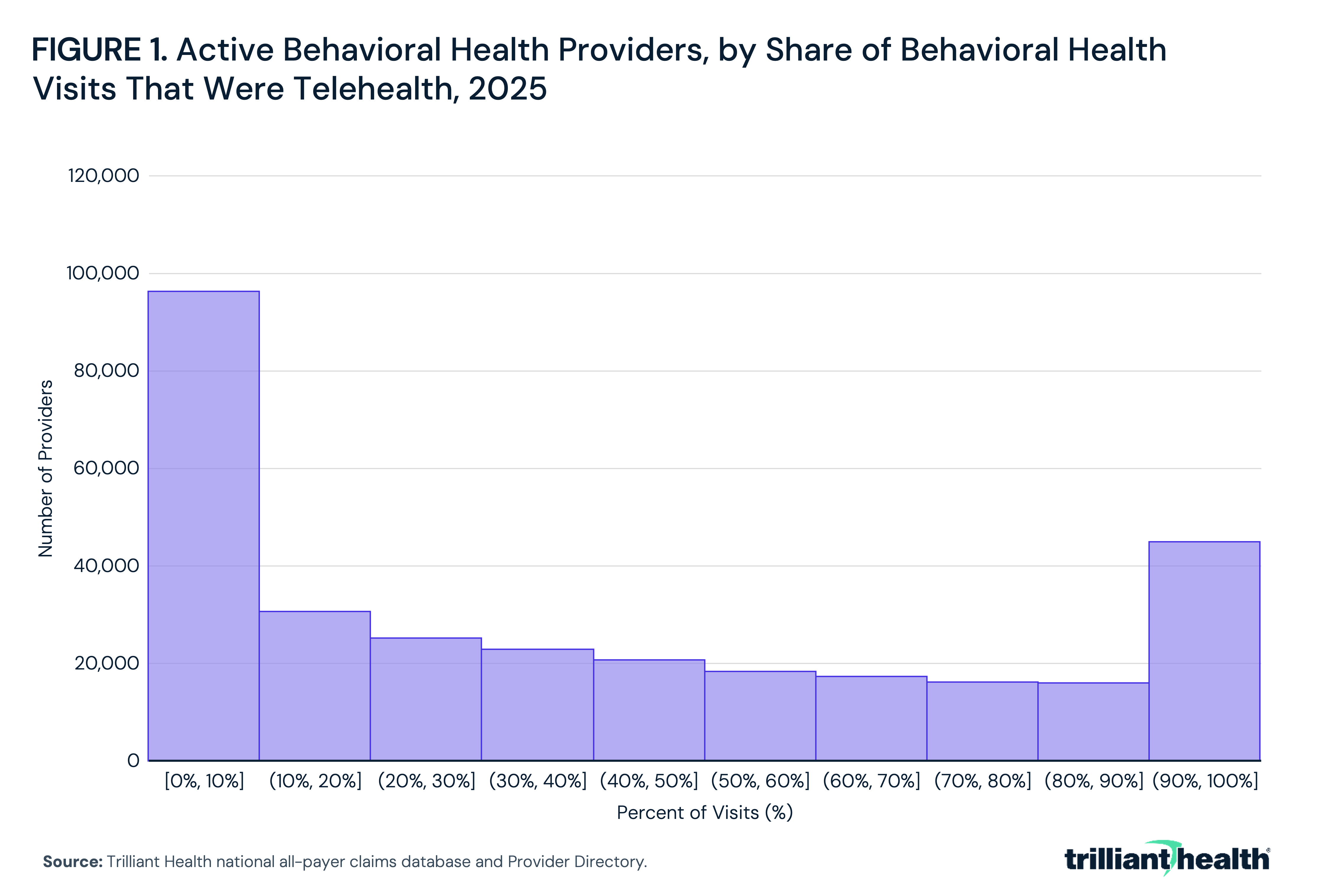
In 2025, the median behavioral health provider delivered 30.9% of visits via telehealth (Figure 1). The provider distribution of telehealth visit share was bimodal, with providers concentrated at the extremes of delivering almost no visits or nearly all visits via telehealth. On the lower end, 25.0% of providers performed less than 5% of their visits via telehealth, and 13.2% of providers did not have any telehealth visits. On the upper end, 11.7% of providers delivered 95% or more of their visits via telehealth, and 5.6% exclusively provided care via telehealth.
Across all behavioral telehealth visits in 2025, the median distance between the patient and the provider's primary practice location was 15.4 miles. In examining the distribution, more than a third (39.0%) of behavioral telehealth visits took place less than 10 miles from the primary practice location, and 64.6% occurred locally, less than 30 miles away (Figure 2). Another 16.1% occurred between 30 and 100 miles away. Just 11.0% took place 300 miles or more from the provider’s practice location.
Relatedly, the distribution of the share of providers’ 2025 visits that took place remotely (i.e., more than 30 miles from their primary practice location) was highly skewed, with a median of 3.6% and an average of 14.9% (Figure 3). Fewer than 1% of providers delivered all 2025 visits via remote telehealth, compared to the 31.6% who did not conduct a single remote telehealth visit. Likewise, the median share of a behavioral health provider’s patients whom they primarily treated via remote telehealth was 3.7%, and this distribution was also highly skewed (Figure 3).
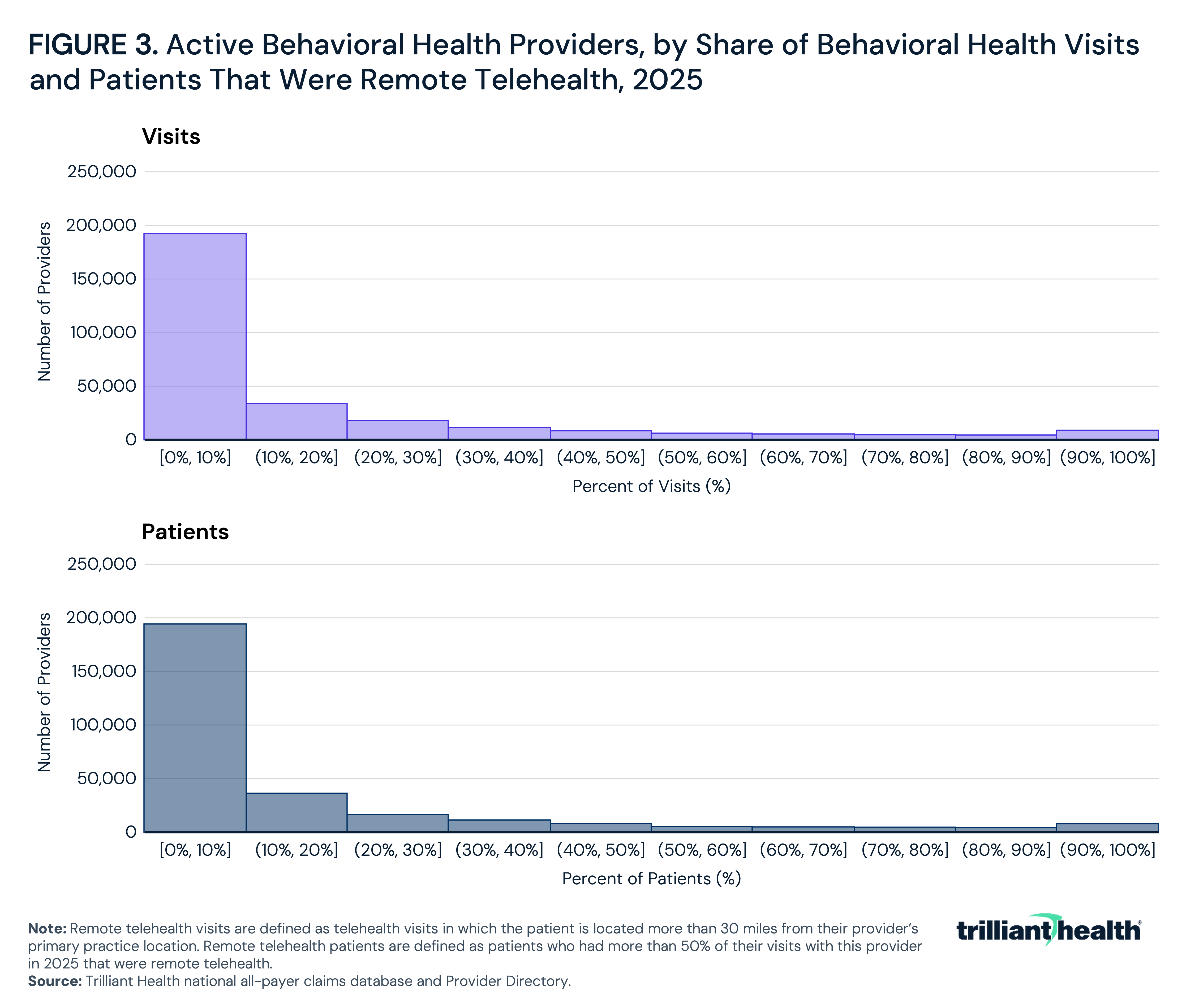
Among providers who had one or more telehealth visits in 2025, 69.9% had at least one remote telehealth patient, and 31.4% had at least five remote telehealth patients. In other words, 68.6% of providers with some telehealth practice had fewer than five remote telehealth patients.
High remote telehealth providers were those in the top decile with at least 50.9% of their 2025 visits taking place via remote telehealth. The no remote telehealth providers accounted for 31.6% of providers. The average age of the high remote telehealth providers was 41.5 years, compared with the average of 46.2 years for no remote telehealth providers (Figure 4).
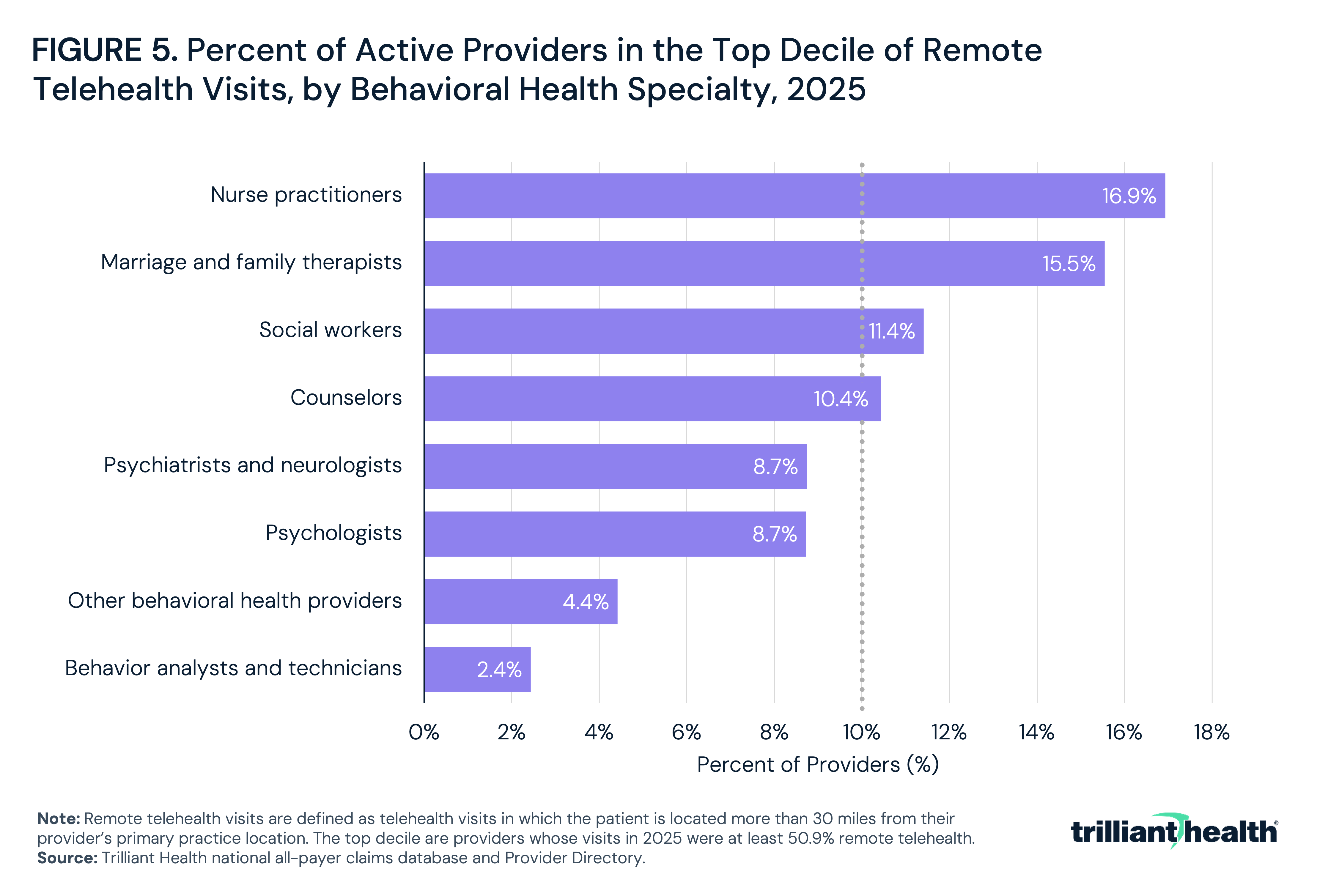
Additionally, some specialties were overrepresented among the high remote telehealth providers. Among these, nurse practitioners (NPs) had the highest representation, with 16.9% in the top decile, followed by marriage and family therapists (15.5%), social workers (11.4%) and counselors (10.4%) (Figure 5). Psychologists and psychiatrists were less likely to be among the top decile of remote telehealth providers, at 8.7% each, and only 2.4% of behavior analysts and technicians were in this group.
Conclusion
This analysis found that although 86.8% of behavioral health providers delivered at least one telehealth visit in 2025, the patient was located less than 30 miles from the provider’s primary practice location for 64.6% of visits. The median behavioral health provider treated just 3.7% of their patients primarily via remote telehealth, and only 31.4% of providers who used telehealth had five or more remote telehealth patients. These patterns suggest that telehealth primarily serves as a convenient way for patients who are already close to their provider to access care, rather than a means of connecting patients with providers outside their community.
Given the documented cost of untreated mental illness and projected increase in demand for services, increasing access to behavioral healthcare, especially for the 155M Americans living in a mental health professional shortage area, is paramount for policymakers and employers.24 The urgent question is how to incentivize a greater supply of behavioral healthcare, particularly telehealth services that could reach patients who lack local providers.
Telehealth adoption has long been constrained by regulatory frameworks, including licensure requirements that restrict providers’ ability to treat patients in other states. Surveyed behavioral health providers cited cross-jurisdictional practice as a central challenge to continuing telehealth post-pandemic.25 Although some states have joined multistate behavioral health compacts making it possible for providers to treat out-of-state patients via telehealth, application and renewal costs for providers may disincentivize participation.26,27 Because licensure has traditionally been regulated by states, expanding cross-state practice will likely depend on states broadening reciprocity agreements and reducing the cost of participation for providers.
Reimbursement incentives may also lead providers to engage in less remote behavioral telehealth. Payment parity is uneven, with just half of states requiring commercial insurers to reimburse telehealth at the same rate as in-person services.28 Self-funded employers, which cover 71% of Americans with employer-sponsored insurance, could unilaterally choose to reimburse telehealth and in-person care equally, and employers with fully insured plans could request that their carriers do the same.29 Although this may raise costs in the short term, without intervention, untreated mental illness is projected to cost $17.5B in emergency department overutilization and $76.0B in excess chronic physical health conditions in 2040.30
Moreover, rural Americans living in mental health professional shortage areas are often covered by Medicaid, which generally offers lower reimbursement rates than commercial insurance plans, Medicare and self-pay.31,32,33 Only 18% of psychologists accepted patients in managed Medicaid programs, and 16% accepted fee-for-service Medicaid in 2024.34 Given the economic burden created by inadequate behavioral health treatment, state legislatures could act to incentivize increased provider participation in remote behavioral telehealth.
Counterproductively, current Federal payment policy will soon disincentivize behavioral telehealth absent congressional action. Beginning in 2028, Traditional Medicare will require behavioral telehealth patients to have an in-person visit within six months of starting treatment, which will further limit remote care access for patients who lack the time, ability or means to travel.35
Technology alone cannot resolve longstanding challenges to improving population health. For telehealth to maximize its potential as a tool to improve health and lower costs, policymakers must first address the barriers to its adoption.
Get the latest insights delivered to your inbox.
Was this shared with you?
Subscribe for weekly insights.
Subscribe to receive weekly insights from Trilliant Health's Research Team
Interested in citing our research? Please follow this guide.
