Counterpoint
Hal Andrews | January 7, 2026Lost in the recent cinematic focus on the witches in The Wizard of Oz is the journey of the Cowardly Lion, the Scarecrow and the Tin Man. Far too many health economy stakeholders resemble these three characters, lacking some combination of courage, intelligence or heart. What little hope I have left that the U.S. healthcare system can heal itself is my belief that most health economy stakeholders have a heart but lack the desire to think critically about facts and the courage to make decisions based on them. So, like Lloyd Christmas, I am telling you there’s a chance.
Beyond the dearth of critical thinking and abundant “go along to get along” mindset that characterizes most health economy stakeholders is a lack of focus. That lack of focus is particularly obvious with respect to Federal and state healthcare policymakers, who seem incapable of focusing their immense resources on productive change.
Along with the characters in The Wizard of Oz, health economy stakeholders also bring to mind Curly from City Slickers, who believed that “the secret of life” is “one thing.” Like Curly’s mentees, health economy stakeholders have the “same problems” and “spend about 50 weeks a year getting knots in your rope” focusing on the tyranny of the urgent instead of what Dr. Martin Luther King, Jr. called the “fierce urgency of now.”
In that same speech, Dr. King noted this:
“In this unfolding conundrum of life and history, there is such a thing as being too late. Procrastination is still the thief of time. Life often leaves us standing bare, naked, and dejected with a lost opportunity.”1
In the hope of avoiding such an outcome, I offer New Year’s resolutions for three healthcare policymakers from the Department of as Obvious as the Nose on Your Face:
For Congress, the courage to exercise their Constitutional power over patents to do the one thing that would bend the cost curve more than anything – crack down on patent extensions for brand-name drugs.
Under 35 U.S.C. § 154, the term of a patent grant is 20 years, subject to extension of up to five years under the Hatch-Waxman Act.
If a picture is worth a thousand words, these four pictures are worth billions of dollars:
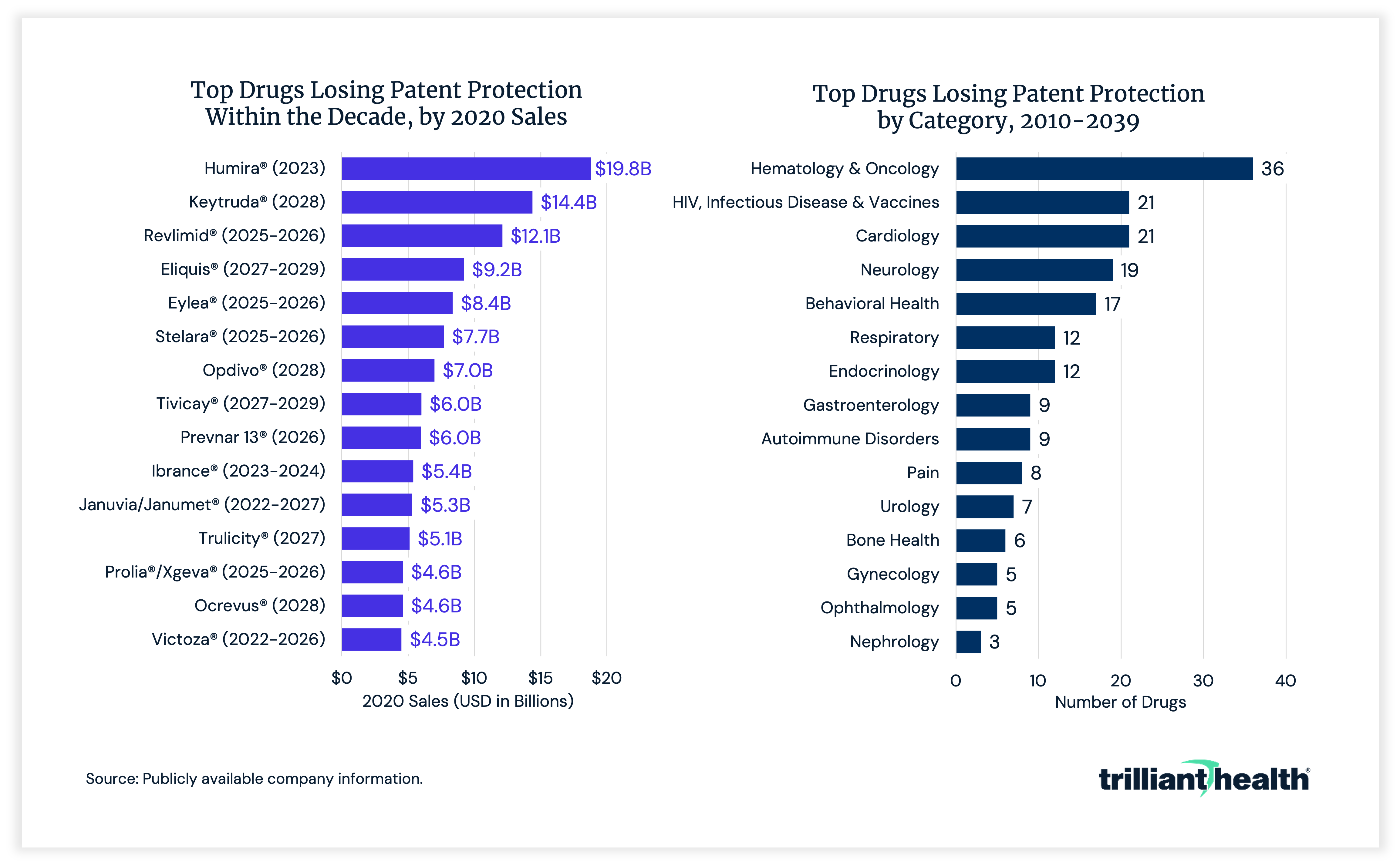
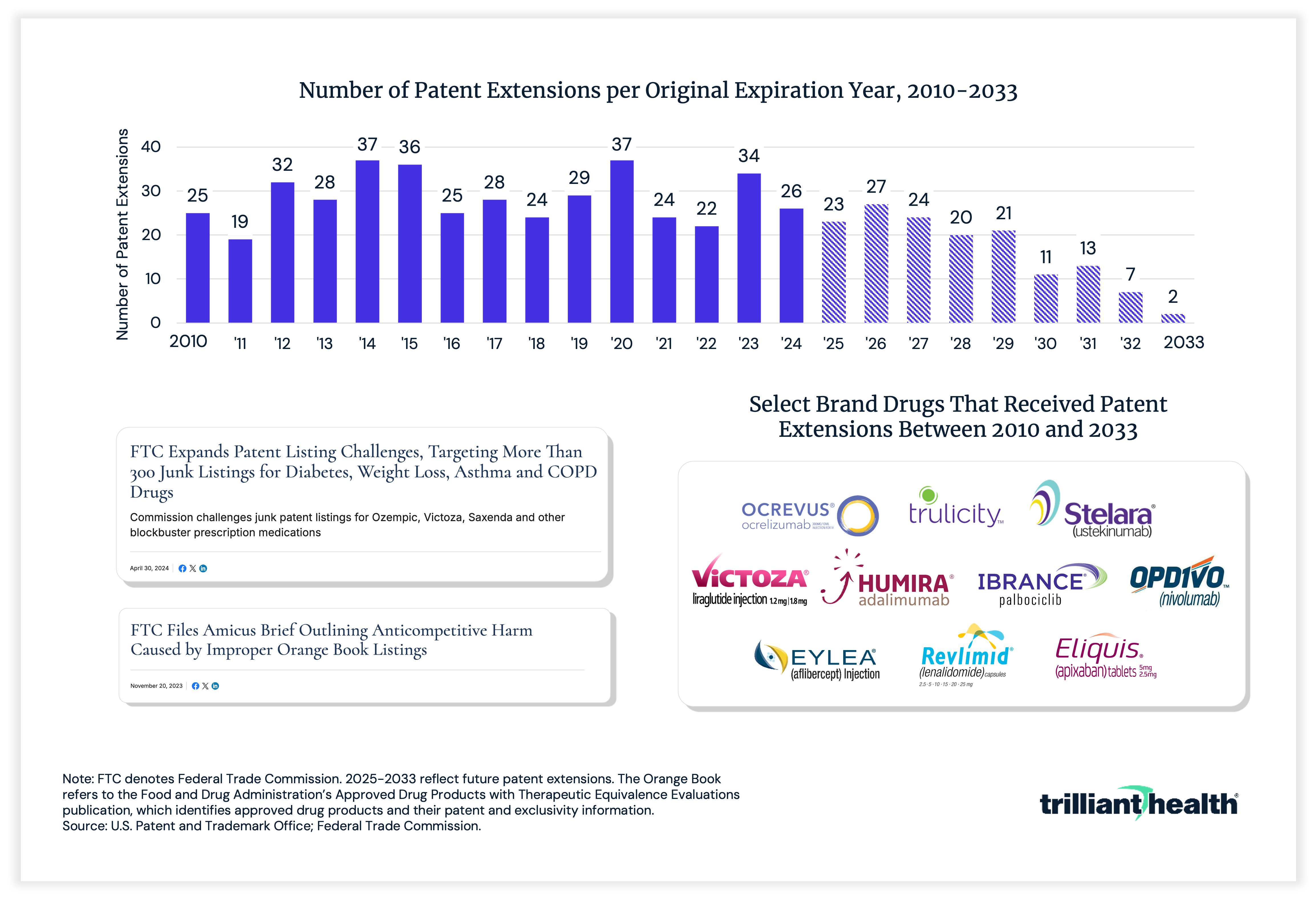
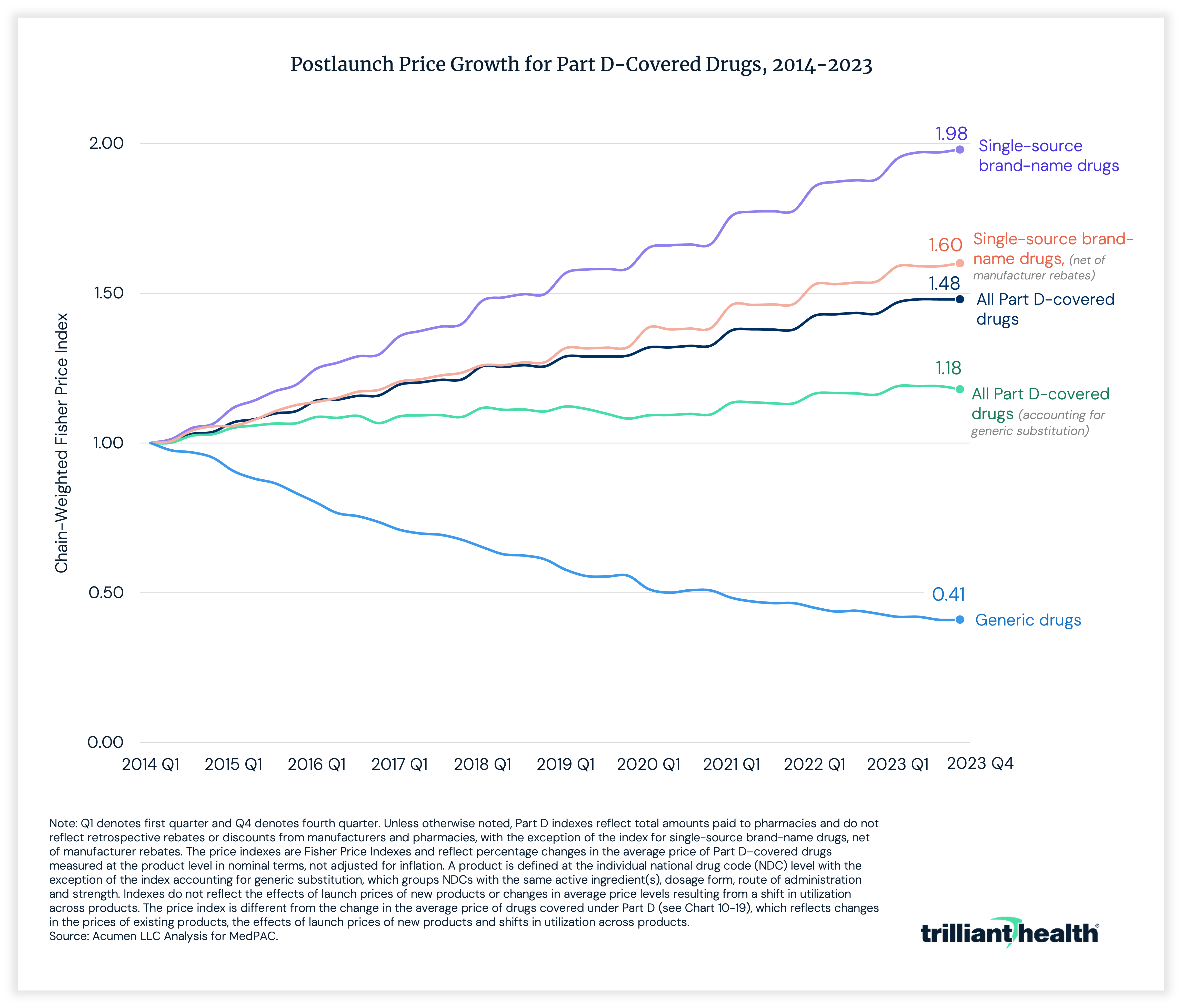
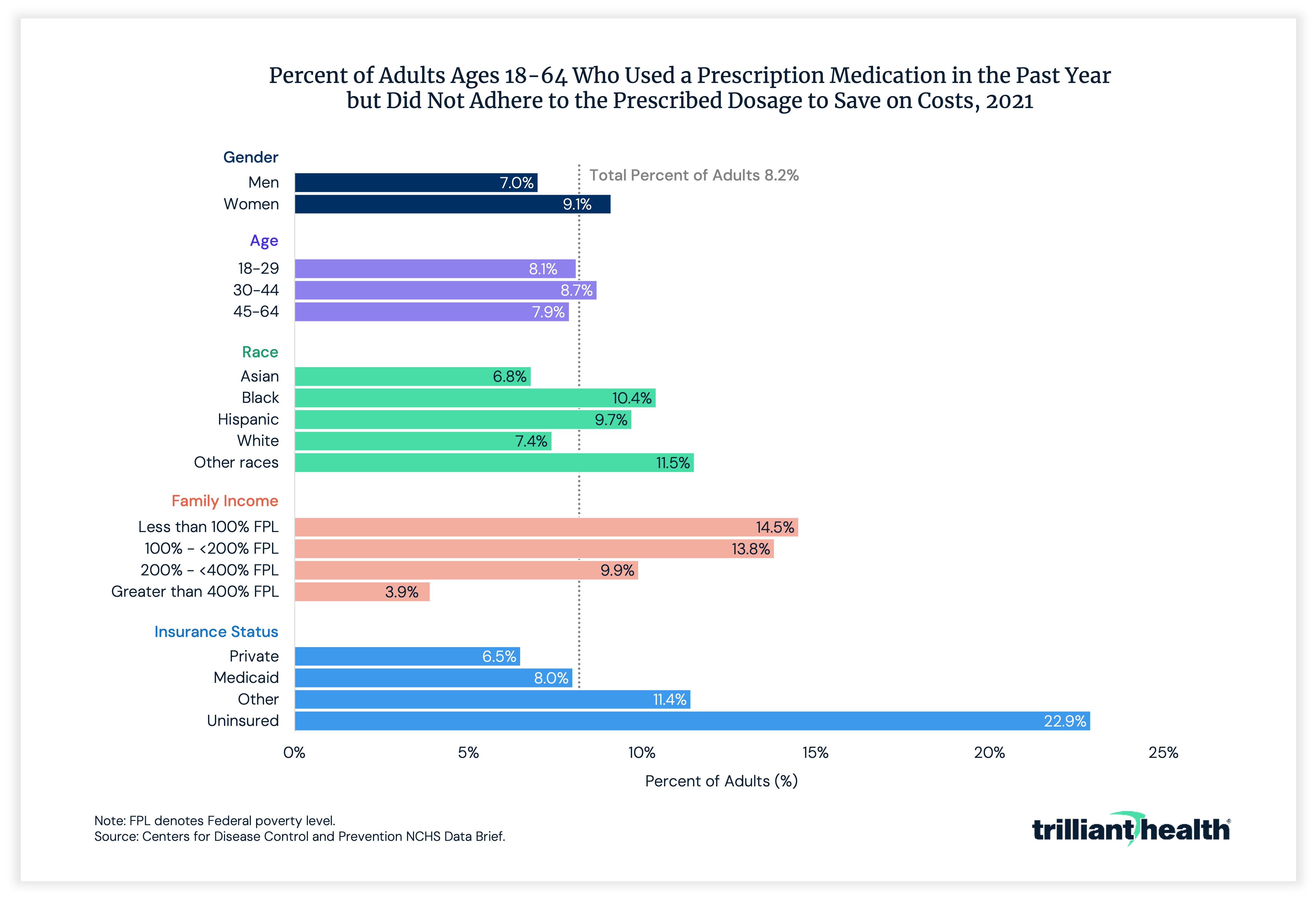
The volume of Executive Orders from the current Trump Administration targeting pharmaceutical costs is the latest evidence that Congress has cowardly abdicated its Article I, Section 8 powers, and spending a few minutes reviewing campaign contributions from the pharmaceutical industry to members of Congress might help you understand why. America, and Americans, deserve better, an observation not lost on either the Biden or Trump Administrations.
Is KEYTRUDA® a miraculous drug for which Merck deserves patent protection under U.S. law? Absolutely. Is it “obvious” as a matter of patent law, and even a basic awareness of medicine, that a drug administered intravenously might be administered subcutaneously, a simpler delivery mechanism? Absolutely. So, while it is inarguable that Merck deserves patent protection for the intravenous version of KEYTRUDA®, it is at least illogical, if not immoral and illegal, to extend patent protection for the subcutaneous version, even as it is economically rational for Merck to seek it.
The most obvious question for Congress is this: Why aren’t GLP-1s, a drug class whose mechanism was first theorized in 1906, discovered in 1984, patented in 1995 and approved by the FDA for Type 2 diabetes in 2005, universally generic?
For CMS, the intelligence to design a program to deliver coordinated and less costly care for the costliest population of all: dual-eligibles.
In 2022, national health expenditures were $4.5T, of which $548.8B was spent on “combined Medicare and Medicaid spending on individuals who were dually eligible for Medicare and Medicaid.”2,3
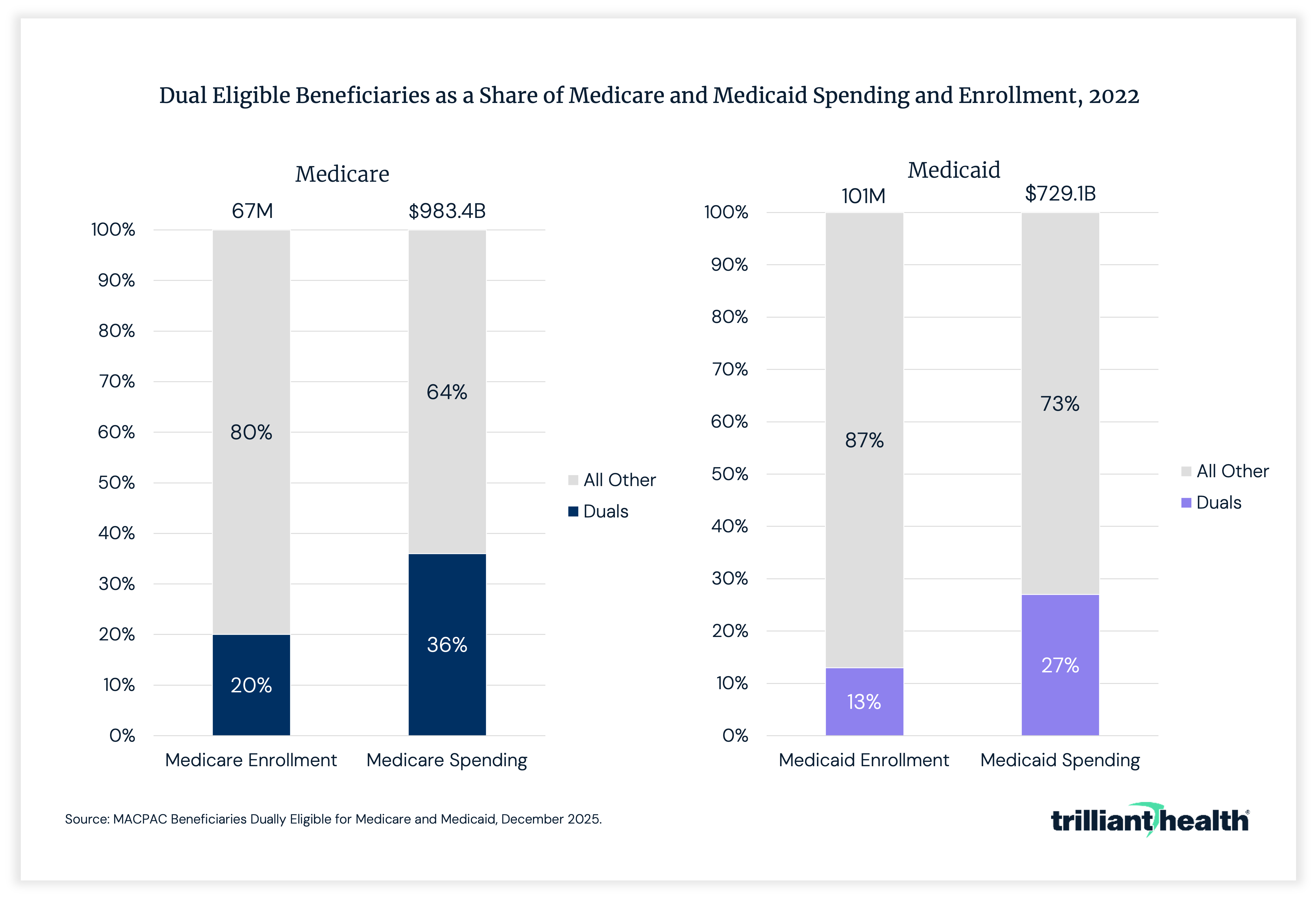
According to MACPAC, “13.6 million individuals were dually eligible for Medicare and Medicaid benefits in at least one month of CY 2022,” and the Census Bureau estimated the U.S. population to be 333.3M in December 2022.4,5 Therefore, 4.1% of the population consumed 12% of national health expenditures, an amount exceeding the entire GDP of each of Ireland, Israel and the United Arab Emirates in 2022.6
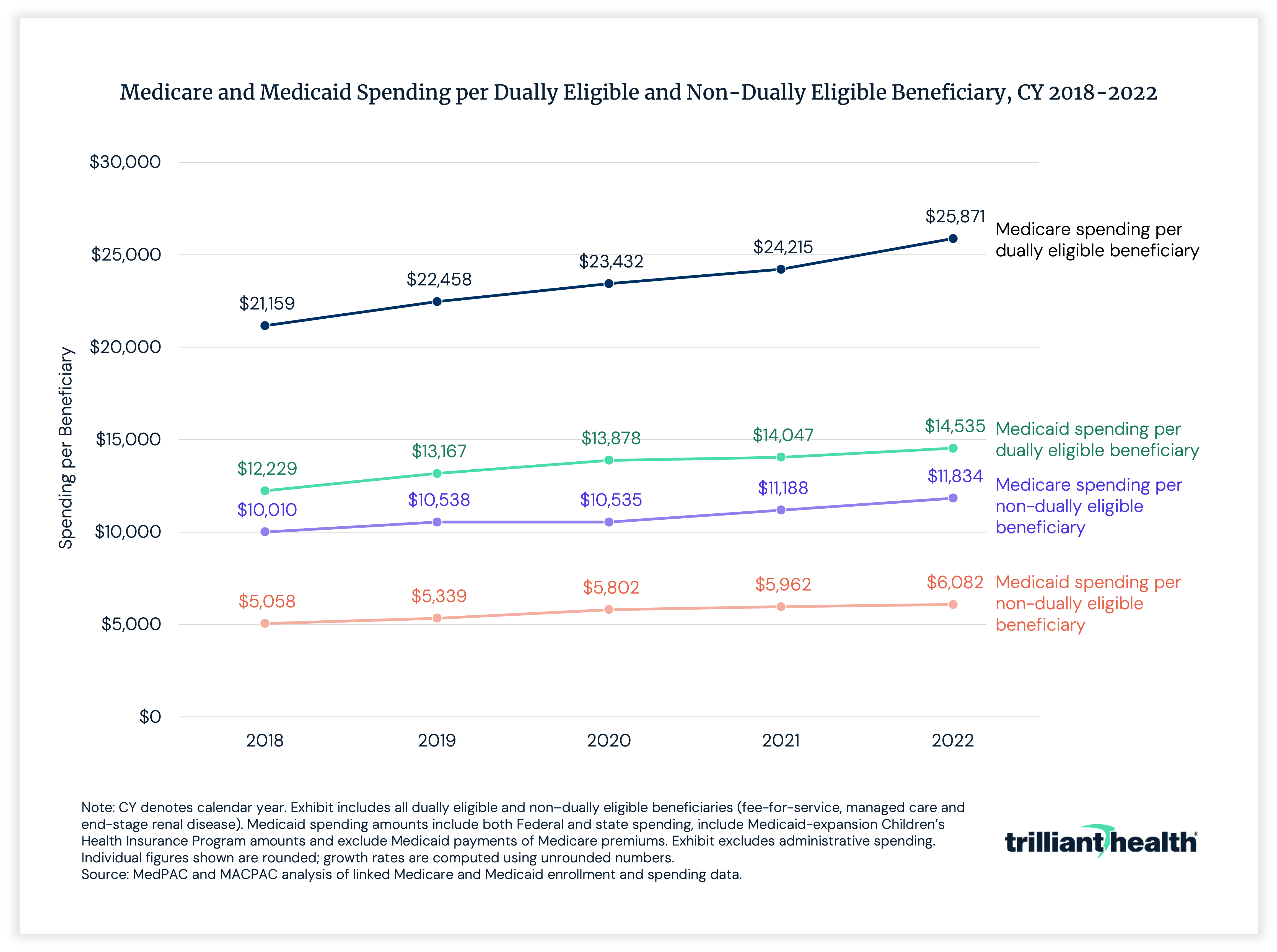
On a per capita basis, dual-eligible spending looks like this:
CMS knows a great deal about the dual eligible population:
“Policymakers have expressed particular interest in dually eligible beneficiaries because of the relatively large expenditures by both Medicare and Medicaid for this relatively small group of individuals. Concerns have also been raised as to how the existence of separate programs creates barriers to coordination of care and the extent to which lack of coordination increases costs and leads to poor health outcomes…
The data book presents information on the demographic and other personal characteristics, expenditures, and health care utilization of individuals who are dually eligible for Medicare and Medicaid coverage. Dually eligible beneficiaries receive both Medicare and Medicaid benefits by virtue of their age or disability and low income. This population is diverse and includes individuals with multiple chronic conditions, physical disabilities, and cognitive impairments such as dementia, developmental disabilities, and mental illness. It also includes some individuals who are relatively healthy.”7
Despite knowing everything about the dual eligible population, Federal and state governments manage this population haphazardly. A disinterested observer reading MACPAC’s analysis might conclude that healthcare policymakers are more concerned about how to finance healthcare services for dual eligibles rather than ensuring they receive appropriate care in a coordinated fashion.
- "In CY 2022, a majority of individuals who were dually eligible for Medicare and Medicaid services (51 percent) were exclusively enrolled in managed care (either a Medicare Advantage (MA) plan or other type of Medicare health plan).
- Dually eligible beneficiaries were more likely to be exclusively enrolled in managed care than non–dually eligible Medicare beneficiaries (51 percent vs. 40 percent).
- Partial-benefit dually eligible beneficiaries were more likely to be exclusively enrolled in managed care than full-benefit beneficiaries (66 percent vs. 45 percent), while full-benefit beneficiaries were more likely to be in Medicare FFS only (42 percent vs. 27 percent).
- Among those exclusively enrolled in managed care, more than half of dually eligible beneficiaries (58 percent) were enrolled in D–SNPs, which are specialized MA plans that serve dually eligible beneficiaries exclusively. Full-benefit dually eligible beneficiaries were more likely to enroll in D–SNPs, while those with partial-benefit dual eligibility were more likely to enroll in other types of plans.
- Most individuals dually eligible for Medicare and Medicaid services in CY 2022 were either enrolled only in Medicaid FFS (40 percent) or in Medicaid FFS with a limited-benefit Medicaid managed care plan (17 percent).
- In CY 2022, more than one-quarter (27 percent) of all dually eligible beneficiaries had at least one month in which they were simultaneously enrolled in a Medicare managed care plan (either a Medicare Advantage plan or other type of Medicare health plan) and a comprehensive Medicaid managed care plan.
- Another 49 percent of all dually eligible beneficiaries had some enrollment in a Medicare managed care and/or comprehensive Medicaid managed care plan but did not have any months of simultaneous enrollment.
- Partial-benefit dually eligible beneficiaries were more likely than full-benefit dually eligible beneficiaries to have had some enrollment in Medicare managed care and/or comprehensive Medicaid managed care without any months of simultaneous enrollment (62 percent vs. 44 percent).”8
The “one thing” that America’s dually eligible population needs is an intervention, not more CMS “innovation” or outsourcing to the more than 500 dual-eligible special need (D-SNP) plans. To paraphrase the Rolling Stones, CMS should provide this population with what it needs, not what it wants.
One potential approach applying “first principles thinking” might create a national “medical home” care delivery model that “carved out” dual eligibles into a distinct “risk pool” for which Congress allocated specific funds to CMS to reimburse providers directly, eliminating health plans completely, and implementing a formulary for this population tiered for generic, then biosimilar and, as a last resort, brand name drugs.
At a minimum, CMS should devise a solution to long-term care that does not induce potential beneficiaries to near-bankruptcy in pursuit of eligibility.
For the U.S. Attorneys and state Attorneys General, the heart to investigate and prosecute every instance of Medicaid fraud to the maximum extent of the law.
Medicaid now exceeds $1,000,000,000,000 of healthcare spending, representing 57.4% of all Federal funding to the states. Moreover, Medicaid is the largest total spending category and second largest general fund category for the 50 states.9
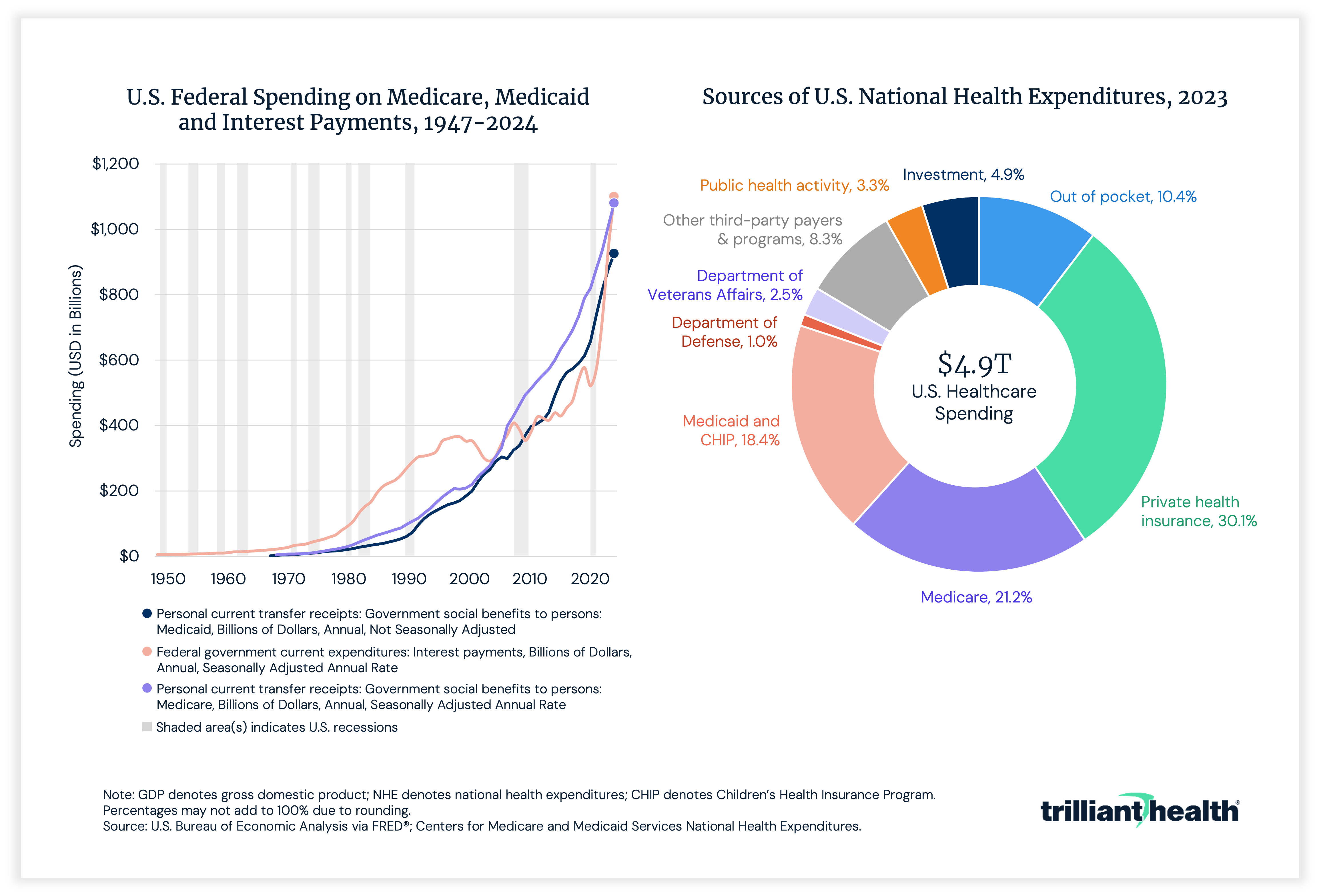
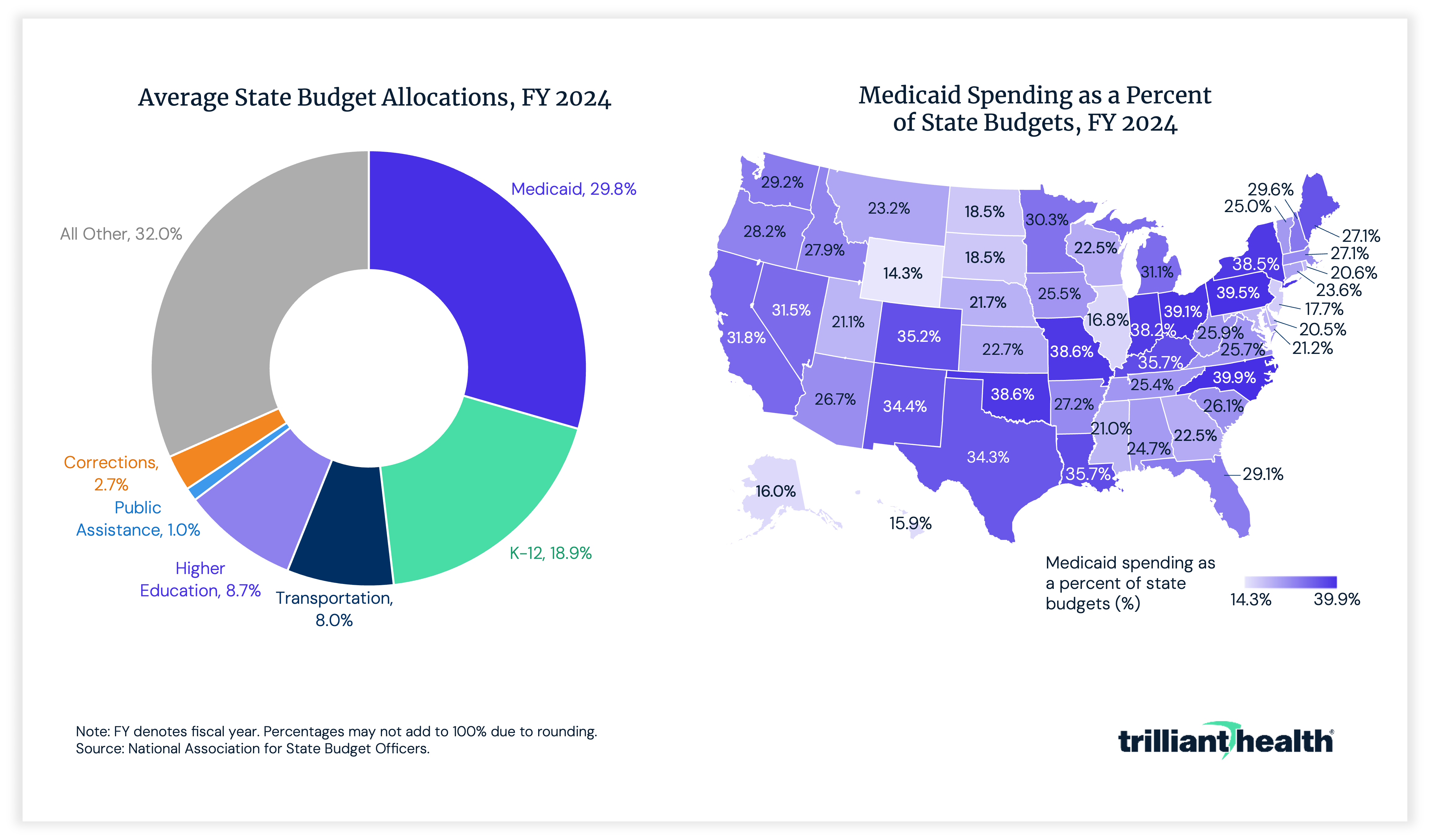
As it is inconceivable that annual Medicaid spending now exceeds $1T, it is equally undeniable that a material portion of that funding is diverted to things other than direct healthcare services for America’s poor.
Everybody knows that healthcare fraud is a problem in the South – South Florida, South Texas, Southern California, South Philly, Southern District of New York, South Minneapolis, etc. Like the Titanic, these examples are the tip of the healthcare fraud iceberg.
As the largest source of Federal funds and, in turn, the largest single expense item in every state budget, the “one thing” for every U.S. Attorney and state Attorney General should be vigilant and intrusive insight into how every Medicaid dollar is spent. Because no crime affects more Americans than every instance of Medicaid fraud, doing otherwise is immoral, unjust and, for attorneys who have sworn to uphold the law, unethical.
Why haven’t healthcare policymakers done more to address these obvious issues? Dr. King offers a potential explanation:
“Nor does the human spirit move without great difficulty against all the apathy of conformist thought within one's own bosom and in the surrounding world.”10
The status quo is septic, and it infects every health economy stakeholder. If you won’t act out a sense of justice or ethics or morality to “move…against all the apathy of conformist thought within one’s own bosom and in the surrounding world,” then you might consider self-interest. Like Dorothy in The Wizard of Oz, think to yourself:
America will have a healthcare election soon.
America will have a healthcare election soon.
America will have a healthcare election soon.
- Counterpoint