Study Takeaways
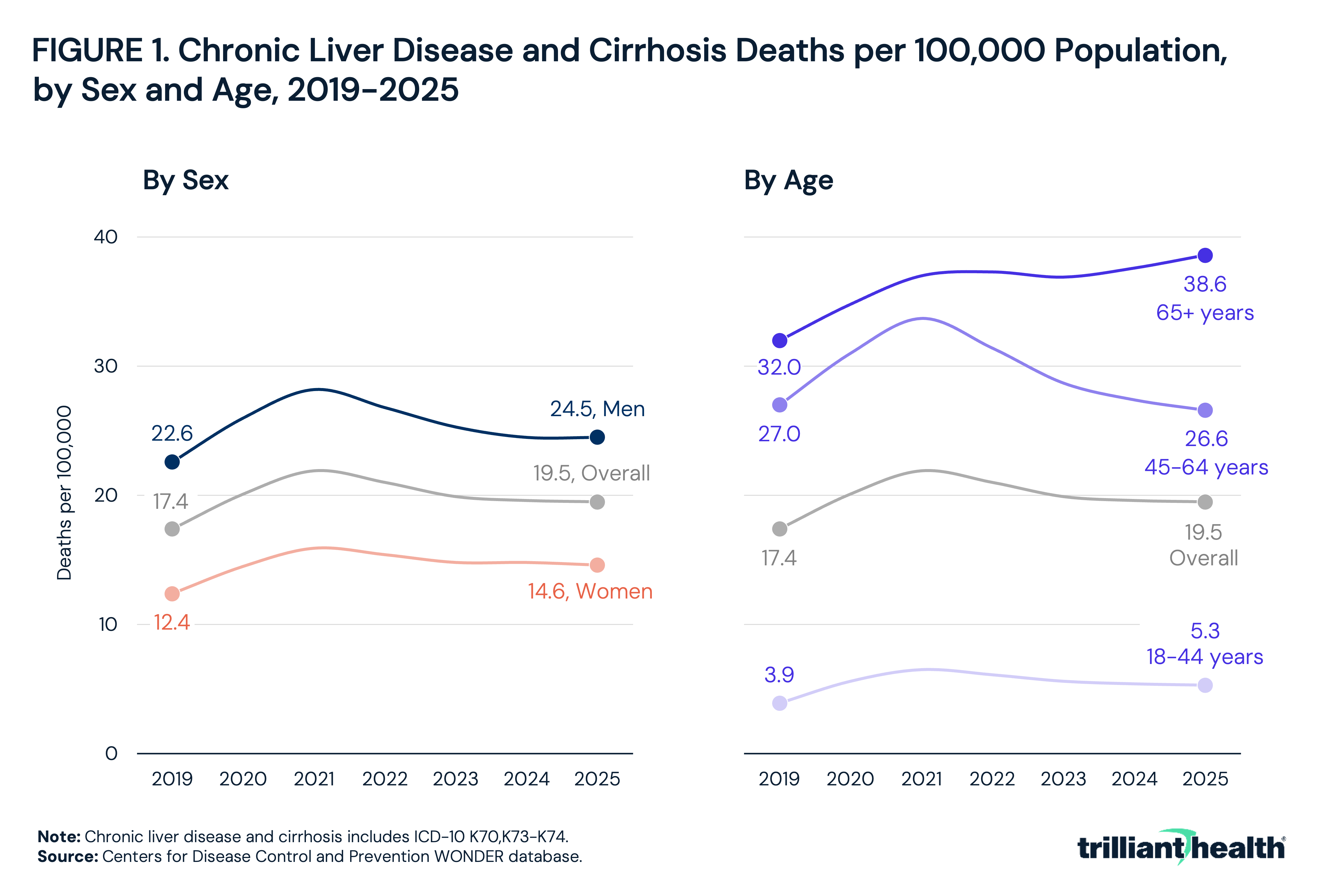
- Chronic liver disease and cirrhosis mortality increased 12.1% from 2019 to 2025, from 17.4 to 19.5 deaths per 100,000 Americans, peaking at 21.9 in 2021.
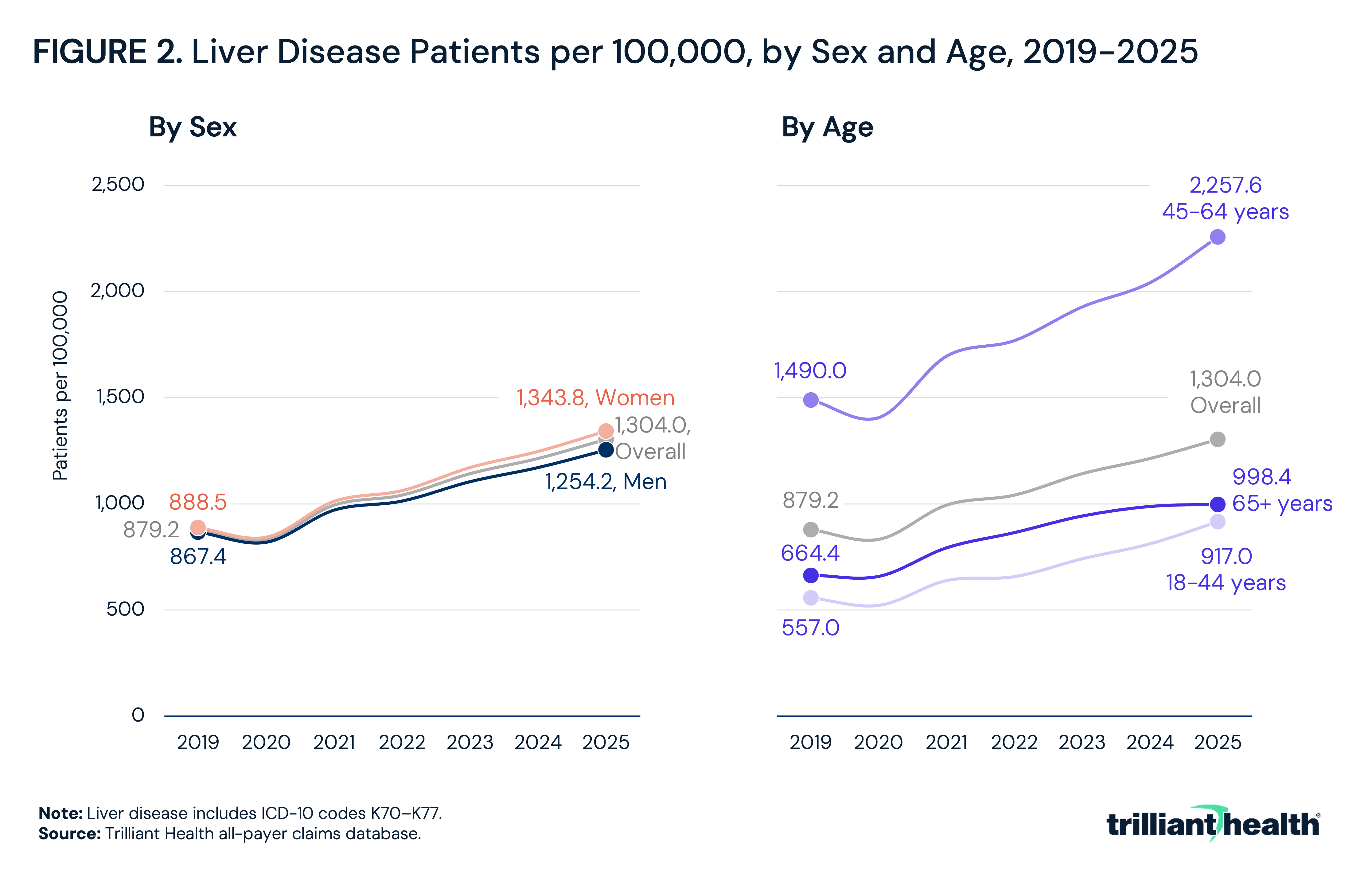
- Liver disease patient volume increased across every adult age group. Distinct patients per 100,000 increased 48.3% from 879.2 in 2019 to 1,304.0 in 2025.
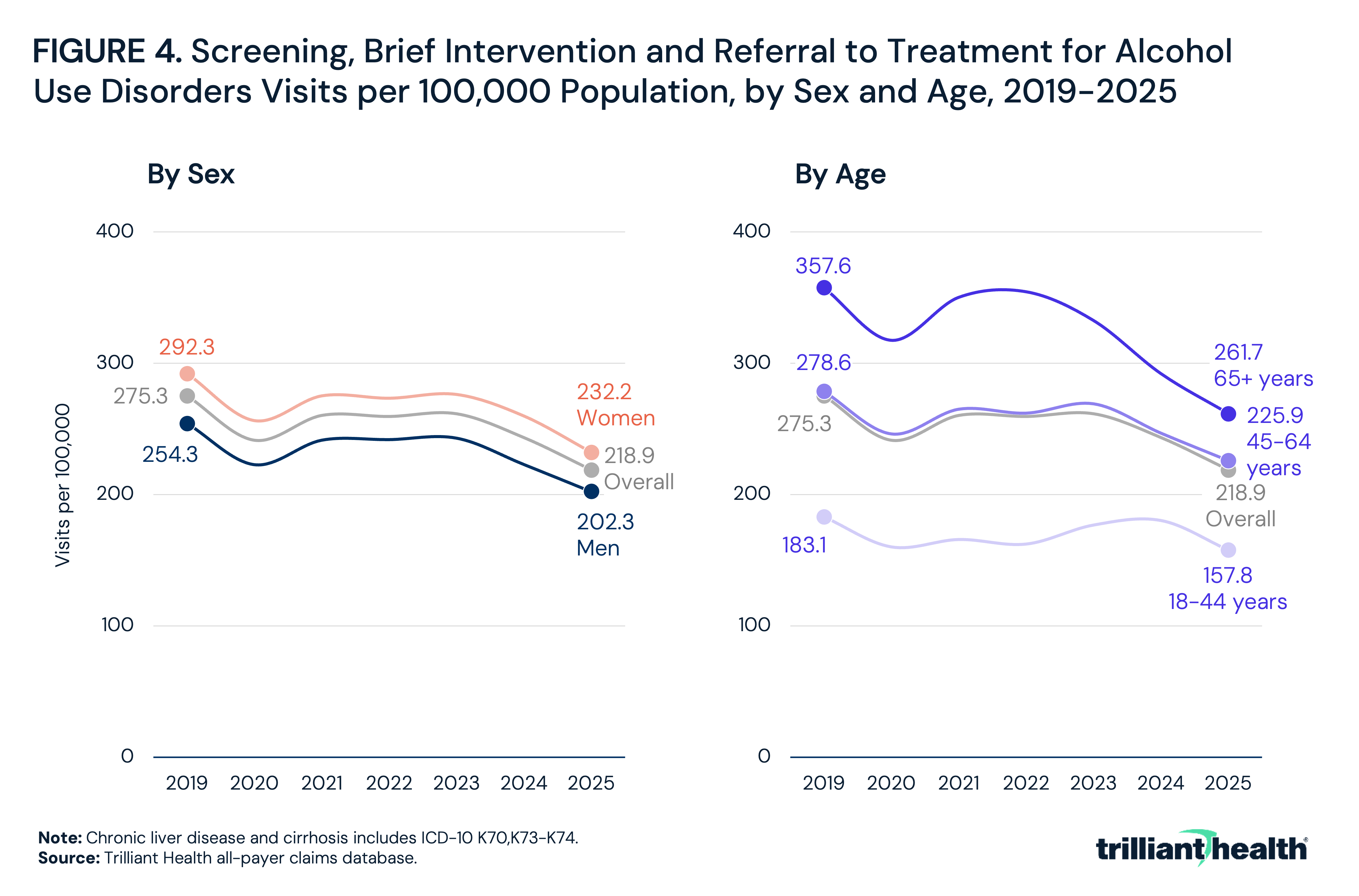
- Alcohol misuse screening and brief intervention visits decreased across every adult age group. Visits per 100,000 decreased 20.5% from 275.3 in 2019 to 218.9 in 2025.
Despite widespread underdiagnosis, liver disease remains one of the most prevalent chronic conditions in the U.S. The term covers a range of liver conditions, including alcohol-associated liver disease, metabolic liver disease, cirrhosis, viral hepatitis and liver cancer. Its most common form, metabolic dysfunction-associated steatotic liver disease (MASLD), affects approximately 25% of U.S. adults. Because the early stages of liver disease are frequently asymptomatic, many cases are identified late. In recent years, the treatment landscape for liver disease has changed markedly with the approval of the first therapies targeting the metabolic form of the disease.
Background
Liver disease is a significant and increasing contributor to mortality in the U.S. In 2023, cirrhosis was the ninth leading cause of death, accounting for 56,975 deaths, over half of which were alcohol related.1 From 1999 to 2023, the number of U.S. liver disease deaths nearly doubled, with alcohol-associated liver disease (ALD) and liver cancer accounting for more than half of deaths and ALD-related mortality increasing most rapidly.2 Working-age adults, women and Hispanic populations had above-average increases, and rates were higher and increased more in non-metropolitan areas.
In 2023, the American Association for the Study of Liver Diseases (AASLD) and its European and Latin American counterparts renamed nonalcoholic fatty liver disease (NAFLD) as metabolic dysfunction-associated steatotic liver disease (MASLD) and renamed nonalcoholic steatohepatitis (NASH) as metabolic dysfunction-associated steatohepatitis (MASH), retiring the term “fatty” as stigmatizing and reframing the disease around cardiometabolic dysfunction.3 MASLD affects an estimated 25% of U.S. adults, and prevalence is 70% or higher among adults with type 2 diabetes.4,5 MASH, the progressive form that can advance to cirrhosis and hepatocellular carcinoma (HCC), affects an estimated 1.5% to 6.5% of U.S. adults, and one projection estimates U.S. cases will reach 23.2M by 2050.6,7
Lifestyle factors account for a significant amount of liver disease prevalence.8 Excessive alcohol use is a leading cause, and the U.S. Preventive Services Task Force (USPSTF) has a B-grade recommendation to screen adults for unhealthy alcohol use in primary care and to provide brief behavioral counseling for those who screen positive, an approach commonly delivered through the Screening, Brief Intervention and Referral to Treatment (SBIRT) model.9 That recommendation is currently being updated, with a draft evidence review released in August 2025.10
Type 2 diabetes and obesity are the principal drivers of metabolic liver disease, with MASLD present in an estimated 70% or more of adults with type 2 diabetes. The American Diabetes Association now recommends that adults with type 2 diabetes or prediabetes be screened for advanced liver fibrosis using the noninvasive Fibrosis-4 (FIB-4) score, even when liver enzymes are normal, with referral to a hepatologist for those at higher risk.11
Liver injury from supplement use is also an emerging concern. Herbal and dietary supplement injury increased from about 7.0% of cases in the Drug-Induced Liver Injury Network in 2004 to 2005 to roughly 20.0% in 2013 to 2014, and a 2024 analysis estimated that about 5.0% of U.S. adults, or 15.6M people, had recently used at least one of six potentially hepatotoxic botanicals such as turmeric and green tea extract.12,13
The therapeutic market for MASH is rapidly evolving, with two therapies for MASH newly approved in recent years. Resmetirom (Rezdiffra®, Madrigal Pharmaceuticals) received accelerated approval in March 2024 for non-cirrhotic MASH with moderate to advanced fibrosis.14 Semaglutide 2.4 mg (Wegovy®, Novo Nordisk) was approved in August 2025 as the first GLP-1 receptor agonist for MASH, based on the Phase 3 ESSENCE trial, in which 63.0% of treated participants achieved resolution of steatohepatitis without worsening fibrosis compared with 34.0% on placebo at 72 weeks.15
This analysis examines liver disease utilization and mortality trends between 2019 and 2025 along with alcohol misuse screening.
Analytic Approach
Chronic liver disease and cirrhosis mortality (ICD-10 codes K70, K73–K74) for 2018 through 2025 were examined from the Centers for Disease Control and Prevention (CDC) WONDER database. National all-payer claims data were used to examine continuously enrolled U.S. adults from 2019 through 2025. Continuous enrollment was defined as 12 months of enrollment within a given calendar year. Liver disease was identified by ICD-10 codes K70–K77, and alcohol misuse SBIRT by CPT codes G0442, G0443, 99408 and 99409 with ICD-10 codes Z13.89, Z71.41 and F10.9. Counts are expressed as rates per 100,000 continuously enrolled members in the same year, by sex and age band (18-44, 45-64, 65 and older).
Findings
Chronic liver disease and cirrhosis mortality increased from 17.4 deaths per 100,000 in 2019 to a maximum of 21.9 in 2021, then decreased to 19.5 by 2025, an increase of 12.1% over the entire period (Figure 1). Throughout the study period, mortality was lowest among adults ages 18-44 and highest among adults ages 65 and older. Mortality increased most among adults ages 18-44, by 35.9%, decreased slightly by -1.5% among adults ages 45-64 and increased 20.6% among adults ages 65 and older. Mortality increased 17.7% among women compared to 8.4% among men, though the mortality rate among men was 1.7x higher, on average.
Liver disease patient volume increased across every adult age group. Distinct liver patients per 100,000 increased 48.3% from 879.2 in 2019 to 1,304.0 in 2025 (Figure 2). The rate increased monotonically aside from 2019 to 2020. The increase was largest among adults ages 18-44, at 64.6%, compared with 51.5% for adults ages 45-64 and 50.3% for adults ages 65 and older. Notably, the 45-64 age group had the highest absolute rate throughout, at 2,255.7 per 100,000 patients in 2025. Rates were slightly higher and increased by a slightly larger amount among women, 51.2%, compared with 44.6% among men. On average, liver patients had 2.2 visits annually between 2019 and 2025.
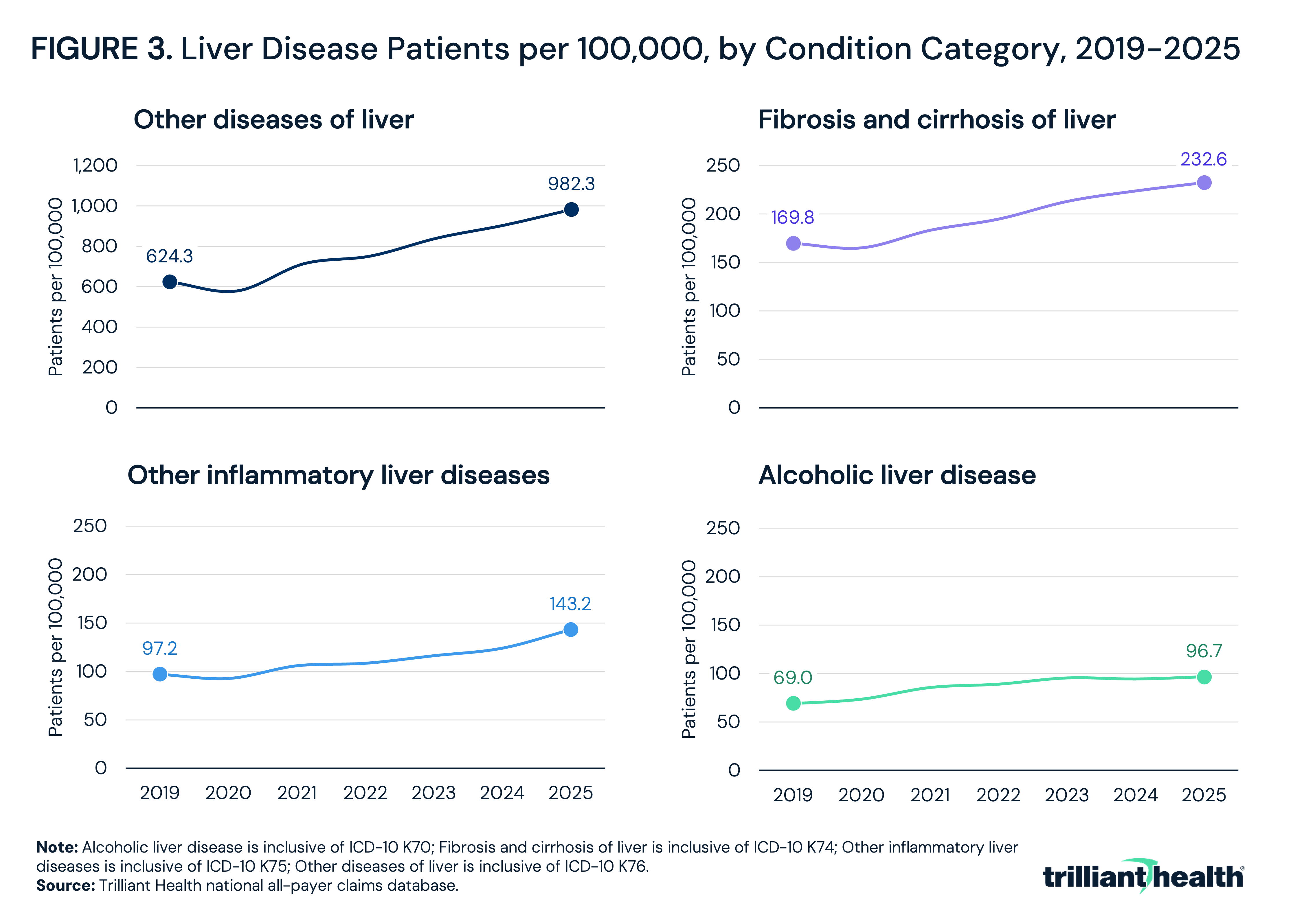
Liver disease patient volume also increased across conditions. From 2019 to 2025, distinct patients per 100,000 increased 57.3% for other diseases of the liver, which also had the highest absolute rate, the most of any condition (Figure 3). Fibrosis and cirrhosis of the liver increased 37.0%, alcoholic liver disease increased 40.1% and other inflammatory liver diseases increased 47.3%. Notably, MASH is classified within inflammatory liver diseases, while MASLD is classified within other diseases of the liver.
Alcohol misuse SBIRT visits decreased across every adult age group. Visits per 100,000 decreased 20.5% from 275.3 in 2019 to 218.9 in 2025 (Figure 4). The decrease was largest among adults ages 65 and older at -26.8%, compared with -18.9% for adults ages 45-64 and -13.8% for adults ages 18-44. Rates were the same for men and women at -20.5%.
Conclusion
Between 2019 and 2025, liver disease utilization increased 48.3%, and mortality increased 12.1%, both increasing fastest among adults ages 18–44 and women, but liver disease prevalence and mortality were higher in men. Even as utilization related to liver disease increased, alcohol misuse screening decreased by 20.5%. Given previously established correlation between alcohol misuse and liver disease, further research is warranted to understand this counterintuitive trend.
From a health economics standpoint, earlier onset means more years of treatment per patient, so a younger patient population raises the long-term volume and cost of liver-related care. Simultaneously, treatment costs for MASLD and MASH are rapidly increasing, at $47,400 per year for resmetirom and more than $60,000 for combined regimens with semaglutide.16 Notably, these drugs are not curative and would require chronic use to control disease progression. Direct annual medical costs for the metabolic form of liver disease are already estimated at about $103B.
Although the observed screening rate for alcoholic liver disease decreased over the study period, the mortality rate increased, and the costs of treatment are rising. Excessive alcohol use was estimated to cost $249B in 2010, and the cost of treating advanced alcohol-associated liver disease alone is projected to roughly double, from $31B in 2022 to $66B by 2040.17,18
Supplement-related liver injury is a smaller but growing contributor to the economic burden of liver disease. Herbal and dietary supplements are a large and lightly regulated market, with U.S. sales of roughly $69B in 2024, yet unlike prescription drugs, they reach the market without premarket safety or efficacy review by the U.S. Food and Drug Administration (FDA).19 Against that backdrop, physicians are becoming more aware that supplements contribute to increasing drug-induced liver injury, driven by products such as turmeric, green tea extract and anabolic formulations. On the other hand, many patients view these products as safe and do not report using them, so the harm is easily missed. Whether the FDA’s evolving views about peptides are a further accelerant for drug-induced liver injury is a question that policymakers should consider.
Even as demand for treatment of liver disease is growing, the clinical workforce is limited relative to the size of the affected population. Hepatologists number only in the several thousands nationally, and gastroenterology faces a documented shortage and an aging workforce.20,21 In short, a younger population with liver disease is encountering an aging physician supply, a fact that may benefit life sciences companies at increasingly unaffordable cost. As the disease becomes more prevalent and shifts toward younger adults, whether effective diagnosis and treatment reach patients will depend heavily on this constrained supply, and prevention delivered in primary care faces its own capacity limits.
The U.S. healthcare system is often criticized for treating illness rather than promoting health. That criticism understates how much of the relevant risk sits beyond the reach of physicians, clinics and hospitals. Liver disease illustrates the point as clearly as any condition. Its two largest forms are closely tied to modifiable lifestyle factors: alcohol use and the metabolic effects of diet, weight and physical activity. Slowing the growth in liver-related cost and mortality therefore depends heavily on behaviors that are upstream of the delivery system, which raises a policy question worth more attention than it receives, namely how public policy might do more to support and reward healthier behavior.
Get the latest insights delivered to your inbox.
Related Research
Was this shared with you?
Subscribe for weekly insights.
Subscribe to receive weekly insights from Trilliant Health's Research Team
Interested in citing our research? Please follow this guide.