Study Takeaways
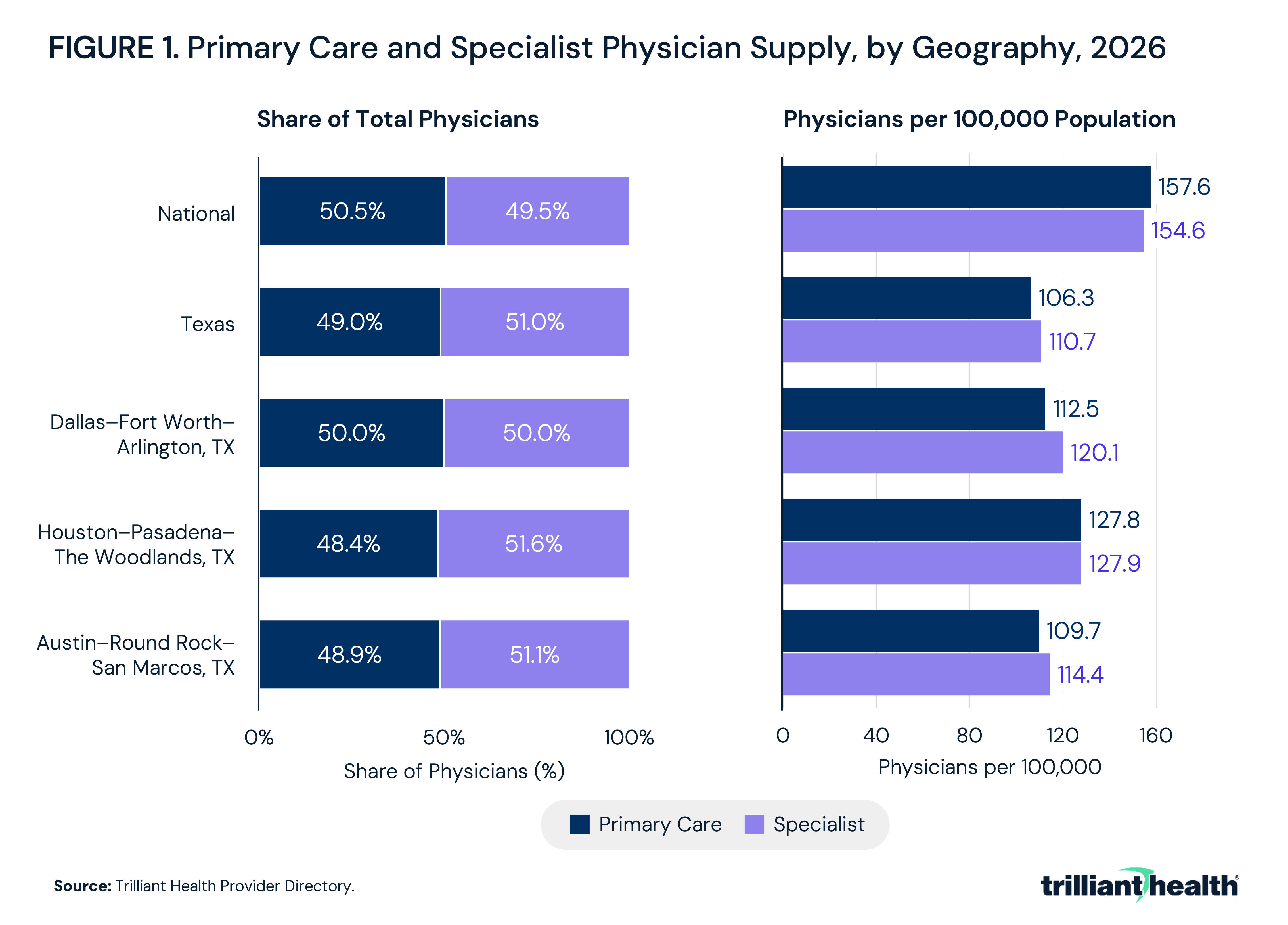
- Nationally, physician supply is evenly split between primary care and specialist physicians, while Texas has slightly more specialists (51.0%) than primary care physicians (49.0%).
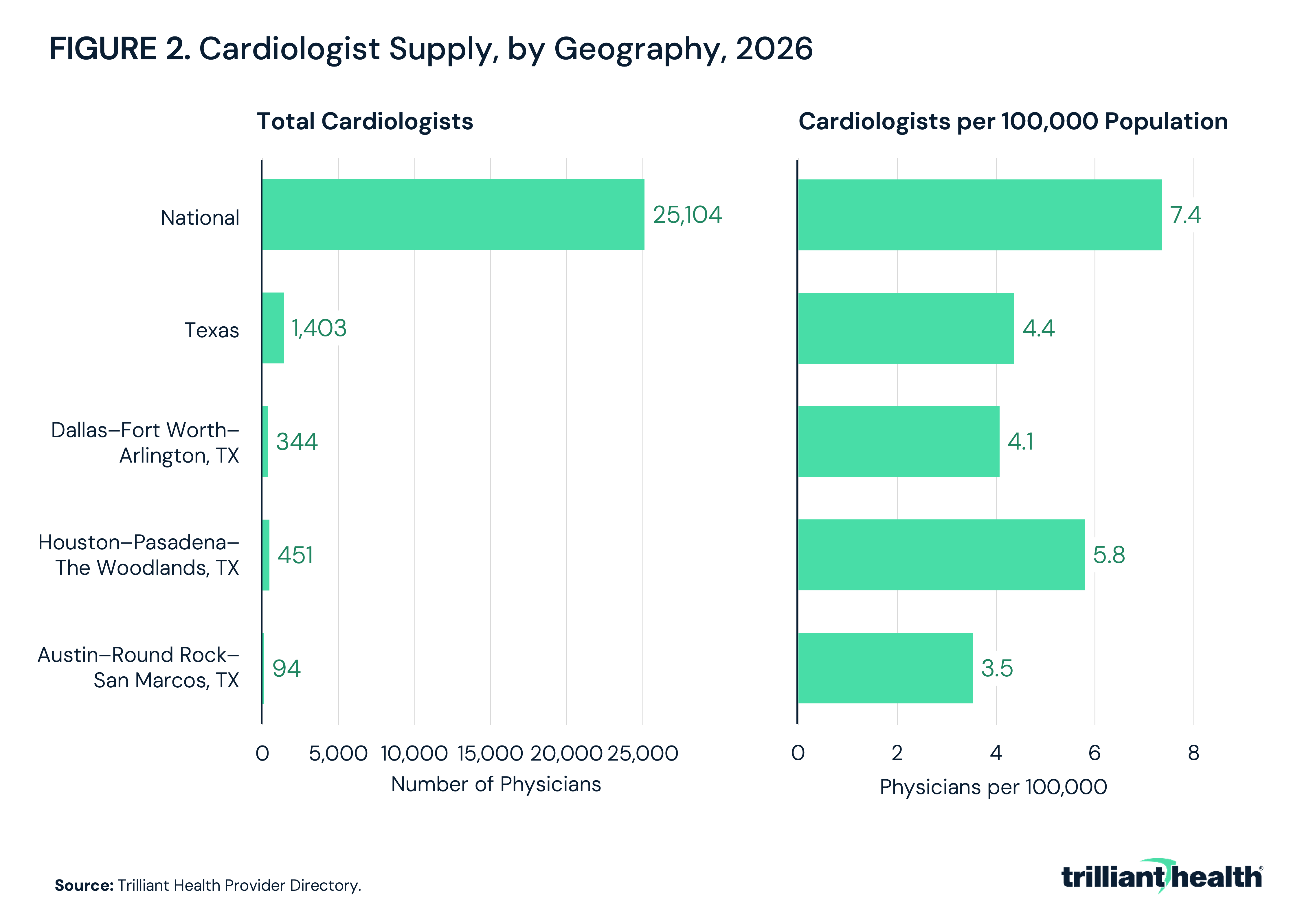
- Nationally, there are 7.4 active cardiologists per 100,000 population compared with 4.4 in Texas, and supply is below the national rate across all three of the state's major metros, ranging from 3.5 per 100,000 in the Austin–Round Rock–San Marcos CBSA to 5.8 in the Houston–Pasadena–The Woodlands CBSA.
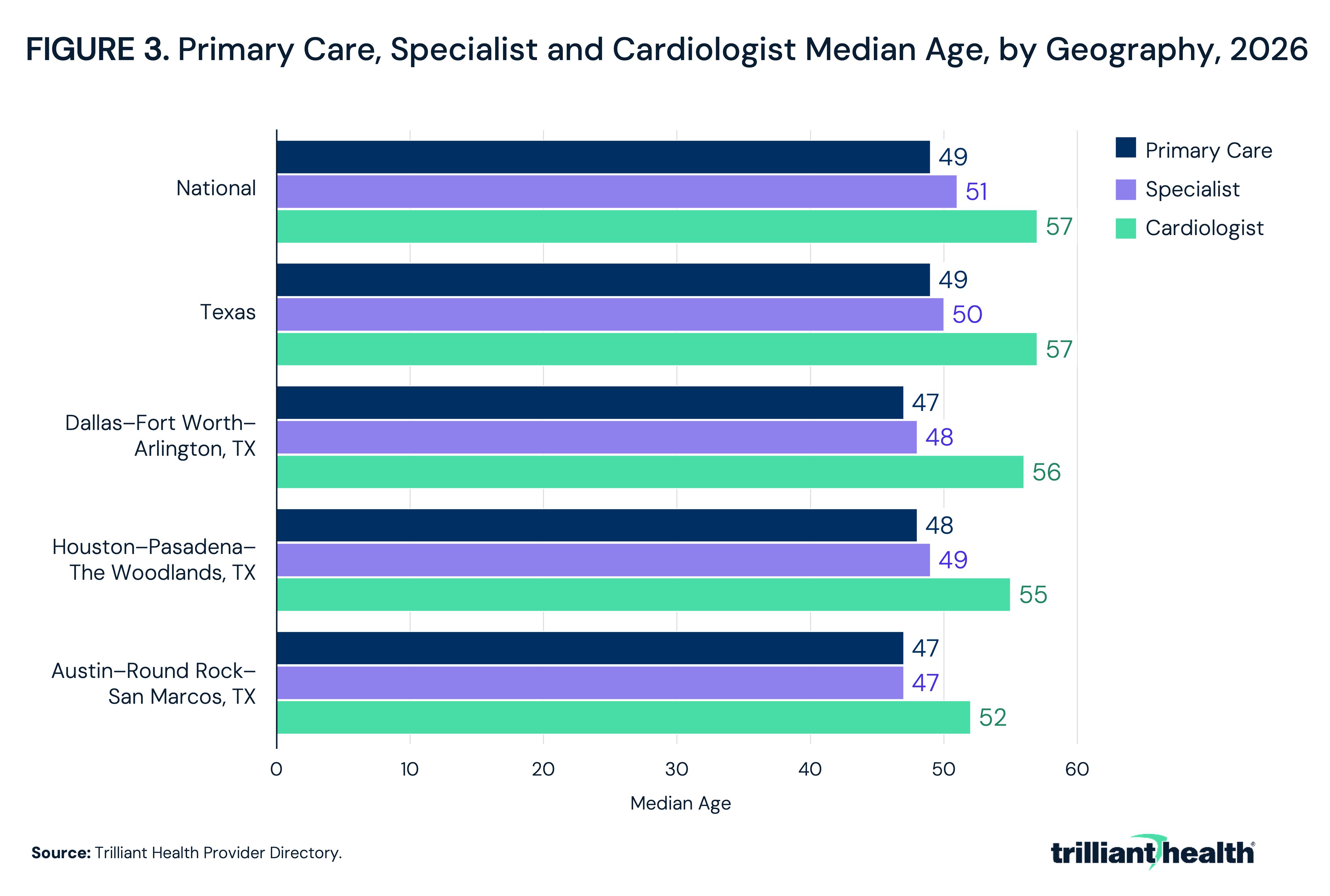
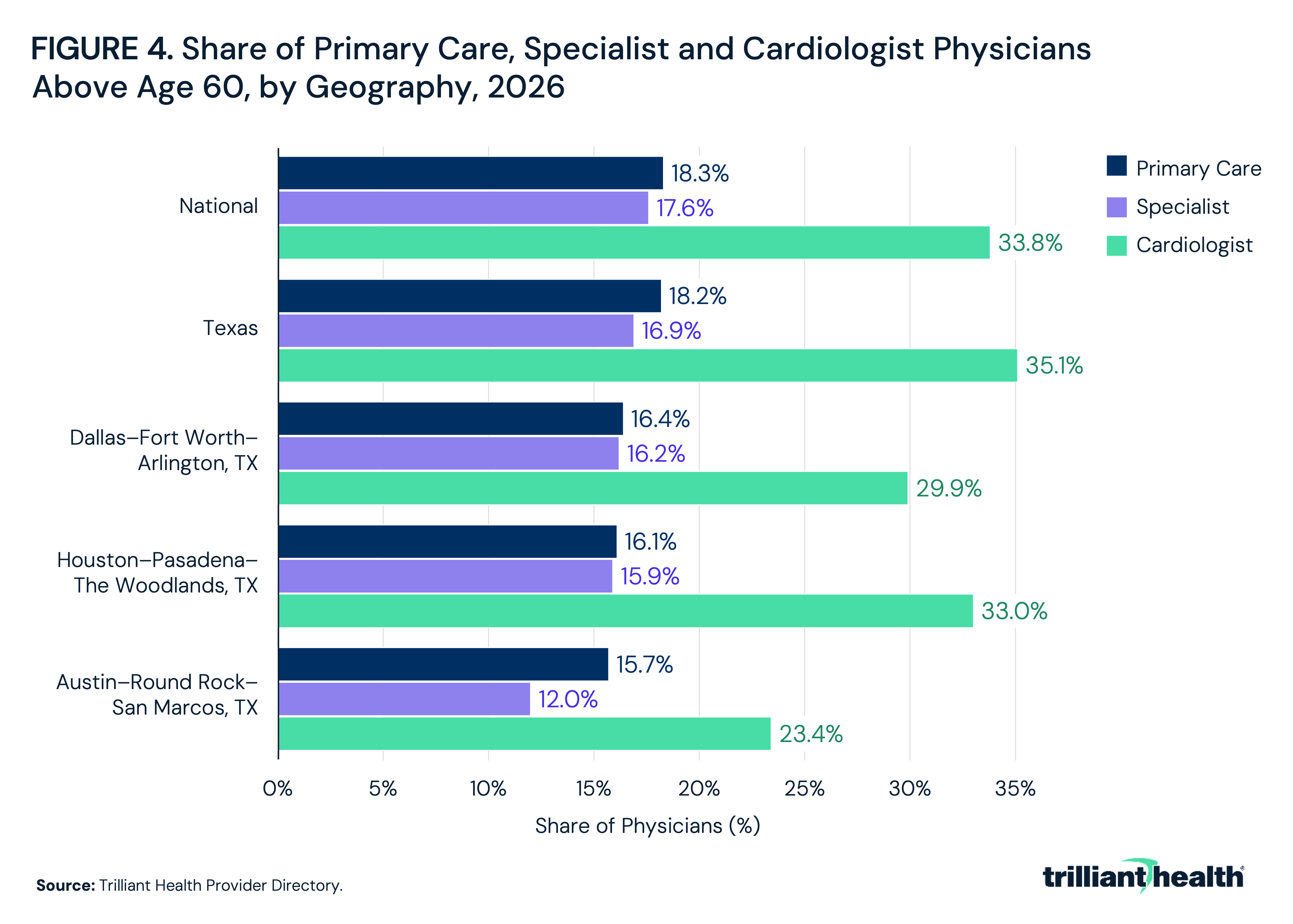
- Nationally, 33.8% of cardiologists are estimated to be above age 60 compared with 18.3% of primary care physicians and 17.6% of specialists, with a median age of 57, 49 and 51, respectively.
- Understanding the future supply adequacy of physicians depends on the age-weighted number of physicians at a market and service-line level.
The adequacy of the U.S. physician workforce is shaped in part by the imbalance between a growing, aging population and a physician supply that is itself aging. Demand for care is projected to outpace supply across both primary care and specialty medicine over the next 10 years, and the composition of that workforce determines how resilient access to care will be.
Background
The U.S. Health Resources and Services Administration (HRSA) projects an undersupply of 141,160 full-time physicians in 2038.1,2 The Association of American Medical Colleges has issued similar warnings, citing the aging of the current workforce and the accelerating rate of physician retirement.3
Nationally, the supply of physicians is projected to meet 87.7% of demand, but this ranges from 58.6% in Mississippi to 304.8% in the District of Columbia, with 42 states projected to have an undersupply. By number of physicians, the largest projected deficits are in Florida (32,200) and Texas (24,450), the two fastest growing states in terms of number of residents.4
HRSA projects a shortage of 70,610 primary care physicians in 2038, primarily in nonmetropolitan areas, where the supply of primary care physicians is projected to meet 61% of demand in 2038. Alongside the aging primary care workforce, this trend is compounded by declining interest in family medicine, general internal medicine and pediatrics residencies among current medical graduates.5
These dynamics also apply to specialty care access. For example, cardiology has a projected supply adequacy of just 84.7% in 2038. By 2035, each cardiologist is projected to serve 1,700 patients, on average, up from 1,087 in 2025, as demand outpaces the supply of cardiologists, though this will vary by geography.6 In 2038, 41 states are projected to have a cardiologist shortage, including Idaho (50.0% supply adequacy), Nevada (54.8%) and New Mexico (56.5%), while seven states and the District of Columbia are projected to have a surplus, led by D.C. (414.3%), Connecticut (150.0%) and Massachusetts (147.2%). Moreover, 86.2% of 1,105 rural counties analyzed do not have a cardiologist.7 Because lower regional primary care and cardiologist density are each associated with higher overall cardiovascular mortality, it is essential to understand the composition, supply and demographic profile of the physician workforce at the market level.8,9,10 Given that heart disease remained the leading cause of death in the U.S. in 2024, accounting for 683,491 deaths, a shortage of cardiologists is one of the health economy’s most urgent and systemic challenges.11
To understand the potential ramifications of this shortage, this analysis examines the specialty composition of the active physician workforce, the supply of cardiologists and the age and gender of primary care physicians, specialists and cardiologists in the U.S., Texas and its three largest metropolitan markets: Houston, Dallas–Fort Worth and Austin.
Analytic Approach
This analysis used Trilliant Health's Oria platform and National Provider Directory data to identify active physicians in the U.S., Texas and three Texas Core-Based Statistical Areas (CBSAs) – Houston–Pasadena–The Woodlands (the “Houston CBSA”), Dallas–Fort Worth–Arlington (the “DFW CBSA”) and Austin–Round Rock–San Marcos (the “Austin CBSA”). Physicians were classified as primary care (family medicine, internal medicine, pediatrics and obstetrics and gynecology), or specialist, and cardiovascular disease physicians (cardiologists) were analyzed as a distinct specialist cohort. Physician age was estimated from medical school graduation year. Primary care, specialist and cardiologist physician supply and age distribution were examined by geography.
Findings
Provider Geographic Distribution
Nationally, Oria identified 1.1M active physicians. Primary care physicians account for 50.5% of active physicians, while specialists account for the remaining 49.5% (Figure 1). This is equivalent to 157.6 and 154.6 primary care and specialist physicians per 100,000 population, respectively. In comparison, the composition of the Texas physician workforce is slightly more specialized – of the state’s 69,673 physicians, 49.0% are in primary care and 51.0% are in specialty practice. Of the three Texas CBSAs analyzed, the Houston CBSA has the most specialized physician workforce, with 51.6% of physicians characterized as specialists while the DFW CBSA is close to matching the national benchmark, at 50.0% specialists.
With respect to the cardiology specialty, there are 25,104 active cardiologists in the U.S., equivalent to 7.4 per 100,000 population (Figure 2). In Texas, there are 4.4 cardiologists per 100,000, with substantial variation at the CBSA level. The DFW CBSA has 4.1 cardiologists per 100,000 as compared with the Houston CBSA with 5.8 cardiologists and the Austin CBSA with 3.5.
Demographic Provider Distribution
Provider age varies significantly by provider specialty at the national and CBSA level. Nationally, cardiologists have a median age of 57, compared with 49 for primary care physicians and 51 for specialists overall (Figure 3). The age of the Texas workforce is similar to the national benchmark, at 57 for cardiologists, 49 for primary care and 50 for specialists, with more variation at the market level. Among cardiologists, median age ranges from 52 in the Austin CBSA to 56 in the DFW CBSA, while primary care and specialist median ages in these markets range from 47 to 49.
An accurate picture of future physician supply depends on understanding the current 'age-weighted' supply of physicians by specialty at the market level. For example, nationally, 33.8% of cardiologists are estimated to be above age 60, compared with 18.3% of primary care physicians and 17.6% of all specialists (Figure 4). Compared to the national benchmark, Texas has a relatively older supply of cardiologist physicians, with 35.1% above age 60, while its primary care (18.2%) and specialist (16.9%) shares fall below their respective national levels. Notably, the physician workforce in the examined metropolitan areas is younger than the national and state-level benchmarks. That said, the cardiologist workforce is still significantly older than that of primary care physicians and the broader specialist workforce. Of the three Texas metropolitan areas, the Austin CBSA has the lowest share of providers above age 60 – 23.4% for cardiologists, 15.7% for primary care and 12.0% for specialists overall.
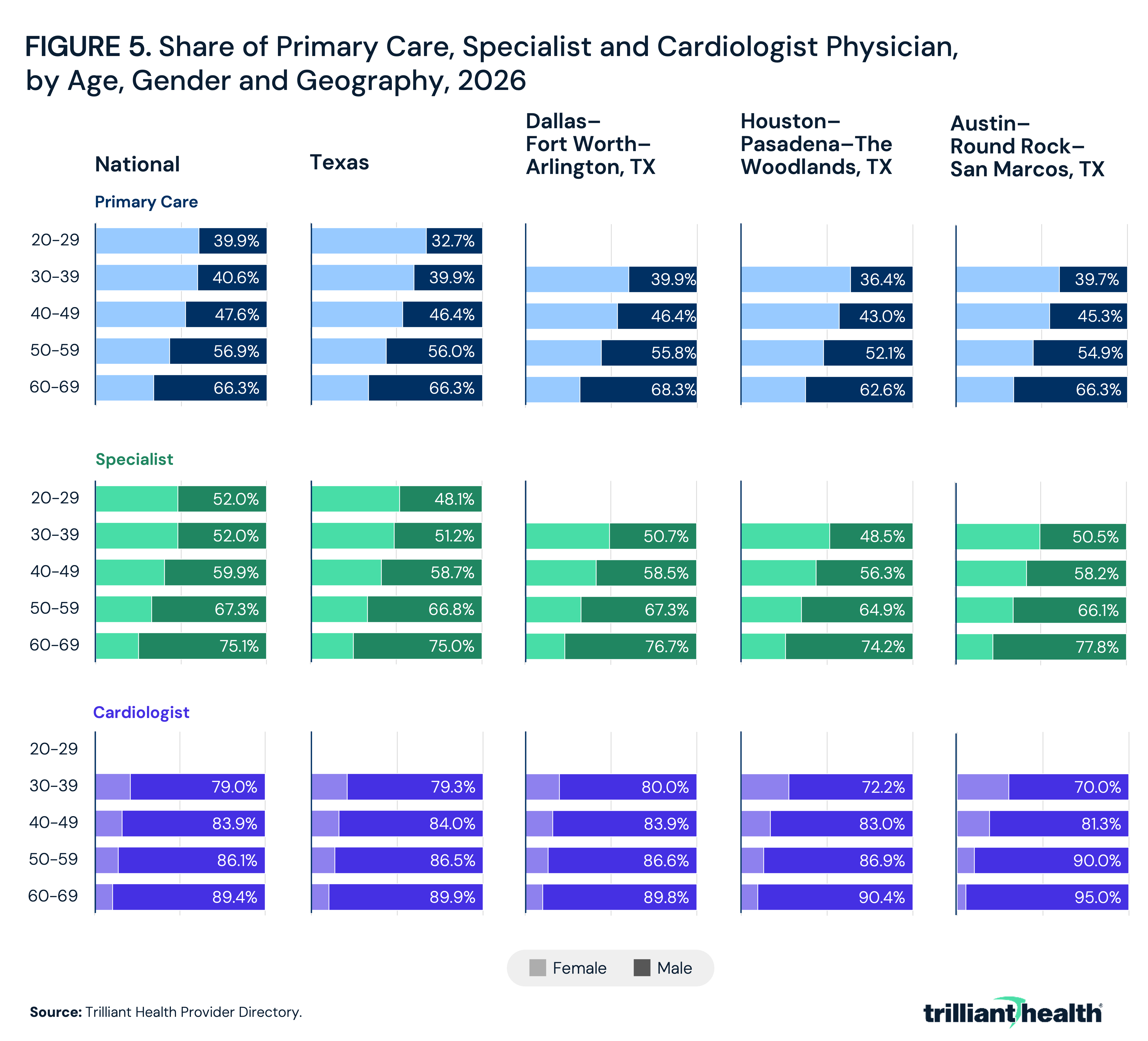
Women account for a growing share of the physician workforce in younger age groups, accounting for 39.4% of the total U.S. physician workforce. Nationally, women account for 60.1% of primary care physicians ages 20 to 29 compared to 33.7% of those ages 60 to 69. There are similar trends in the specialist physician workforce, in which women make up 48.0% and 24.9%, respectively, of specialists in those age groups (Figure 5). Cardiologists have the lowest female representation nationally across every age band, ranging from 10.6% among those ages 60 to 69 to 21.0% among those ages 30 to 39. Texas has similar trends, with female primary care share ranging from 33.7% in the 60 to 69 age band to 67.3% among those ages 20 to 29. Female specialists ranged from 25.0% to 51.9% and cardiologists from 10.1% to 20.7%. The Houston, Dallas and Austin CBSAs follow the same pattern across all three categories, with primary care having the highest female share and cardiovascular disease the lowest within each age band.
Conclusion
It is axiomatic that healthcare is local, but the well-documented national projections of inadequate physician supply are rarely discussed at the local level. Without an understanding of age-weighted physician supply by specialty at the market level, it is not possible to build a coherent plan to address gaps in care access at the CBSA or county level. This gap has long shaped policy initiatives that fall short in serving the rural and lower-income populations they were meant to reach, reflecting a persistent disconnect between Federal policy and local need. Tactical solutions are urgent because of the destructive and irreversible macro-policy flaws in the Flexner Report and the 25-year voluntary moratorium on U.S. medical school enrollment from 1980 to 2005.12,13 Prompted by a 1980 Federal projection of a surplus of 70,000 physicians by 1990, U.S. medical school output held near 16,000 graduates per year even as the population grew by roughly 70M. Because the training pipeline takes years to build, the supply available today was locked in decades ago by policy decisions grounded in projections that proved to be egregiously wrong.
This analysis reveals that the three Texas CBSAs studied have a younger cardiology workforce than the state and nation, with the share of cardiologists above age 60 ranging from 23.4% in the Austin CBSA to 33.0% in the Houston CBSA. This pattern is consistent with the concentration of training programs and employment in large metropolitan areas. Even so, that concentration is insufficient to address the demand trajectory in those markets, much less the demand in over 175 rural counties in Texas.14 Similarly, national projections anticipate a widening gap between the demand for cardiovascular care and the supply of cardiologists, and because fellowship capacity is effectively fixed in the near term, the attrition implied by an older workforce cannot be quickly replaced. Markets that rely on an older cohort, including those where current supply per capita appears adequate, face greater exposure to access constraints as those physicians reduce hours or retire. Addressing physician supply to treat the leading cause of death in America would seem to be a top priority for Federal and state policymakers.
Get the latest insights delivered to your inbox.
Related Research
Was this shared with you?
Subscribe for weekly insights.
Subscribe to receive weekly insights from Trilliant Health's Research Team
Interested in citing our research? Please follow this guide.