Study Takeaways
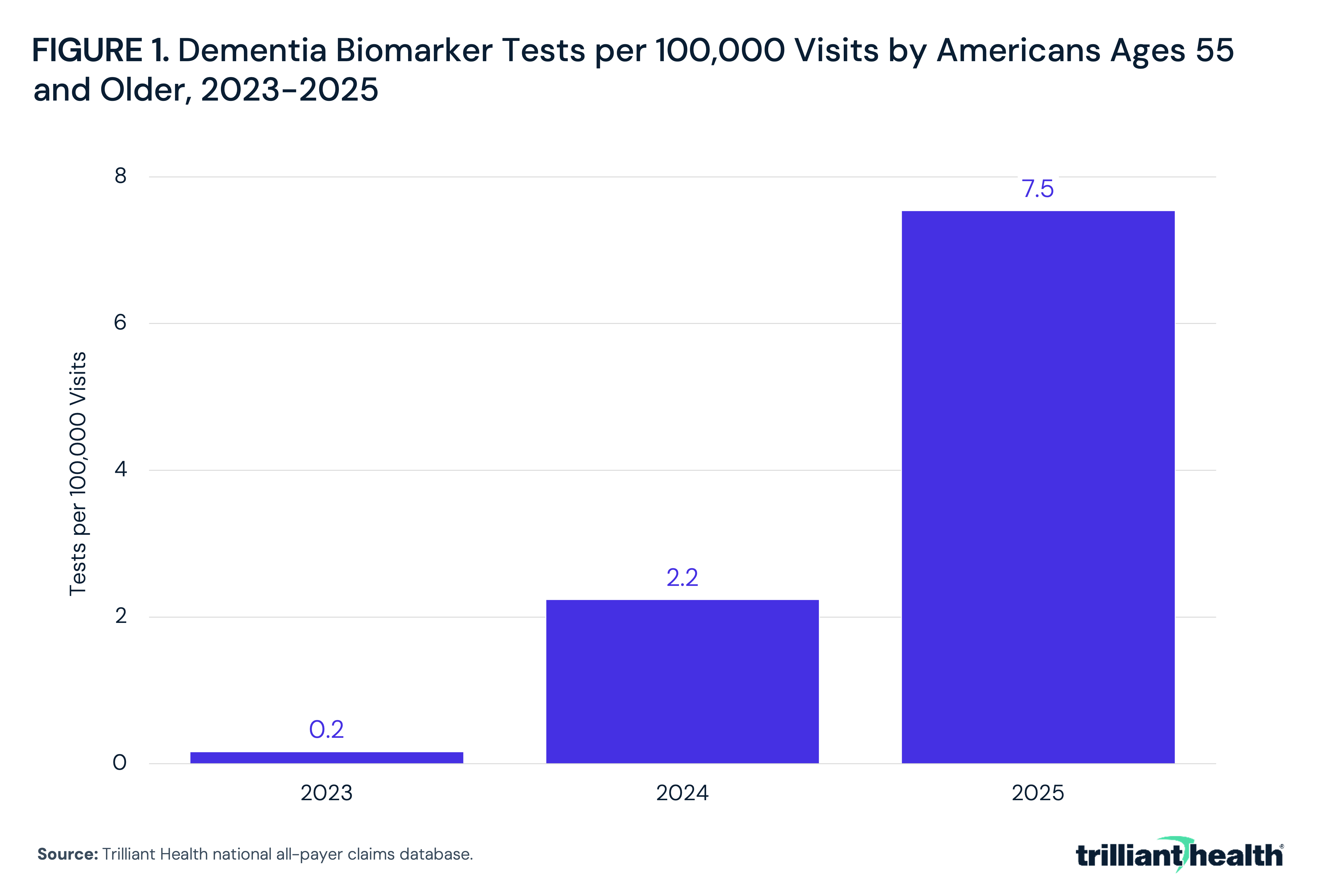
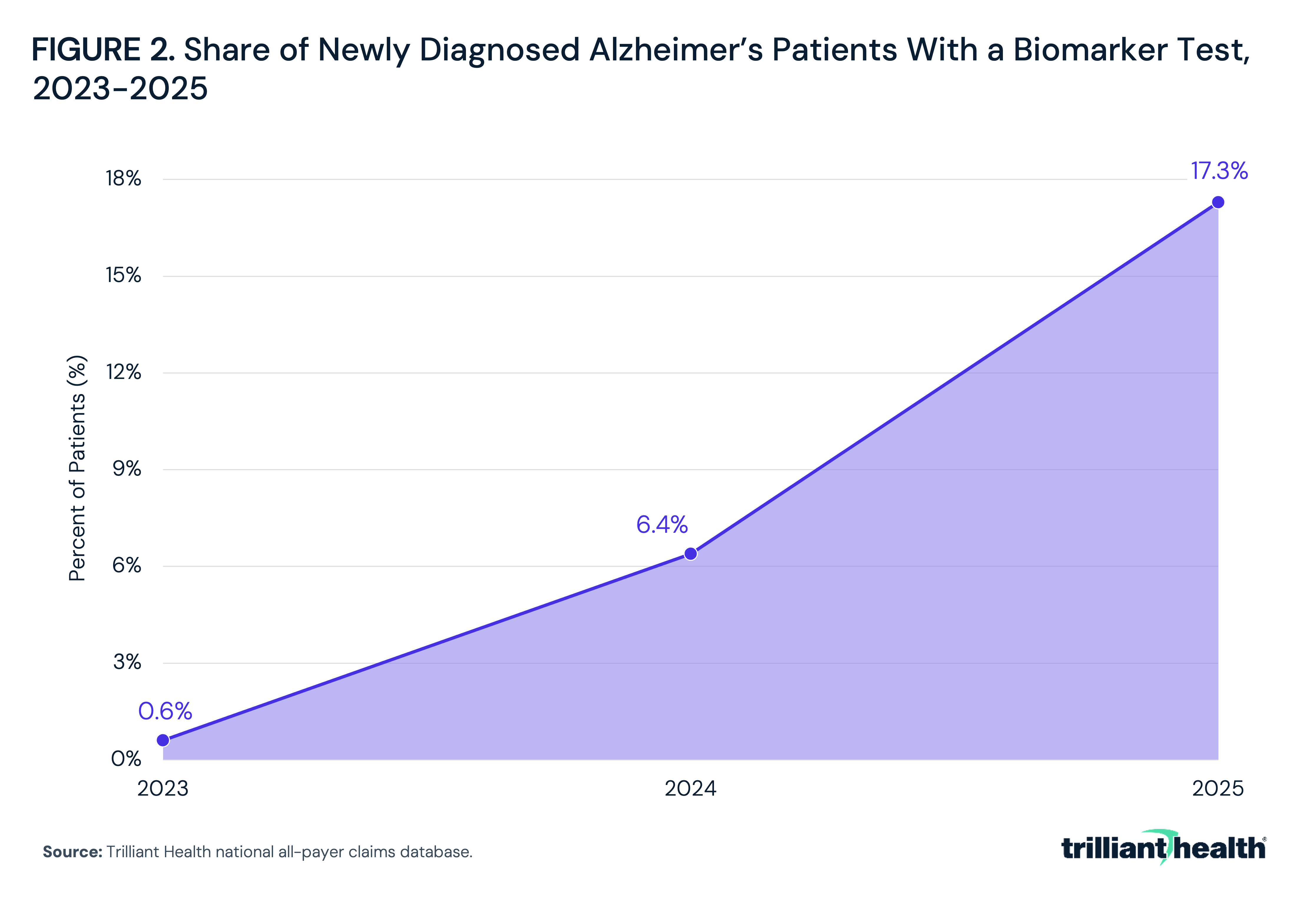
- Alzheimer’s biomarker test utilization by Americans ages 55 and older increased 37.5x from 2023 to 2025, and 17.3% of adults with an initial diagnosis of Alzheimer’s disease in 2025 had a biomarker test within six months of their diagnosis.
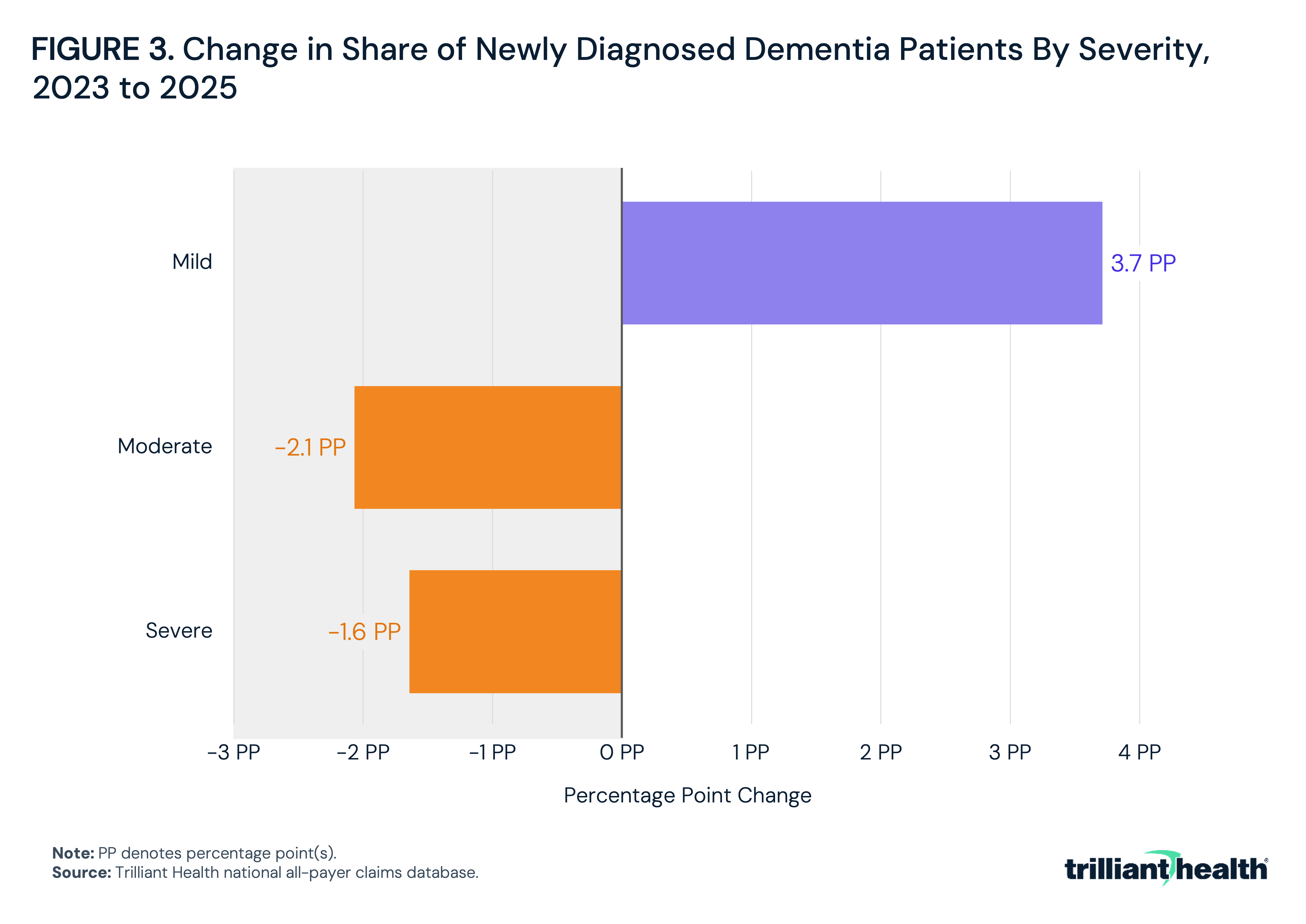
- From 2023 to 2025, the share of new dementia cases classified as mild grew 3.7 percentage points to 48.7% as compared to moderate and severe cases, which decreased 1.6 percentage points to 12.8% and 2.1 percentage points to 38.5%, respectively.
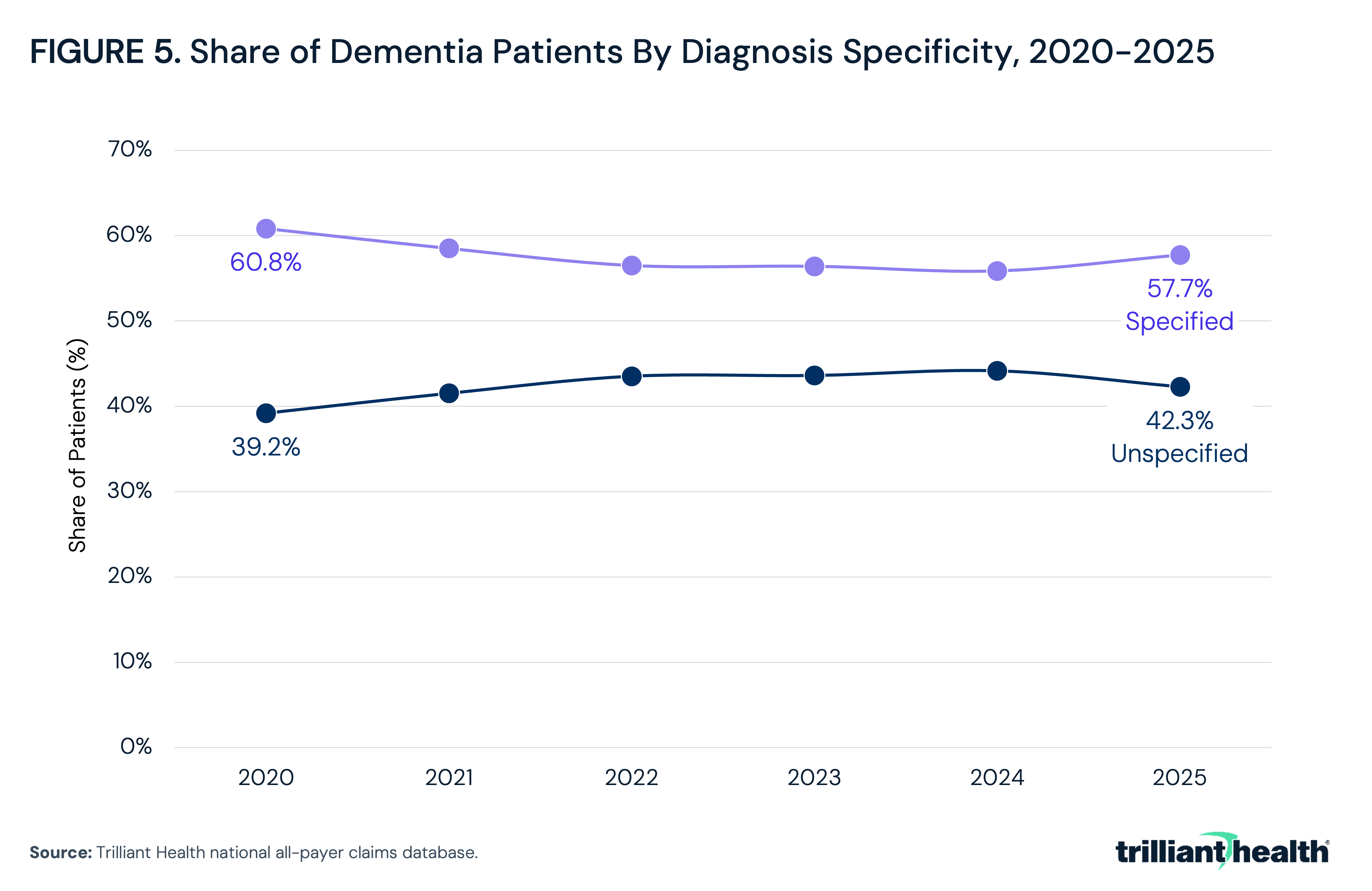
- Unspecified dementia accounted for a larger percentage of dementia cases in 2025 (42.3%) than in 2020 (39.2%).
Alzheimer’s disease and related dementias (ADRD) are a large and growing challenge to the American population and health economy. In 2025, the total economic cost of dementia was $781B, and despite recent innovations in ADRD diagnosis and treatment, the United States’ aging population is likely to catalyze even higher costs.1 The U.S. healthcare system already faces a critical undersupply of dementia specialists, so understanding shifts in ADRD diagnosis and how they may drive future demand for care is critical.
Background
By age 55, Americans face a 42% lifetime risk of developing dementia.2 As of 2026, an estimated 7.4M older adults have Alzheimer’s disease, a number that is expected to double between 2020 and 2060 primarily due to an aging population.3,4 By 2060, 24.4% of the population will be over age 65, compared to just 17.7% under age 18.5 Based on high projected demand for dementia-related care, provisioning an adequate supply of dementia specialists is vital.
Currently, significant gaps in dementia care exist, as a majority of adults affected by Alzheimer’s disease go undiagnosed.6 Additionally, delayed diagnosis is common: a 2015 study found that the median time from first dementia symptom to diagnosis was 4.5 years.7 Delays in diagnosis are even longer for men, people with less education and Black Americans.8
A key driver of delays in diagnosis is insufficient physician supply. Across the U.S., 79% of hospital referral regions – “areas with at least one hospital performing major cardiovascular procedures and neurosurgery” – had a shortfall of dementia specialists (e.g., neurologists, geriatricians, psychiatrists) in 2020. These shortage areas were home to 33.1M Americans ages 65 and older, or about 59.4% of all older adults.9 Because fellowship fill rates for geriatric medicine are the lowest of any specialty – they dropped from 58.7% in 2023 to 38.9% in 2026 – this situation will likely worsen.10 A low fellowship fill rate portends increasing shortages as fewer trainees replace retiring physicians. Indeed, national supply adequacy is expected to decline eight percentage points to 84% in 2038, with an uneven distribution of geriatricians across states (e.g., Alabama with 50% adequacy in 2038).11
Prompt diagnosis can help patients access support, manage symptoms and plan for their care in the future, while misdiagnosis can lead to excess health expenditures that do not improve patient outcomes.12,13 Delayed diagnosis also results in fewer eligible patients being enrolled in clinical trials for emerging drug treatments that slow the development of Alzheimer’s disease.14 In 2021, 2023 and 2024, the U.S. Food and Drug Administration (FDA) approved the first three therapies that affect the underlying biology of Alzheimer’s (i.e., aducanumab (Aduhelm®), lecanemab (LEQEMBI®) and donanemab (Kisunla®)).15,16,17 As of May 2026, 158 additional Alzheimer’s drugs were in clinical trials, 73% of which aim to slow disease progression.18 Patients can use these treatments while in the early stages of Alzheimer’s, but once they progress to moderate dementia, they can no longer benefit. Thus, early diagnosis is essential for patients to potentially access new treatments or participate in clinical trials.
Other recent advances in dementia care have made early detection more feasible. In 2025, the FDA approved Lumipulse®, the first blood-based biomarker test for Alzheimer’s disease, potentially widening access to screening to sites of care that lack the specialty equipment traditionally used to detect Alzheimer’s (e.g., a Positron Emission Tomography (PET) scanner). While these tests are not currently approved for use with asymptomatic individuals, research suggests that they could be deployed to identify presymptomatic patients in the future.19
With these promising developments and the increasing recognition that biological changes associated with Alzheimer’s emerge up to 20 years before symptoms arise, some clinicians and researchers have advocated for expanding the definition of Alzheimer’s to include asymptomatic individuals with biological signals of the disease.20 The Alzheimer’s Association estimates that these revisions would mean that approximately 19M Americans ages 65 and older could be diagnosed with Alzheimer’s disease in 2026, compared to the 7.4M currently understood to have Alzheimer’s (i.e., those with clinical symptoms of the disease).21
While there are many benefits of these new Alzheimer’s treatments and tests, it is unclear whether the healthcare system is prepared to keep pace with them. To understand how demand for dementia care may continue to evolve relative to supply, this analysis examines recent trends in biomarker testing and diagnosis of ADRD.
Analytic Approach
This analysis uses national all-payer claims data from 2016 to 2025 to examine changes in dementia diagnosis and care utilization over time. First, the rate of biomarker test usage for dementia evaluation is characterized from 2023 to 2025, both at the visit level and the patient level. The visit-level analysis calculates the annual number of visits among patients ages 55 and older in which a biomarker test was performed (a CPT code for an amyloid PET scan (e.g., 78811 and A9586), cerebrospinal fluid test (e.g., 0358U), blood-based biomarker test (e.g., 0568U) or skin fibroblast (e.g., 0206U) is present) and where the primary diagnosis for the visit was related to memory impairment (an ICD-10-CM code for Alzheimer’s disease (G30), vascular dementia (F01), dementia in other diseases (F02), unspecified dementia (F03), frontotemporal dementia (G31.0), dementia with Lewy bodies (G31.83), senile degradation of the brain (G31.1), age-related cognitive decline (R41.81) or mild cognitive impairment (G31.84)). Notably, blood-based tests were approved by the FDA in 2025, and skin fibroblast tests have not yet received FDA clearance.22 The patient-level analysis measures the number of patients each year who had a biomarker test within six months before or after their first visit with a primary diagnosis of Alzheimer’s disease. Patients’ first diagnoses were identified using claims data from as far back as 2016, and patients were required to be continuously enrolled for at least two years prior to their initial diagnosis.
The second part of the analysis examines patterns in dementia diagnosis over time. First, it characterizes the severity of initial dementia diagnoses between 2023 and 2025 – the years in which ICD-10-CM dementia severity codes were used. The result is the proportion of patients with a mild, moderate or severe initial dementia diagnosis, out of all continuously enrolled patients ages 55 and older whose initial diagnosis included a severity code. To complement this breakdown, the analysis next examines the trajectory of mild cognitive impairment (MCI) incidence – a condition that is even less severe than mild Alzheimer’s disease – among continuously enrolled patients from 2020 to 2025. MCI incidence is the rate of new MCI diagnoses per 100,000 patients ages 55 and older with at least one visit in a given year, counting only each patient’s first observed diagnosis (ICD-10-CM code G31.84).
Lastly, patients ages 55 and older with unspecified dementia diagnoses (ICD-10-CM codes F03 and G31.1) and specified diagnoses (ICD-10-CM codes G30, F01, F02, G31.0 and G31.83) were examined annually from 2020 to 2025. If a patient had at least one visit with a specified dementia diagnosis, the patient was treated as having specified dementia that year. The relative share of dementia patients with unspecified and specified diagnoses was examined over time.
Findings
Biomarker test utilization grew 37.5x from 2023 to 2025. In 2023, there were 0.2 biomarker test visits per 100,000 visits among older Americans, increasing to 2.2 per 100,000 in 2024 and to 7.5 per 100,000 in 2025 (Figure 1). The increase in 2025 likely reflects the FDA’s approval of blood-based tests that year.
Not only did the number of biomarker tests grow, but a larger share of patients’ initial diagnoses of Alzheimer’s disease were accompanied by a biomarker test in 2025 compared to 2023. In 2023, only 0.6% of newly diagnosed patients had a biomarker test, compared to 6.4% in 2024 and 17.3% in 2025 (Figure 2). From 2023 to 2025, the share of Alzheimer’s patients with a biomarker test grew an average of 8.4 percentage points each year.
While these changes in biomarker test adoption took place, the severity of newly diagnosed dementia patients changed. In 2023, 14.4% of newly diagnosed patients had severe dementia, 40.6% had moderate dementia and 45.0% had mild dementia. Although the absolute number of patients in all three categories grew between 2023 and 2025 (by 16.3% for severe, 24.6% for moderate and 42.1% for mild dementia), the relative share of each shifted. By 2025, severe dementia represented 1.6 percentage points fewer new cases (down to 12.8% of new diagnoses), and moderate dementia represented 2.1 percentage points fewer new cases (38.5%). In contrast, mild dementia accounted for a larger proportion of newly diagnosed patients, increasing by 3.7 percentage points to 48.7% of new cases (Figure 3).
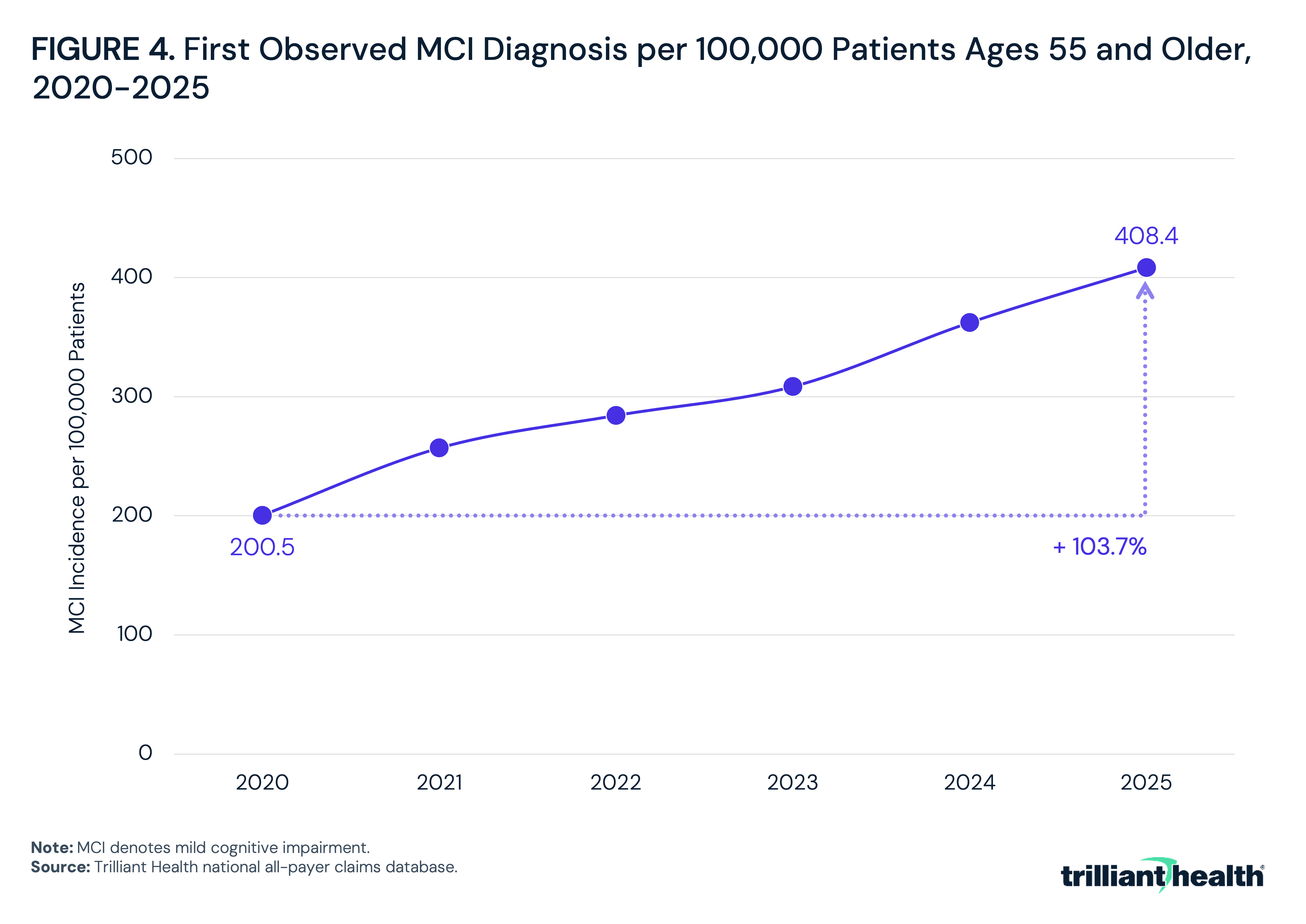
Like mild dementia, MCI diagnosis became increasingly common in recent years, more than doubling between 2020 and 2025, from 200.5 per 100,000 patients to 408.4 per 100,000 patients ages 55 and older (Figure 4).
The share of dementia patients that were diagnosed with unspecified dementia increased slightly since 2020, up 3.1 percentage point to 42.3% of patients in 2025. This change was accompanied by a declining share of specified diagnoses, down from a high of 60.8% in 2020 to only 57.7% in 2025 (Figure 5).
Conclusion
This analysis found that biomarker test utilization increased 37.5x in three years, and 17.3% of newly diagnosed Alzheimer’s patients received a biomarker test within six months of their diagnosis in 2025, compared to just 0.8% in 2023. This change corresponds with the FDA’s 2025 approval of blood-based biomarker tests for Alzheimer’s disease.23
Blood-based testing removes barriers to diagnostic assessment because it is widely available through blood sample collection, as compared to more intensive or expensive diagnostic testing like PET scans or cerebrospinal fluid tests.24 Infrastructure gaps are particularly problematic for members of rural and impoverished communities, and 1.5M older Americans live over an hour from a medical center with a PET scanner.25,26
However, the ubiquity of access to blood-based testing is distinct from the clinical efficacy of those tests, which face ongoing concerns over validity. Researchers found a higher false-positive rate in real-world evidence data than in clinical trial data for one blood test (Lumipulse®), which led to a recall of some lots.27,28 The research population for blood test trials also underrepresented Black, Asian and Latino participants, leaving questions about the accuracy of blood tests for these already underdiagnosed populations.29
Another limitation of blood-based biomarker testing is that it has only received FDA approval for symptomatic patients. Recent research suggests that these tests are sufficiently sensitive to detect early warning signs of Alzheimer’s in asymptomatic individuals; however, Medicare coverage reflects FDA hesitations around asymptomatic testing.30 This situation may change in the future – a bill with bipartisan support aims to provide Medicare coverage for blood-based Alzheimer’s screening tests for asymptomatic adults – however, the preparedness of the healthcare system for such mass screening and care provision is unclear.31
Blood-based screening still requires specialists to diagnose patients. While primary care physicians can order biomarker tests used to rule out Alzheimer’s, they must refer patients who test positive to specialists for follow-up testing to confirm a diagnosis.32 Given the severe undersupply of dementia specialists in the U.S., broad screening of asymptomatic older adults may create a surge in demand for care that the healthcare system is not equipped to handle.33 As a consequence, patients flagged for potential ADRD may not be able to access the specialist care needed to establish diagnostic certainty and receive treatment.
This analysis found that mild dementia took up a larger share of new diagnoses in 2025 than in 2023, possibly indicating that physicians have already begun to diagnose ADRD patients at earlier stages. Another possibility is that the change reflects an evolution in coding practices, with clinicians becoming more confident in coding cases as mild over time after the implementation of severity coding in 2023. That said, the incidence of MCI also appears to be increasing, which suggests a real change in diagnosis patterns; between 2020 and 2025, the rate of first observed MCI diagnosis per 100,000 patients ages 55 and older increased by 103.7%.
Earlier diagnosis has many benefits, including earlier access to support, care planning and treatment, but diagnoses can also provoke anxiety in patients without necessarily providing added clarity.34 Alongside shifts in diagnostic severity, this analysis catalogued a rise in the share of dementia diagnoses that are unspecified, meaning that their root cause is not identified. For the 42.3% of dementia patients in 2025 with only unspecified dementia, this lack of specificity may introduce confusion and concern that is not offset by access to specialized dementia treatment. Additionally, fewer than half of MCI patients go on to develop full dementia, so anxiety caused by receiving an MCI diagnosis may not be proportionate to patients’ real risk of functional decline.35
Earlier diagnosis may also have consequences for healthcare costs and supply. Healthcare costs for Alzheimer’s treatment in 2020 totaled $305B and were projected to increase to over $1T by 2050.36 These projections were made prior to the introduction of drug treatments that slow disease progression; one year of such a treatment (lecanemab) costs $25,000 but with monitoring and care comes out to $82,500 per patient per year.37 If ADRD patients are identified at increasingly mild stages, the number of patients requesting dementia treatment is likely to grow, which would in turn exacerbate the supply shortages already plaguing this specialty. Given that shortages impact people of color, low-income Americans and rural residents disproportionately, it stands to reason that worsening care inadequacy would also widen existing disparities.
To efficiently distribute the limited supply of dementia care, Federal funding should support research that aims to identify which individuals with MCI and mild dementia are most at risk of advancing to severe cognitive impairment. Investing in research on upstream factors like social networks, education and occupational complexity that bolster cognitive reserve – the ability for the brain to compensate for damage and preserve cognitive function after the onset of Alzheimer’s – could also lower healthcare costs by reducing dependence on expensive medications while improving the quality of life of millions of Americans.38,39
To keep pace with surging demand, investment in the future of dementia care is also necessary. Medical students cite financial disincentives and limited exposure as their top reasons for not pursuing geriatrics.40 To overcome the first obstacle, it is necessary to align incentives with supply adequacy and pursue a comprehensive restructuring of payment models to reflect the complexity and time required for effective ADRD care. Medical students need to see the value in choosing to spend additional years of schooling to become an expert in geriatric and dementia care. Addressing the second barrier is a task for medical schools. An estimated 45% of medical schools require clinical experience in geriatrics, which leaves students at 55% of schools without a window into this specialty.41 Mandatory rotations alongside incentive restructuring could go a long way toward bolstering the geriatrics care pipeline.42
For Americans to fully benefit from breakthroughs in ADRD diagnosis and treatment, addressing the imbalance between supply and demand for dementia care is necessary. Until then, Alzheimer’s screenings may do more harm than good for older adults.
Get the latest insights delivered to your inbox.
Was this shared with you?
Subscribe for weekly insights.
Subscribe to receive weekly insights from Trilliant Health's Research Team
Interested in citing our research? Please follow this guide.