Studies Archive
March 8, 2023
As a health economist, I study healthcare through the lens of demand, supply and yield. Even though markets for healthcare products and services deviate from what we economists would call the ideal market, the core principles offer a valuable framework for examining secular trends.
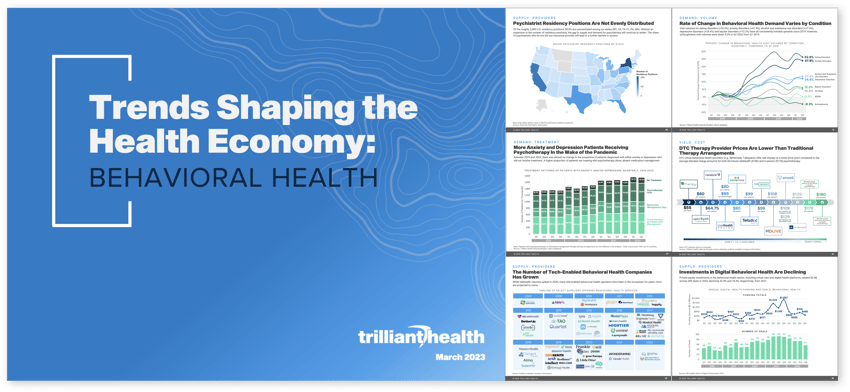
Leveraging this framework, I am delighted to release the 2023 Behavioral Health Trends Report, the latest publication in our Trends Shaping the Health Economy Research Series.
It is well established that the behavioral health (including mental health) status of Americans—from elementary school students to Medicare beneficiaries—has declined since the onset of the COVID-19 pandemic. Simultaneously, the pandemic catalyzed investments in digital health capabilities (e.g., virtual therapy, e-prescribing) in response to unprecedented demand. While the magnitude of the national behavioral crisis is well documented by government agencies (e.g., CDC, SAMSHA) and in the academic literature, less is known about how the pandemic changed the behavioral health care journey and the extent to which certain populations and geographies were differentially impacted.
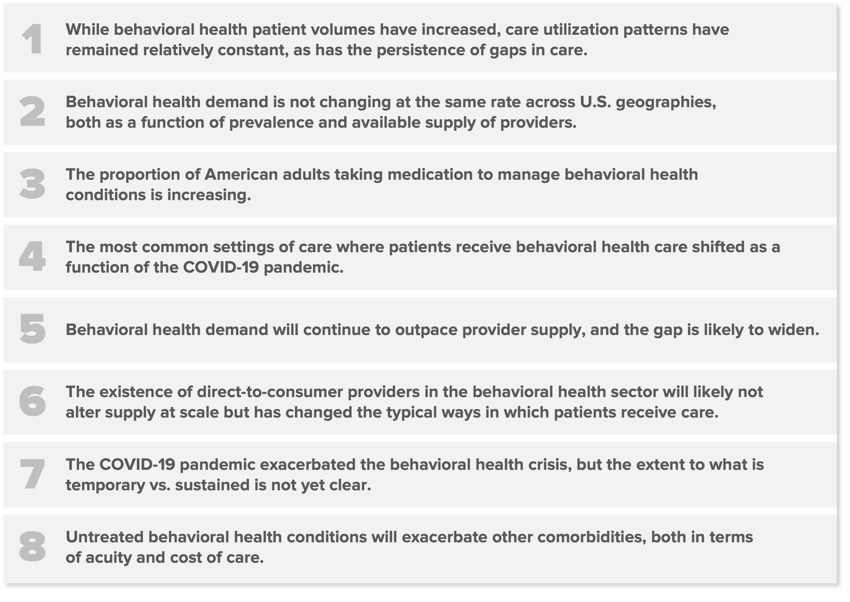
In a behavioral health economy where current (and forecasted) demand exceeds current supply and subsequent yield is resulting in higher cost of care, longitudinal analysis of the ways in which Americans accessed care and were treated from 2019 to 2022 reveals the following key insights:
With the expiration of the Public Health Emergency (PHE) on May 11, 2023, understanding the ways in which the pandemic changed both patient and provider behaviors is advisable.1 Moreover, new policy initiatives, such as the U.S. Preventive Services Task Force’s Fall 2022 recommendations to screen children (final) and adults (draft) for anxiety and depression and the Drug Enforcement Agency’s February 2023 proposal to restrict online prescribing of most controlled substances (e.g., Adderall) upon expiration of the PHE, have significant implications for the future of the U.S. healthcare system.2,3,4,5
This report is designed to provide a data-driven foundation for every stakeholder to think about the demand, supply and yield trends influencing the future of the behavioral health economy.
I hope that you will use this report as a compass to inform your strategic approach to the organization, financing and delivery of behavioral health care services in the years ahead.