Counterpoint
Hal Andrews | August 5, 2026In 1993, Peter Drucker wrote this:
“Public-service institutions such as government agencies, labor unions, churches, universities, and schools, hospitals, community and charitable organizations, professional and trade associations and the like, need to be entrepreneurial and innovative fully as much as any business does. Indeed, they may need it more. The rapid changes in today’s society, technology, and economy are simultaneously an even greater threat to them and an even greater opportunity. Yet public-service institutions find it far more difficult to innovate than even the most ‘bureaucratic’ company. The ‘existing’ seems to be even more of an obstacle. To be sure, every service institution likes to get bigger. In the absence of a profit test, size is the one criterion of success for a service institution, and growth a goal in itself. And then, of course, there is always so much more that needs to be done. But stopping what has ‘always been done’ and doing something new are equally anathema to service institutions, or at least excruciatingly painful to them. Most innovations in public-service institutions are imposed on them either by outsiders or by catastrophe...”1
For the last two years, we have suggested several ways in which hospitals might have “innovations…imposed on them by outsiders,” if not catastrophe.
Our 2024 edition of Trends Shaping the Health Economy included this analysis:
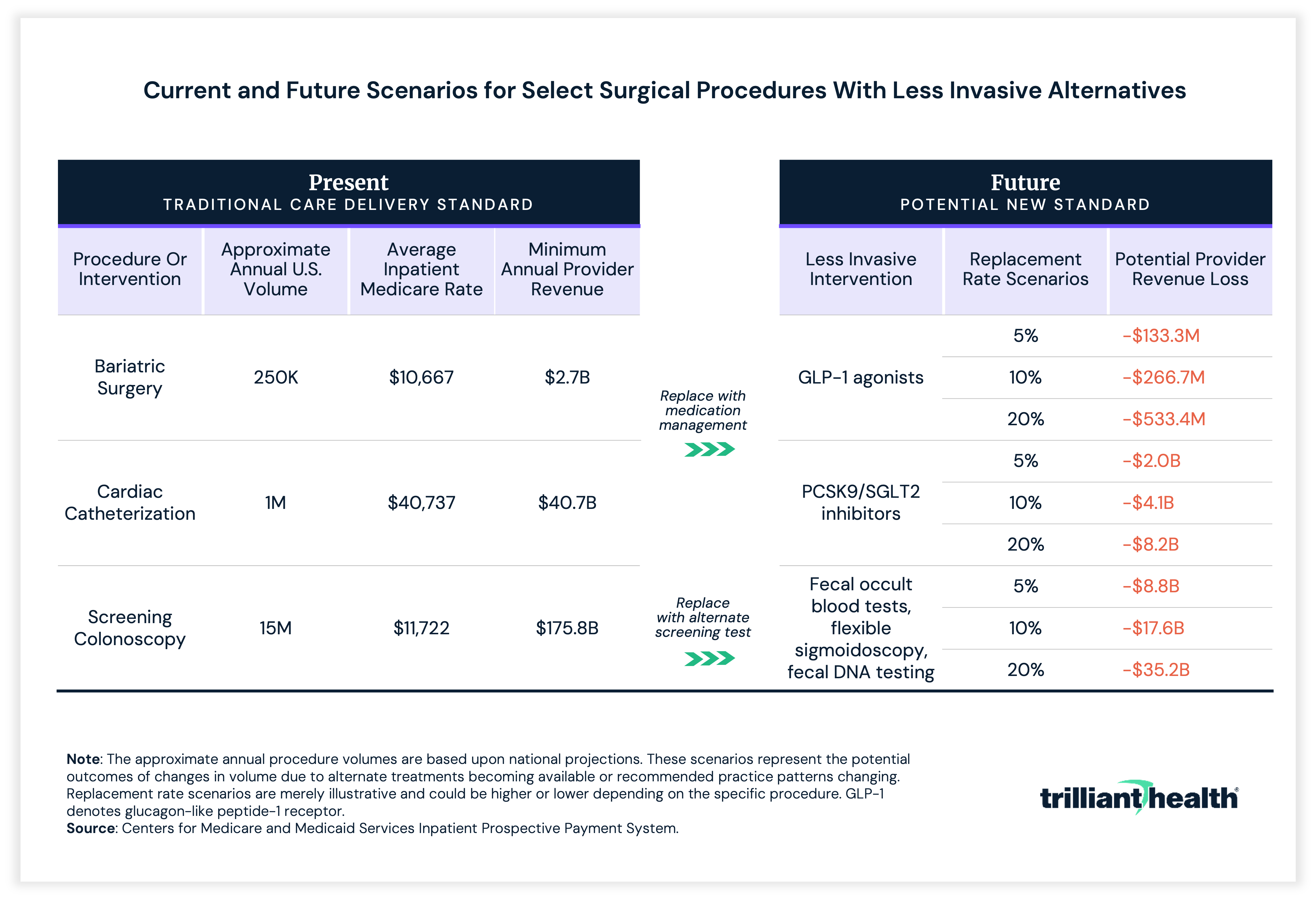
Our 2025 edition of Trends Shaping the Health Economy included this analysis:
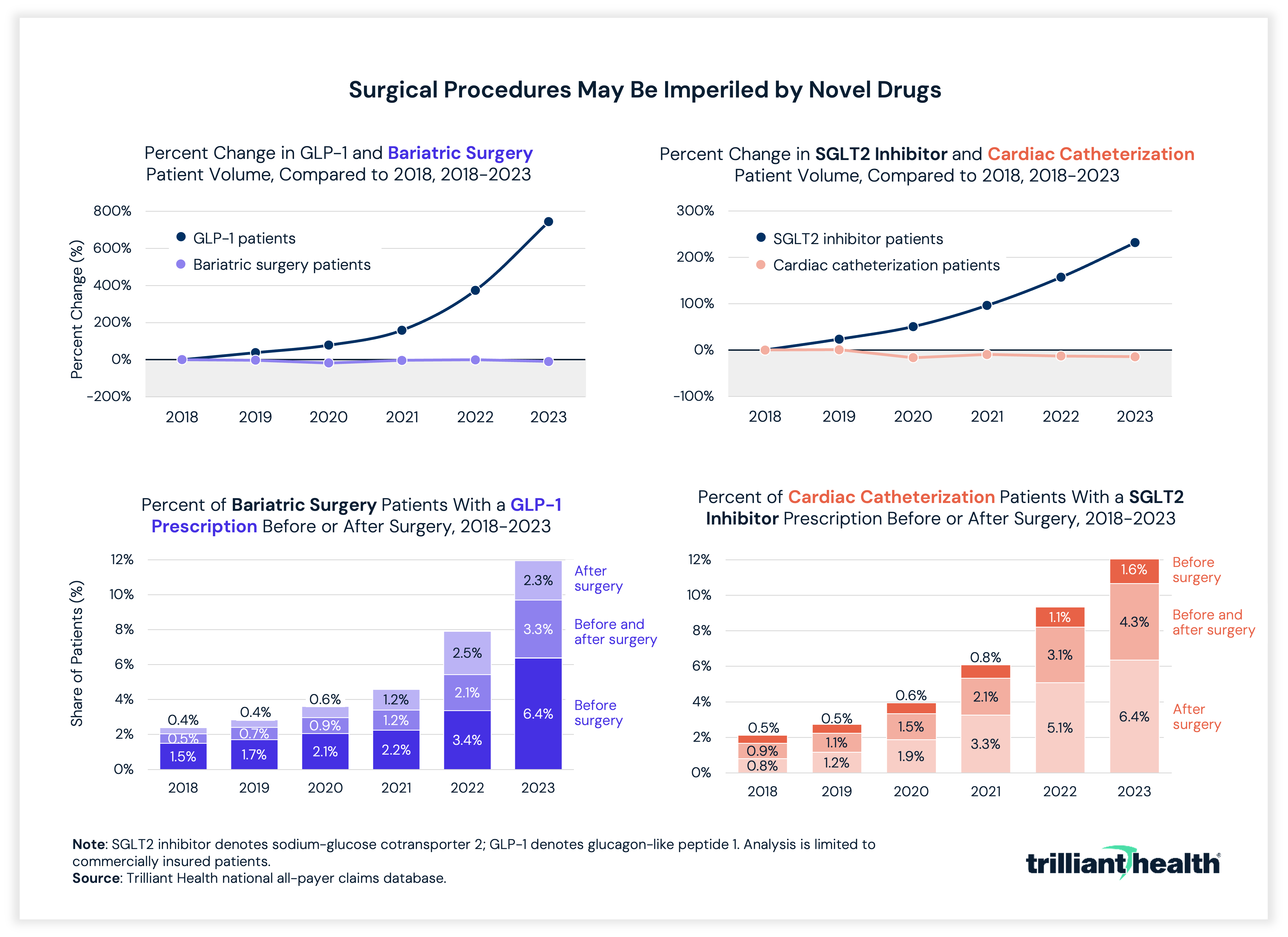
In the last two years, in dozens of presentations to board members and executive teams of health systems and life sciences companies, I have highlighted the nascent existential battle between “hands-on” providers and life sciences companies, as well as the general cluelessness of self-funded employers about the implications. In the last two weeks, I have realized that I have vastly understated the speed with which life sciences companies will win the battle.
One of Dr. Drucker’s most famous observations is that a hospital is “altogether the most complex human organization ever devised.”2 According to Dr. Drucker, “the ‘product’ of a hospital is a cured patient,” the result of which is that hospitals have high capital costs, labor costs and regulatory burden.3
Less well known is this observation from Dr. Drucker:
“Unless institutions learn, however, to ask what the community requires, they will increasingly lose public support, as have the labor unions in the United States and Great Britain. The American hospital is in crisis too in large part because it failed to take political responsibility, and with it leadership, in controlling costs and quality of health care.”4
The U.S. hospital industry is undoubtedly in crisis, and public scrutiny, particularly by the Federal government, has never been more intense. Survey data reveals that the share of Americans reporting “a lot” of trust in hospitals and doctors has decreased from 71.5% in April 2020 to 40.3% in April 2025.5
Regrettably, narrative is all that matters in the Beltway these days, and most health system executives I know believe the hospital lobby has failed to advocate effectively in recent years. The continuing Congressional fervor for price transparency is one example of that failure, with bills like Patients Deserve Price Tags Act, Health Care Price Certainty for All Americans Act, Health Care PRICE Transparency Act and The Prices on the Wall Act.
Given that CMS has exercised its regulatory power to promulgate and enforce hospital price transparency, a reasonable person might think that even an inexperienced and inexpensive lobbyist could convince legislators of the diminishing returns of increased regulatory burden of incremental hospital price transparency legislation. Assuming the hospital lobby understands the payer mix of hospital admissions, it could seemingly explain to Congress that only 10M of annual U.S. hospital admissions – or at most 3% of the U.S. population – are even susceptible to hospital price transparency. Assuming the hospital lobby understands how patients are admitted to a hospital, it could seemingly explain to Congress that physicians admit patients to the hospitals where they have admitting privileges, which means that consumers choose physicians, not hospitals.
Most importantly, assuming the hospital lobby understands the practical impact of 340B legislation, it would seemingly realize that increasing use of the 340B program means that hospitals are increasingly dispensing pharmaceuticals, meaning that an increasing portion of “hospital costs” are, in fact, pharmaceutical costs. In fact, MedPAC’s 2026 Data Book reveals that per-beneficiary spending on physician-administered Part B drugs grew 7.8% annually from 2015 to 2023, while per-beneficiary spending on inpatient hospital care, skilled nursing facilities, the physician fee schedule and home health declined over the same period.6
The most obvious example of increasing drug spending is pembrolizumab, better known as KEYTRUDA®, which is an FDA-approved specialty drug for lung, skin, head and neck, bladder and colon cancers, among others.7 KEYTRUDA® is a life-changing and, in some cases, life-saving therapy. KEYTRUDA® is also the lifeblood of Merck, generating $31.7B – or 49% – of its 2025 revenue.8
At the surface, KEYTRUDA® also benefits hospitals. Every hospital operating a cancer service line generates a meaningful, and in many cases material, amount of revenue from dispensing KEYTRUDA®, which is typically administered before and after a patient’s cancer surgery as well as to treat tumors that cannot be surgically removed. Additionally, every not-for-profit hospital acquiring KEYTRUDA® through the 340B program generates a meaningful, and in many cases material, amount of margin. Lurking below the surface is that the efficacy of KEYTRUDA® materially reduces cancer recurrence, a miracle for patients that is ultimately detrimental to the hospital business model.9,10,11
Hospitals are designed to produce “cured patients” through procedural volumes, not drug administration. As such, hospitals increasingly provide very expensive and consumer-unfriendly real estate to administer KEYTRUDA® and dozens of other specialty pharmaceuticals. Doing so is, to borrow a legal term, double jeopardy, as tax-exempt hospitals are increasingly dependent on 340B revenue tied to drug acquisition and administration while being blamed by Congress for increasing hospital “prices” that are, in fact, increasingly attributable to drug costs.
KEYTRUDA® and other life-changing and life-saving drugs reinforce the nature of the negative-sum game that is the U.S. health economy. That reality informs the reality in these slides that everyone wants to ignore but none have yet to refute:

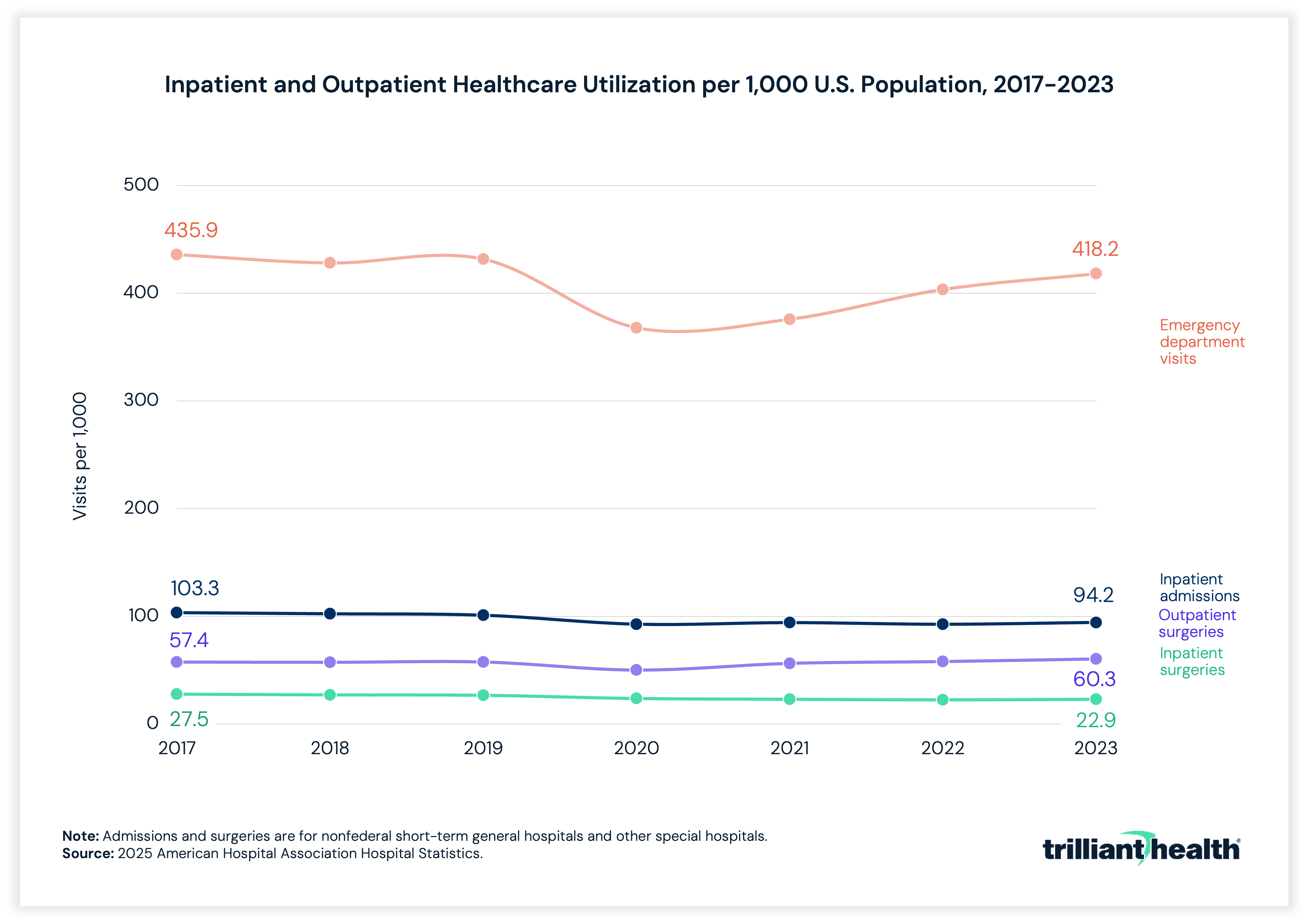
Instead of being “entrepreneurial and innovative,” hospitals are increasingly addicted to drug administration revenue, reliant on the innovation of outsiders (i.e., the life sciences industry). Not only having “failed to take political responsibility, and with it leadership, in controlling costs and quality of health care,” hospitals are practically inviting innovation to be “imposed on them either by outsiders and by catastrophe” by being blamed by the public for doing the bidding of the pharmaceutical industry.
Game theory is infrequently, if ever, discussed in healthcare systems, but nothing will have a more profound effect on the performance of America’s hospitals and surgery centers in the next 20 years.
“The most difficult problems are negative-sum situations, where the pie is shrinking. In the end, the gains and losses will all add up to less than zero. This means that the only way for a party to maintain its position is to take something from another party, and even if everyone takes his or her share of the ‘losses,’ everyone still loses in comparison to what they currently have or really need. This type of situation often sparks serious competition.”12
Every time a physician prescribes a specialty drug – or even a GLP-1 – to a patient, the life sciences industry takes something from a hospital or surgery center, even if it only results in a delay in performing a procedure. Whether that is the right decision is not mine to judge; whether that imperils the traditional business of a hospital should be self-evident.
Specialty pharmacy’s impact on hospital and surgery center volumes, revenues and margins have been gradual, and those impacts will pale in comparison to emerging cell and gene therapies.

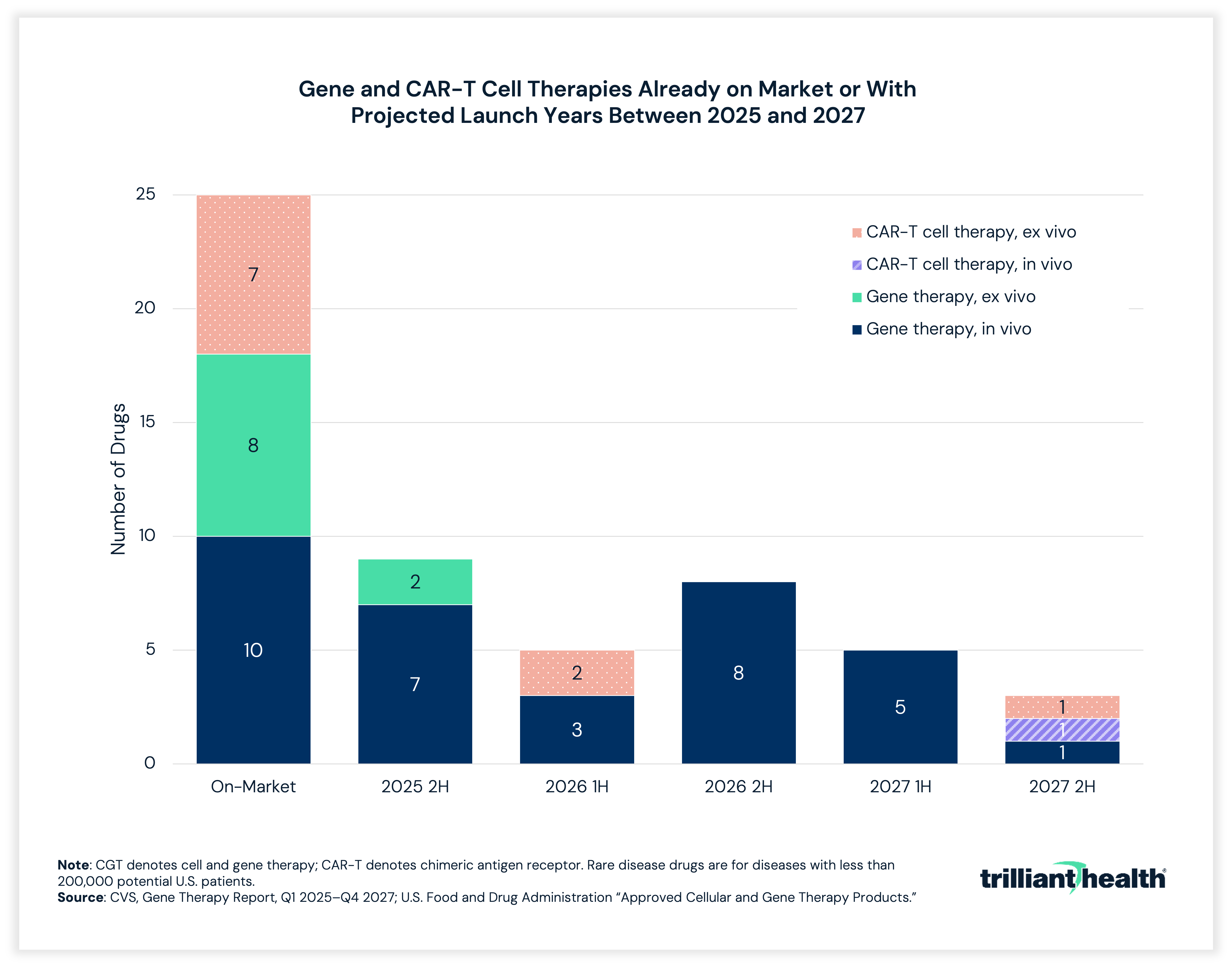
Cell and gene therapies offer the promise of replacing the hospital as the industry whose product is a “cured patient,” not neoadjuvant and adjuvant therapies like KEYTRUDA® requiring multiple or ongoing doses but instead “one-shot” disease cures. The challenge of these therapies will not be their efficacy but their cost, which will force Americans into some very uncomfortable discussions about health economics and quality-adjusted life years.
The more successful cell and gene therapies are, the more site-based care providers will recognize that the greatest, yet least appreciated, risk to their business is the laziness of the American public, which manifests most obviously in the rise of GLP-1s. In his song “Living in Fast Forward,” my friend Rivers Rutherford summed it up this way:
“The body’s a temple, that’s what we’re taught
I treated this one like an old honky tonk
Greasy cheeseburgers and cheap cigarettes
One day they’ll get me if they ain’t got me yet”
Only an addict actively seeks sedation, and only an expectant mother eagerly awaits her hospital admission; most Americans don’t even want to go to the dentist. Coincidentally, obstetrics and trauma are the only site-based procedural care immune from the onslaught of cell and gene therapies. Even orthopedics, the real cash cow of site-based care, is vulnerable. Reduced obesity from GLP-1 adoption reduces the degenerative impact of obesity on joints, and there are currently more than 200 clinical trials assessing stem cell therapies for osteoarthritis, which certainly appeals to a guy who had four total joint replacements before the age of 52. The question for hospitals is whether changes to the Inpatient Only list or stem cell therapies will have a greater impact on inpatient orthopedic surgical volumes.
Anyone who spends time in airports knows that Americans consistently choose poor health over good health. The sad reality of the American consumers’ propensity for instant gratification manifests in their preference for a medical or surgical or pharmaceutical intervention over the hard work of a lifestyle change requiring consistent exercise, healthy nutritional choices or dedicated behavioral health therapy. Given the choice between a change in lifestyle, a surgical intervention and taking a pill, Americans reliably choose the easy button: a pill. That reality is why Americans need a strong and independent Food and Drug Administration, i.e., fully funded with tax dollars, to serve as a trustworthy gatekeeper for therapies without interference from the pharmaceutical and tobacco lobbyists and the “ride or die,” I mean “right to try,” posse at The Wall Street Journal. Fruit-flavored vapes for kids or gene therapies that kill them, anyone?
In May 2025, Governor Mike Braun (R) of Indiana – a “red” state – signed HEA 1004 to cap the commercial prices charged by Indiana tax-exempt health systems with more than $2B of net revenue. Vermont and Washington enacted similar laws in 2025, and Delaware and Michigan are currently considering similar legislation.
In June 2026, Governor Braun justified HEA 1004, saying that “government has to intervene, because healthcare is run like an unregulated utility.”13 Whether that statement is ignorant – as I am not aware of any utilities required to give their services away for free on demand as hospitals are under EMTALA – is different from whether it is politically astute. What will increase public support of Governor Braun’s narrative is the “innovation from the outside” that threatens to reduce hospitals to oversized infusion therapy centers and drug dispensaries with inconvenient parking.
Dr. Drucker is undoubtedly correct that hospitals and health systems "like to get bigger" and that "in the absence of a profit test, size is the one criterion of success and growth a goal in itself." However, I feel certain that Dr. Drucker would never have imagined that hospitals and health systems would rely on an interloper's innovation for that growth and would have thought that doing so might ultimately result in catastrophe.
Forewarned is forearmed.